
FAO: Gender balance helps reduce poverty.
The Food and Agriculture Organization of the United Nations (FAO) yesterday called for gender balance in agriculture to increase agricultural production and reduce the world's hunger and poverty rate by 100 million people.
“If women in rural areas had the same access to land, technology, financial services, education and markets as men, agricultural production would increase. The number of people living in poverty could decrease by 100-150 million,” the FAO stated in its 2010-2011 State of Agriculture and Food report.
Speaking at a press conference in Rome, Italy, FAO Director-General Jacques Diouf said: “Gender balance is not only a good idea but also crucial for agricultural development and food security.”
"We must promote gender balance and empower women in agriculture to win the fight against poverty," Diouf said ahead of International Women's Day on March 8.
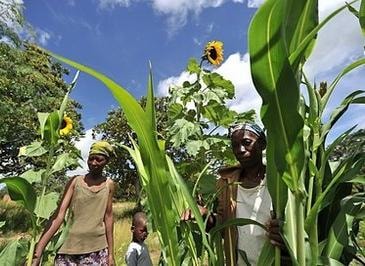
Women inspect a cornfield in Zimbabwe.
Women around the world do not have access to land or agricultural resources equivalent to that of men. In developing countries, only 3-20% of landowners are women.
“Female farmers own less land than men, not because they lack skills, but because they typically manage smaller plots, using fewer inputs such as fertilizer, seeds, and tools,” said Terri Raney, the report’s author.
Ann Tutwiller, Deputy Director-General of FAO, has called on governments, international organizations and development agencies to promote gender balance.
"Agricultural policy must be one of the issues of gender balance because women are present in all sectors of agriculture," Ms. Tutwiller said at the press conference.
Bina Agarwal, head of the Institute for Economic Development in New Delhi, India, said there is growing global concern about inequality between women and men in agriculture and called for action to ensure that women have access to land.
On average, women make up 43% of the agricultural workforce in developing countries, ranging from 20% in Latin America to nearly 50% in Asia and sub-Saharan Africa.
"Giving women equal access to agricultural resources could increase women's agricultural production in developed countries by 20-30%," the FAO report states.
Female agricultural workers are often paid less than their male counterparts. They are also frequently employed on a seasonal or part-time basis.
"We must eliminate all discrimination against women, ensure they have access to more equitable resources, and that agricultural policies and programs are gender-balanced," Diouf said.
According to Dan Tri/AFP


