
The highest retail price for household electricity remains at 2,701 VND per kWh.
The retail electricity pricing structure for household consumption will remain divided into six tiers as currently in place, instead of the previously proposed reduction to four tiers.
After numerous revisions and incorporating feedback from ministries, agencies, and associations, the draft decision of the Prime Minister on the electricity pricing structure, currently being reviewed by the Ministry of Industry and Trade, remains unfinished.The regulations divide the pricing into six tiers with progressively increasing prices, despite previous suggestions to change this calculation method.
With an average retail electricity price of VND 1,720.65 per kWh (excluding value-added tax) applied from December 2017, the retail price for household electricity in each tier ranges from VND 1,549 to VND 2,701 per kWh. This is also the retail electricity price currently applied after the 6.08% increase from the beginning of December 2017.
| Retail price of electricity for household use | Electricity price (VND/kWh) | Compared to the average retail electricity price | |
| Level 1 | For kWh from 0 - 50 | 1,549 | 92% |
| Level 2 | For kWh from 51 - 100 | 1,600 | 95% |
| Level 3 | For kWh from 101 - 200 | 1,858 | 110% |
| Level 4 | For kWh from 201 - 300 | 2,340 | 138% |
| Level 5 | For kWh from 301 - 400 | 2,615 | 154% |
| Level 6 | For kWh 401 and above | 2,701 | 159% |
 |
In fact, during the consultation process, the Ministry of Industry and Trade developed several scenarios for the retail electricity pricing structure, including reducing the number of price tiers from six to three or four. Specifically, according to scenario 1A, the retail electricity pricing structure is reduced to three tiers, with the lowest tier starting from 50 kWh at 1,484 VND per kWh; tier 2 from 51 to 300 kWh at 1,768 VND per kWh; and tier 3 from 301 kWh onwards at 2,559 VND per kWh.
Scenario 2A shows retail electricity pricing divided into four tiers, with the lowest tier remaining at 50 kWh.The price is 1,484 VND per kWh. Tier 2 (51-200 kWh) is priced at 1,668 VND per kWh; Tier 3 (201-400 kWh) is priced at 2,327 VND per kWh. Tier 4 (401 kWh and above) is priced at 2,587 VND per kWh.
As for scenario 2B, the lowest tier starts at 100 kWh, priced at 1,506 VND per kWh, while the highest tier remains at 401 kWh, priced at 2,587 VND per kWh.
In its comments on this electricity pricing scheme, the Vietnam Electricity Association suggested that the consumption level starting from 101-200 kWh should be used as the base consumption level and equal to 100% of the average retail electricity price to calculate the prices for other tiers.
However, the Ministry of Industry and Trade maintains its position that the current six-tier pricing system should be retained, arguing thatSince the retail electricity prices for tier 1 (0 - 50 kWh) and tier 2 (51 - 100 kWh) are calculated at 92% and 95% respectively of the average retail electricity price, the prices of subsequent tiers are gradually adjusted upwards to compensate for the first two tiers and simultaneously achieve the goal of encouraging energy conservation and efficiency.
"Maintaining the current six-tiered retail electricity pricing system will avoid disruption in practice," the Ministry of Industry and Trade stated.
|
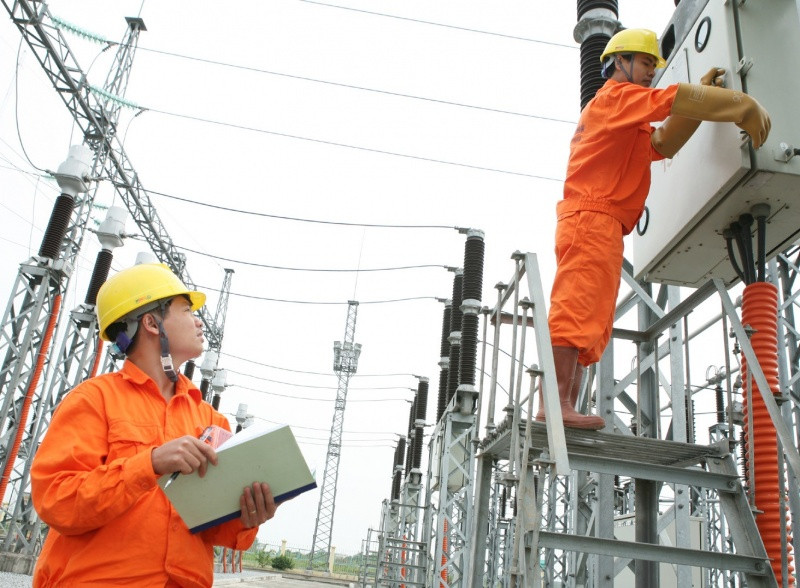
The average retail electricity pricing structure will remain unchanged with six tiers, according to the latest draft currently open for public comment. |
The agency also stated that,If a four-tiered electricity pricing scheme is implemented instead of a six-tiered one, it will increase electricity bills for households using less than 50 kWh per month. Simultaneously, the budget allocated to support poor households and those receiving social welfare benefits will increase by approximately 258 billion VND per year due to the upward adjustment of the first tier price.
The Ministry of Industry and Trade analyzed the situation.The increase in electricity bills mostly affects middle- and low-income customers who use 51-100kWh and 201-300kWh per month, accounting for approximately 8.6 million households, or 36% of the total 24.1 million households. Households using 300kWh or more per month benefit from electricity price reductions. This is not appropriate in the current situation.
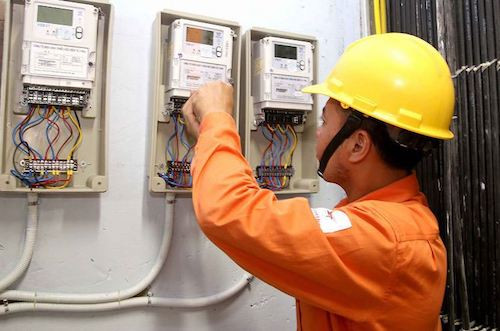
Furthermore, the nationwide installation of electronic electricity meters has made meter reading and electricity billing more transparent and open. Electricity customers can monitor their monthly electricity consumption, and the issues related to the tiered electricity pricing system for residential use have gradually been resolved through transparent meter reading.


