
Oil prices are rising close to $60 per barrel.
World crude oil prices rose close to $60 per barrel, recording their highest increase since July 2015, thanks to several positive supporting factors.
World oil prices rose to their highest level in a year and a half after the Organization of Petroleum Exporting Countries (OPEC) and several major non-OPEC oil producers agreed to cut global production.
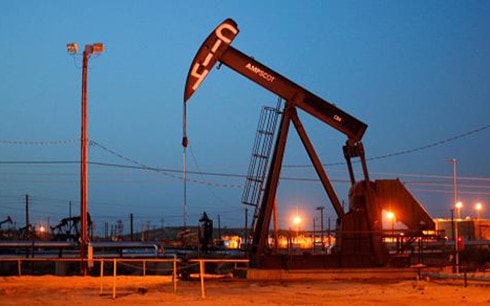 |
| Global oil prices have risen sharply (Illustrative image: Reuters) |
On December 12th, Brent crude oil was priced at $56.61 per barrel, while US crude oil was at $53.84 per barrel. Earlier, Brent crude oil had risen 6.6% to $57.89 per barrel, and US crude oil had increased 5.8% to $54.51 per barrel. These were the highest levels since early July 2015.
In recent trading sessions, oil prices have risen consecutively thanks to positive news from production cuts that help reduce the global oil surplus.
Saudi Arabia's Energy Minister Khalid Al-Falih said the kingdom is ready to cut production even more than the figures committed by OPEC member countries.
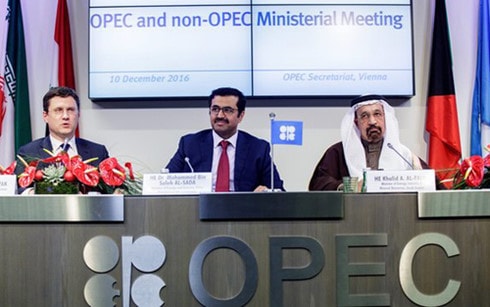 |
| Oil giants are determined to "rescue" oil prices (Photo: The Guardian) |
Non-OPEC countries also pledged to cut production by 558,000 barrels per day. Russia pledged the largest cut, at 300,000 barrels per day.
Previously, OPEC countries reached a historic agreement to "freeze" production cuts, with a reduction of 1.2 million barrels per day. This was the first production cut agreement by OPEC and other oil-exporting countries since 2001, and came after two years of record 75% drops in oil prices that devastated many countries that depend on oil revenue, from the Middle East to Latin America.
Currently, OPEC, along with non-OPEC countries that have agreed to production cuts, accounts for 60% of the world's crude oil supply. The remainder is supplied by other major producers such as the United States, China, Canada, Brazil, and Norway.
According to VOV
| RELATED NEWS |
|---|


