
Palm fruit prices in mountainous Nghe An province have doubled, with supply unable to meet demand.
(Baonghean.vn) - In winter, in many areas of western Nghe An province, people are entering the palm fruit harvesting season. This is also a job that helps people in mountainous areas earn extra income, especially when the price of this specialty fruit doubles.
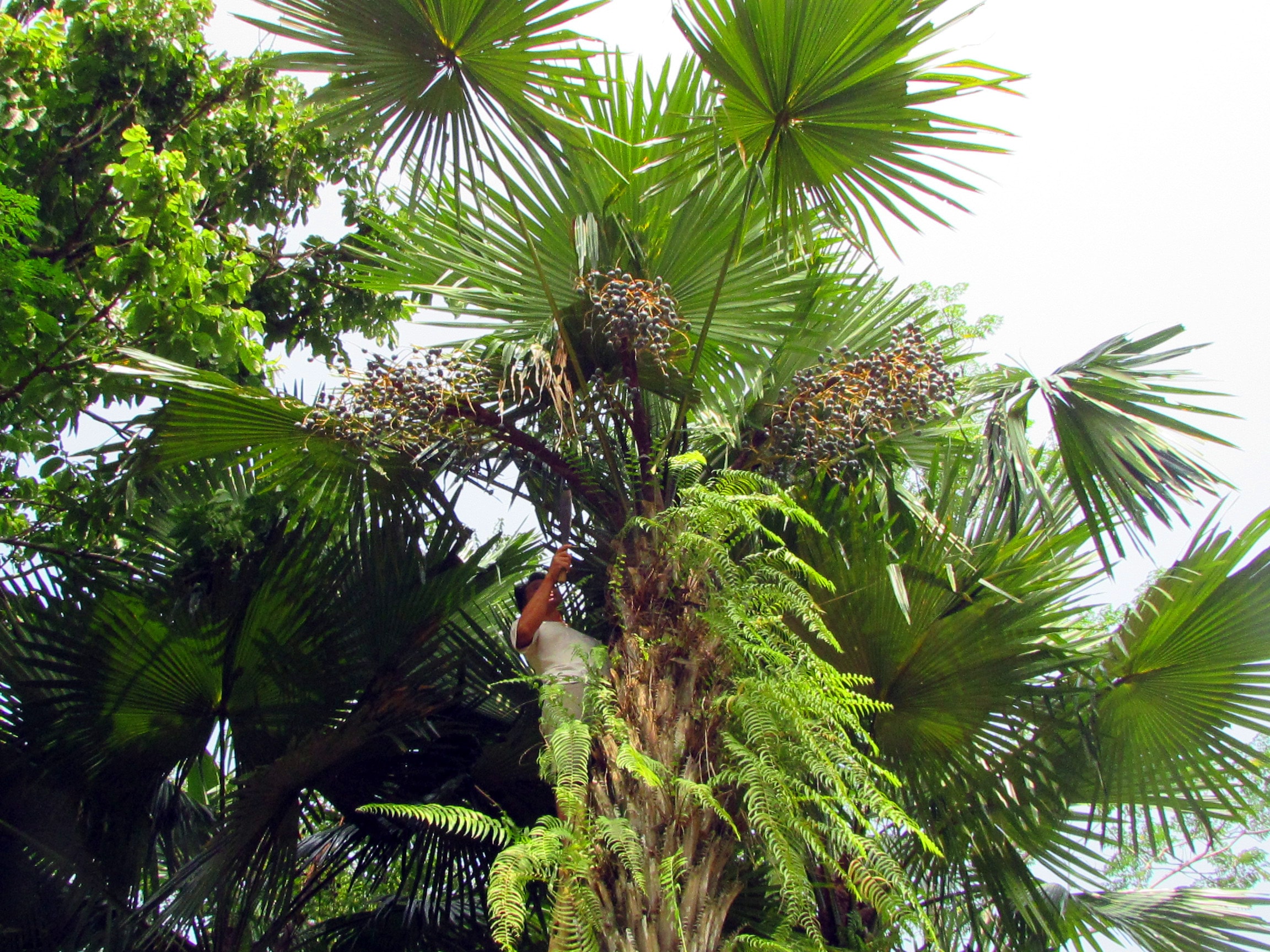 |
| Palm trees are commonly grown in orchards by people in mountainous areas, planted around houses or on hillsides, primarily for their leaves used as roofing. However, palm fruit is also a favorite food during the cold season in Thai ethnic villages. Besides providing income from selling palm leaves, the people of Con Cuong now have an additional source of income from palm fruit. (Photo: Ba Hau) |
The family of Mr. Lo Huynh Lan in Khe Ran village, Bong Khe commune, Con Cuong district, has 1.5 hectares of forest land allocated to them. In addition to planting perennial trees, he has intercropped 150 palm trees. To date, 100 of these palm trees have borne fruit.
Mr. Lan said that this year, due to favorable weather conditions, the palm fruit harvest is abundant, with each tree yielding an average of 10-20 kg of fruit, depending on the individual tree. At this time, some palm trees have already ripened, and because there are few early-season palm fruits, they are selling at a good price, 30,000 VND per kilogram. This is quite a high price compared to this time in 2017 (only 10-15,000 VND/kg).
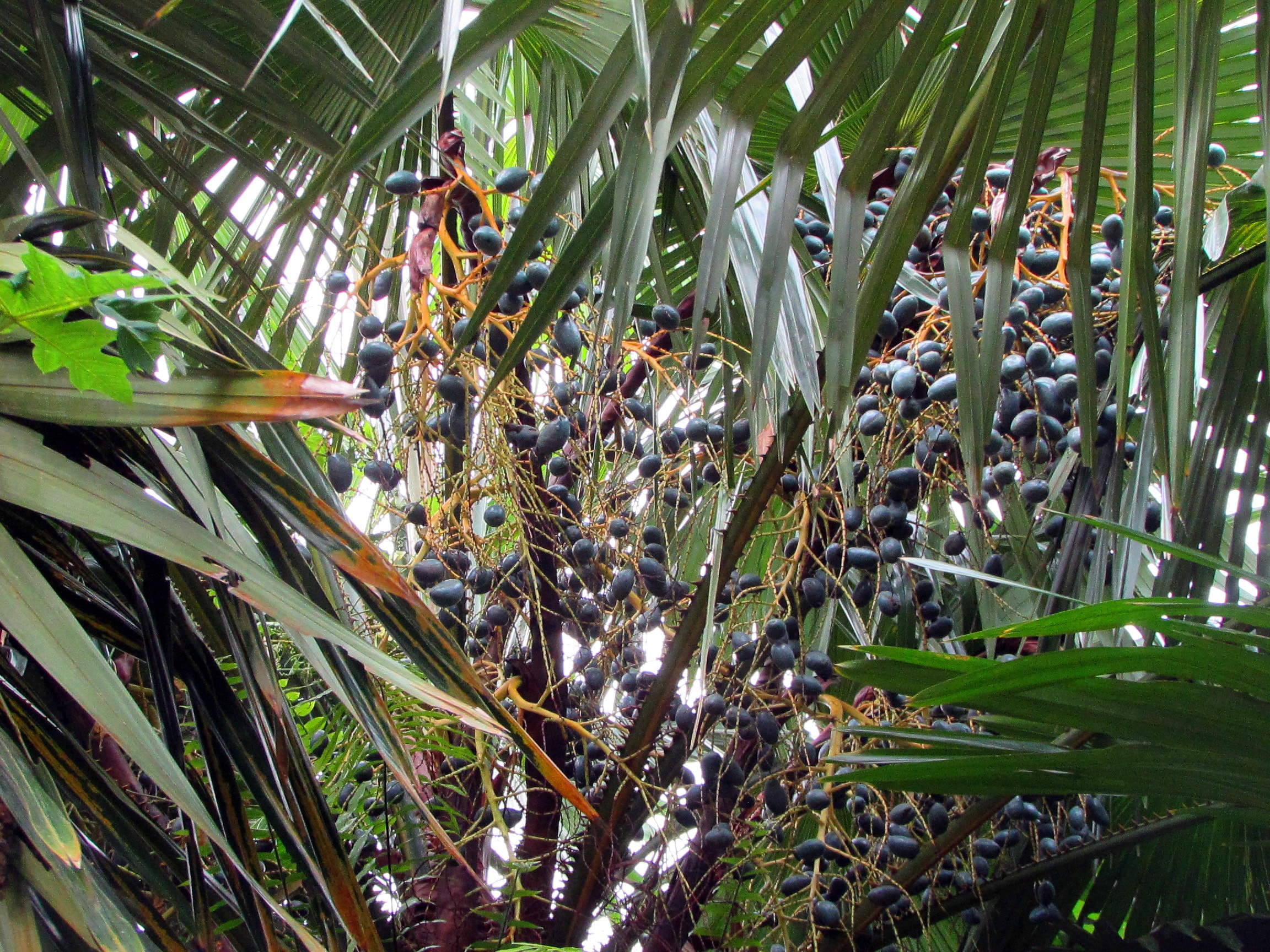 |
| Palm trees are widely grown by people in Con Cuong district, particularly in the communes of Yen Khe, Bong Khe, and Chi Khe... Some households cultivate over 2 hectares. Photo: Huu Vi |
According to Mr. Lan's estimate, if the entire harvest yields over 1 ton of fruit, it would bring in approximately 20 million VND. For a household in a mountainous region, such an income is significant.
Palm trees are easy to grow, require little care, and are well-suited to the soil and climate of mountainous regions, making them a valuable source of income for many households.
 |
| Residents of Khe Ran village, Bong Khe commune (Con Cuong district) harvest palm fruit. Photo: Ba Hau. |
The family of Ms. Luong Thi Hoa, from Nua village, Yen Khe commune, owns 10 palm trees, which are currently bearing fruit.
Ms. Hoa said that this year in Yen Khe village, the palm fruit yield is lower than last year, but the price is good, so there is still a decent income from selling palm fruit. In addition, people also harvest palm leaves to sell.
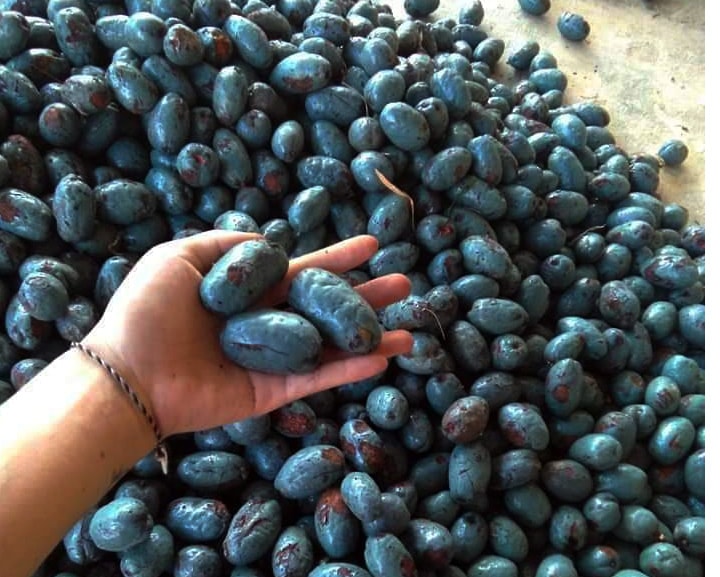 |
| Recently, palm fruit has become a commodity that helps women in villages earn extra income. Photo: Huu Vi |
Khe Ran village in Bong Khe commune is located on the left bank of the Lam River and is home to 100% Thai ethnic minority people. Besides developing key crops such as bamboo and acacia, Khe Ran village is also known for having the largest area of palm tree cultivation in Con Cuong district.
Mr. Lo Van Thang, head of Khe Ran village, said: "The entire village currently has 160 households, and most of them cultivate palm trees, covering a total area of 150 hectares. Palm trees provide a dual source of income from both fruit and leaves, which has helped many households in the village improve their daily lives."
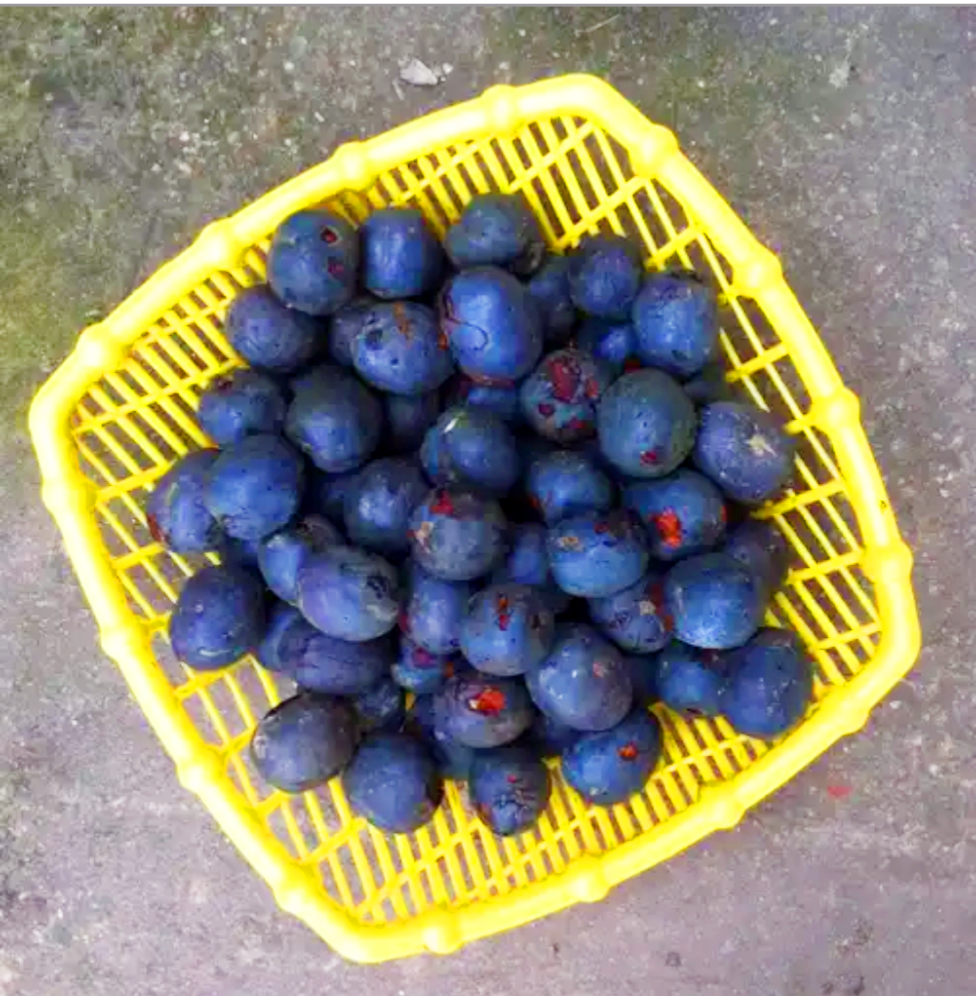 |
| Braised palm fruit is a signature winter dish of the Thai people in mountainous areas. Photo: Huu Vi |
Every palm season, Mr. Nguyen Van Tho, residing in Tuong Son commune (Anh Son district), goes to great lengths to find and buy palm leaves to sell wholesale to areas in the lowlands. Mr. Tho says that the market demand for this mountain fruit is currently increasing. He can sell about half a ton of palm fruit every day. Both palm leaves and palm fruit are very popular and easy to sell, with traders often buying them directly from his home. However, the supply often doesn't meet the demand.


