
The informational value of photojournalism
Photojournalism (PJ) can be considered either a genre of photography or a form of journalism. The latter is perhaps more reasonable.
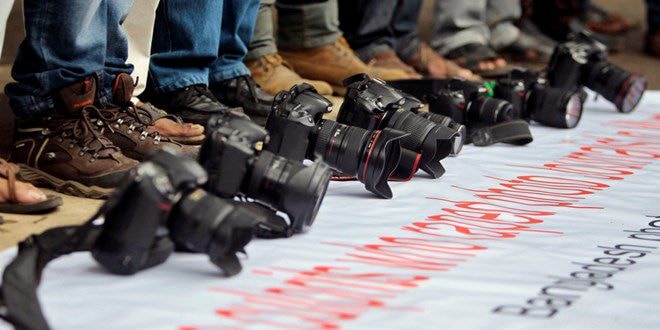 |
| Illustrative image |
Newspapers are a commodity, a special kind of product. The primary customers are the readers. Without readers, newspapers cannot sell, and newsrooms cannot generate advertising revenue.
Photographs appearing in a newspaper must, of course, comply with all relevant, including legal, journalistic regulations. Since PJ is one of the three tools and forms of journalism, it must adhere to all the characteristics and requirements of journalism. Any media tool possesses two essential elements:
1. Content to be conveyed
2. Forms of expression
These are also the two values that readers need when they buy a newspaper or read a page of a newspaper. In this case, the content conveyed is understood as the information provided by journalistic photographs. Journalistic information is often defined in the 5W-1H format. However, journalists in general, and photojournalists in particular, need to understand the characteristics of information; the characteristics that make information valuable to readers.
A photographer, or a professional communicator in general, must understand the valuable nature of information. Otherwise, they will rush into taking pictures that seem like journalistic photos but have nothing to do with journalism, turning them into someone who enjoys taking pictures rather than a true photographer.
Most graduate schools in media/journalism in the United States conduct interviews for prospective students. The first and most important question is always: "Please list 10 topics you would like to cover this year for the city's newspaper." This question will reveal the applicant's thought process and journalistic aptitude. This is more important than writing, photography, videography, or editing skills.
To answer this question correctly, candidates must thoroughly understand the newspaper, its style, its focus, its target audience, and so on. No matter how good their writing or photography skills are, without this mindset, they will forever remain a writer or a photographer, never a journalist.
 |
| Illustrative image |
And of course, each candidate's answer will be different, depending on the newspaper's name, distribution area, target audience, and time period. The Head of the NEU Graduate School of Communication once said: "The students who answer the first question best in the interview round, two years later, all become the best students upon graduation."
To develop a good topic, journalists need to understand the characteristics of information. From there, they can categorize and select information to develop their topics. Information has the following four characteristics, and it's important to note that these four characteristics are closely and tightly related:
1. Related
Readers enjoy reading information that relates to them, to a greater or lesser extent. Information that directly impacts readers' lives is far more valuable. For example, in Vietnam, news about rising or falling gasoline prices attracts readers a thousand times more than news about conflicts in Africa. More professionally, some newsrooms should develop a system of monthly distribution maps. These maps show newsrooms how their readership is geographically distributed. If a large number of readers are currently concentrated in Ba Dinh district, the newsroom should prioritize information gathering in that district, rather than Tu Liem or Thanh Xuan districts.
2. Unusual
Information related to issues that readers don't see every day is of great value. For example: social ills, accidents, tragic fates, or extraordinary acts of resilience, etc.
3. Reputation
Celebrities always attract readers' attention because curiosity is a common trait among most people. In fact, a few quotes from a celebrity can increase the value of an article.
4. Current Affairs
The faster the information, the more valuable it is. News organizations are constantly competing to deliver news as quickly as possible.
Does every news item or article have to include all four of the above elements? Of course not. These are four crucial qualities that help journalists select and utilize information. The nature of a photojournalist's work requires direct access to information and cannot rely on third-party sources. Their articles must include descriptive and illustrative photographs. Without direct access, where would the photos come from?
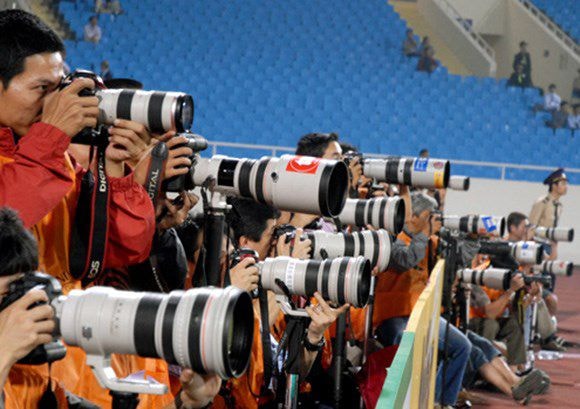 |
| Illustrative image |
In Vietnam, the term "Photojournalist" is frequently used and often confused with "Photojournalist." In reality, especially in American journalism, there are two types of photojournalists: Newspaper Photographers and Photojournalists.
A newspaper photographer is simply someone who takes pictures for a newspaper; they photograph whatever they're told to or whatever they think might be published. In short, their main job is taking pictures. A photojournalist is a bit different. Photography is an important part of the job, but only a part of it.
The task of photojournalists is to create articles with images (photojournals). The ratio between the number of images and the number of words depends on each article. For photojournalists, the four elements mentioned above are vital to their work.
According to Infonet
| RELATED NEWS |
|---|


