
Unraveling the mystery of "milk rain" in the Pacific Northwest.
Scientists have finally been able to unravel the mystery of a "milk rain" that fell across a vast area of the Pacific Northwest in February of this year.
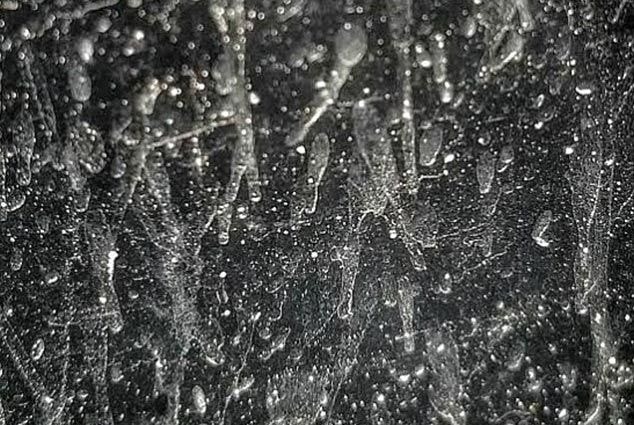 |
The unusual rain left long, powdery streaks across a vast area, stretching nearly 322 kilometers in eastern Oregon and Washington states. Scientists and locals alike are trying to understand the origin of this strange phenomenon.
Some scientists initially speculated that a Japanese volcanic eruption was the source of the white powder that fell during the rain. Others blamed wildfires, while a few attributed the cause to a Nevada dust storm.
All three of the above hypotheses have just been proven wrong, when a chemist, along with a meteorologist and two geologists from the University of Washington (USA), examined the chemical composition of rainwater samples and analyzed wind pattern data for February. The research team discovered that winds blew from the south before the milky rain fell.
The sodium levels in the rainwater samples also provided another clue, suggesting a connection to a salt source in a dried-up lakebed. This led the researchers to examine Oregon's Summer Lake, which is relatively shallow and often nearly dry during droughts.
A storm with winds reaching 96.5 km/h swept across Lake Summer the night before the milky rain occurred. This storm was believed to be strong enough to lift large amounts of dust into the air. Further analysis confirmed that Lake Summer was indeed the source of the milky rain.
According to the Daily Mail


