
E-commerce fraud in Nghe An is becoming increasingly sophisticated.
E-commerce in Nghe An is booming, leading many to exploit the situation for fraudulent purposes, trading in counterfeit goods and products of unknown origin, affecting consumer rights and causing tax revenue losses.
Many illegal websites have been discovered.

Online business is becoming increasingly popular; however, the downside reveals many complex developments. Recently, authorities in Nghe An province have discovered and penalized many websites selling goods in violation of regulations.
For example, on April 2, 2024, Market Management Team No. 3 issued a decision to impose an administrative fine of 30 million VND on AC Food Joint Stock Company, located in Nghi Phu commune, Vinh City (Nghe An province), for the violation of failing to notify the management agency about its e-commerce website.
Subsequently, on April 3, 2024, Market Management Team No. 5 imposed an administrative fine of 20 million VND on HM Co., Ltd., owned by Ms. Nguyen Thi H., residing in Lam Son commune, Do Luong district. At the time of inspection, HM Co., Ltd. was operating an e-commerce website with an online shopping cart function, listing and advertising shampoo and cosmetic products.

Another case involves a violation by AC Food Joint Stock Company, whose director and representative is Ms. PTTH. The inspection team discovered that the company's website is currently operating and conducting business in the food and grain sector. The website has a shopping cart and online ordering system, but the company failed to notify the Ministry of Industry and Trade about its e-commerce website as required by regulations.
At the same time, the inspection team also discovered that the e-commerce website of AC Food Joint Stock Company had not fulfilled its obligation to notify the Ministry of Industry and Trade as required by regulations. Ms. H - the company's director - admitted the violation and committed to rectifying it as soon as possible.
Mr. Bui Van Chung, Team Leader of Market Management Team No. 3, added: "In the past period, the team has successfully implemented basic investigations, thoroughly understanding the situation of production and business establishments and market developments. At the same time, we have coordinated with other forces to monitor, gather information, and track down networks, groups, and warehouses storing goods for online sales and livestreaming via social media platforms like Facebook, TikTok, and YouTube…"
In the first six months of the year, the team handled 10 violations involving organizations and individuals trading in counterfeit goods, goods of unknown origin, and smuggled goods via social media platforms like Facebook, Zalo, and TikTok, collecting total fines exceeding 240 million VND.
According to a report by the Market Management Department, from the beginning of 2024 to the present, the Department has coordinated with other forces to handle 27 cases related to e-commerce activities, imposing administrative fines exceeding 509 million VND. These violations mainly involved the trading of counterfeit goods and the sale of goods infringing intellectual property rights on the internet.

The situation is complex.
According to the Vietnam Chamber of Commerce and Industry, Nghe An province ranks 14th out of 63 provinces and cities nationwide in terms of e-commerce development speed. The province has 534 online sales websites, 4 trading platforms, and 2 mobile applications operated by organizations and individuals that have notified and registered with the Ministry of Industry and Trade.
However, combating fraud in the e-commerce environment faces difficulties. Violators possess advanced technology, employ sophisticated methods, and constantly change their tactics to carry out their illegal activities. They use social media platforms like Facebook and Zalo to sell goods, and their operations often take place in apartment buildings or private homes, making them difficult to detect and investigate.
Goods are transported through third-party carriers, and payments are made via cashless methods such as e-wallets or cash-on-delivery (COD), making it difficult to track, detect, and address violations. E-commerce websites using international domain names like .com, .net, .org… often have unclear ownership information and are created and shut down within a short period.

In addition, offenders often create multiple accounts on e-commerce platforms or social networks, selling goods through livestreaming. They use numerous groups and communities on social media to monitor or comment on products inaccurately, and even place fake orders to deceive consumers.
The management systems and equipment across various sectors for e-commerce and business activities on digital platforms are not yet synchronized. The implementation of electronic identification and authentication, and the synchronization of population data with tax, banking, and telecommunications data, is slow, leading to difficulties in identifying and authenticating individuals and organizations engaged in e-commerce and business on digital platforms.
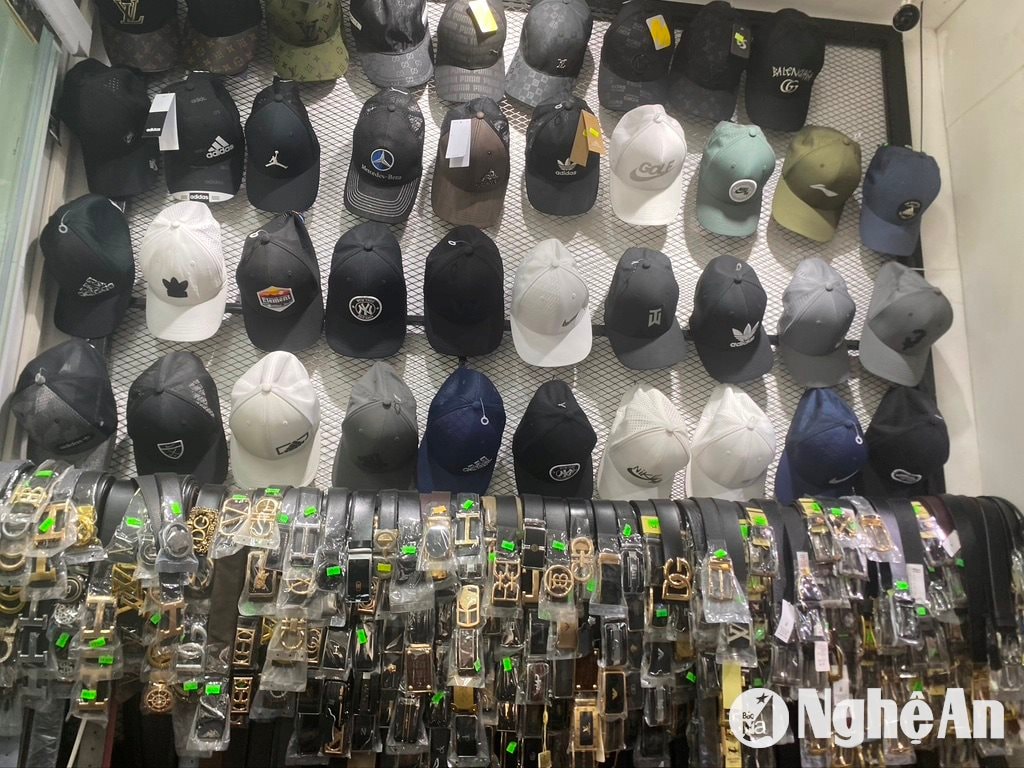
Investigating the reality on the internet reveals that through various websites, individuals often advertise, promote, and provide misleading information about products, offering goods of unknown origin or without invoices. Clothing, shoes, cosmetics, mobile phones, watches, plants, and dietary supplements are among the most commonly sold items.
.jpg)
Many items are being sold at low prices through live streams on Facebook. These vendors often don't provide a business address; customers place orders directly or through private messaging. Some individuals also use e-commerce platforms and social media to openly advertise services such as forging documents; luring people into financial and foreign exchange investments with promises of high interest rates and large profits...
Tighten management
Mr. Nguyen Hong Phong, Deputy Director of the Nghe An Market Management Department, stated: To prevent and deter violations in e-commerce, the Nghe An Market Management Department has implemented various solutions, such as sending leaders of teams and departments, inspectors, and specialists to participate in professional training courses on distinguishing genuine from counterfeit goods; and assigning inspectors with IT skills to search, monitor, evaluate, and compile lists of organizations and individuals engaged in e-commerce activities in the area.
In addition, by monitoring interactions, the number of products listed for sale, best-selling products, favorite shops, delivery rates, and customer feedback, we can estimate the scale and revenue to develop appropriate inspection plans.

The Tax Department also coordinates with relevant agencies such as the Police, Customs, Border Guard, etc., to strengthen inspections, detection, and handling of violations in e-commerce activities for businesses, households, and individuals who do not declare and pay taxes as required. In particular, it strengthens inspection and supervision of livestreaming sales activities.
Strengthen the dissemination of information and guidance to businesses and production and trading establishments to raise awareness of compliance with the law and protect consumers in cyberspace; in particular, strengthen warnings and guidance for consumers through e-commerce.
A representative from the Nghe An Tax Department added: Credit institutions are responsible for coordinating and providing payment information from organizations and individuals engaged in e-commerce and digital platform businesses, as requested by the tax authorities. Online sellers are required to register, publicly disclose, and truthfully and promptly declare identifying information, product origin and quality, and information related to revenue and tax obligations to the competent authorities.
According to experts, to prevent commercial fraud in the e-commerce environment, authorities must tighten the licensing process for online platforms and stores. This will help control product quality, protect the rights of consumers and businesses, and build a healthy e-commerce environment.
From the consumer's perspective, when making transactions on e-commerce platforms, it's advisable to choose reputable businesses and platforms. Purchases must be accompanied by documentation and invoices.
However, in the future, it is predicted that violations in e-commerce will involve more sophisticated and complex methods and tactics. Simply imposing administrative penalties at the current level will not be sufficient to deter and prevent such violations.


