
Difficulties in rural road infrastructure in Nga My
Residents of remote villages in Nga My commune, Tuong Duong border district, have reported that transportation is currently very difficult for their children to get to school, and the sale of agricultural products is also limited. During the rainy season, many children have to stay at school because the roads are slippery, and parents cannot come to pick them up.
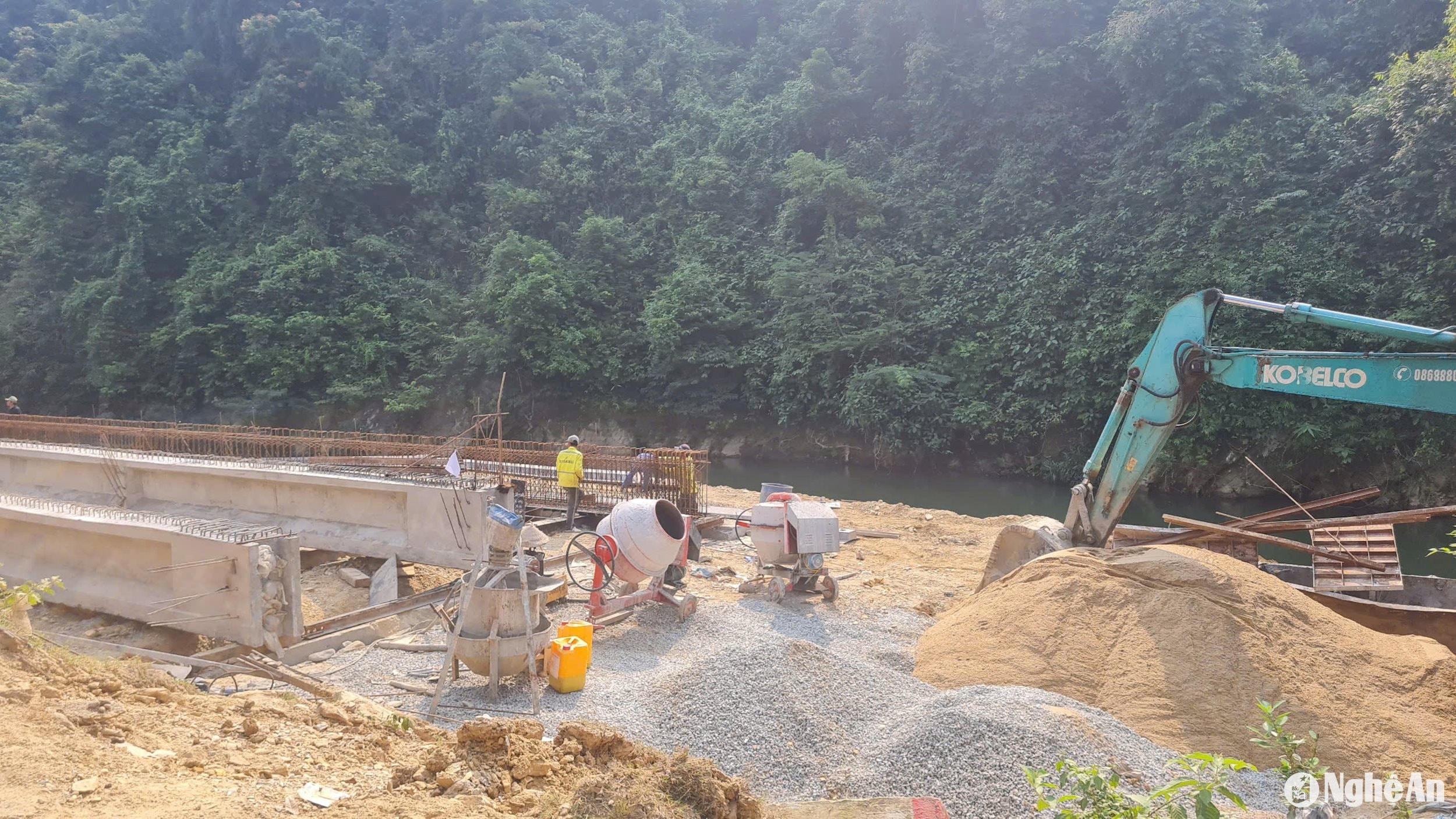
Two weeks after the recent floods, the roads leading to the remote villages of Nga My commune, such as Na Kho, Xop Kho, and Na Ngan, remain muddy. Many sections are covered in mud and standing water, forcing motorbikes to be pushed along. Vehicles carrying materials to Xop Kho village for bridge construction also frequently get stuck in the mud due to the deteriorated road conditions.
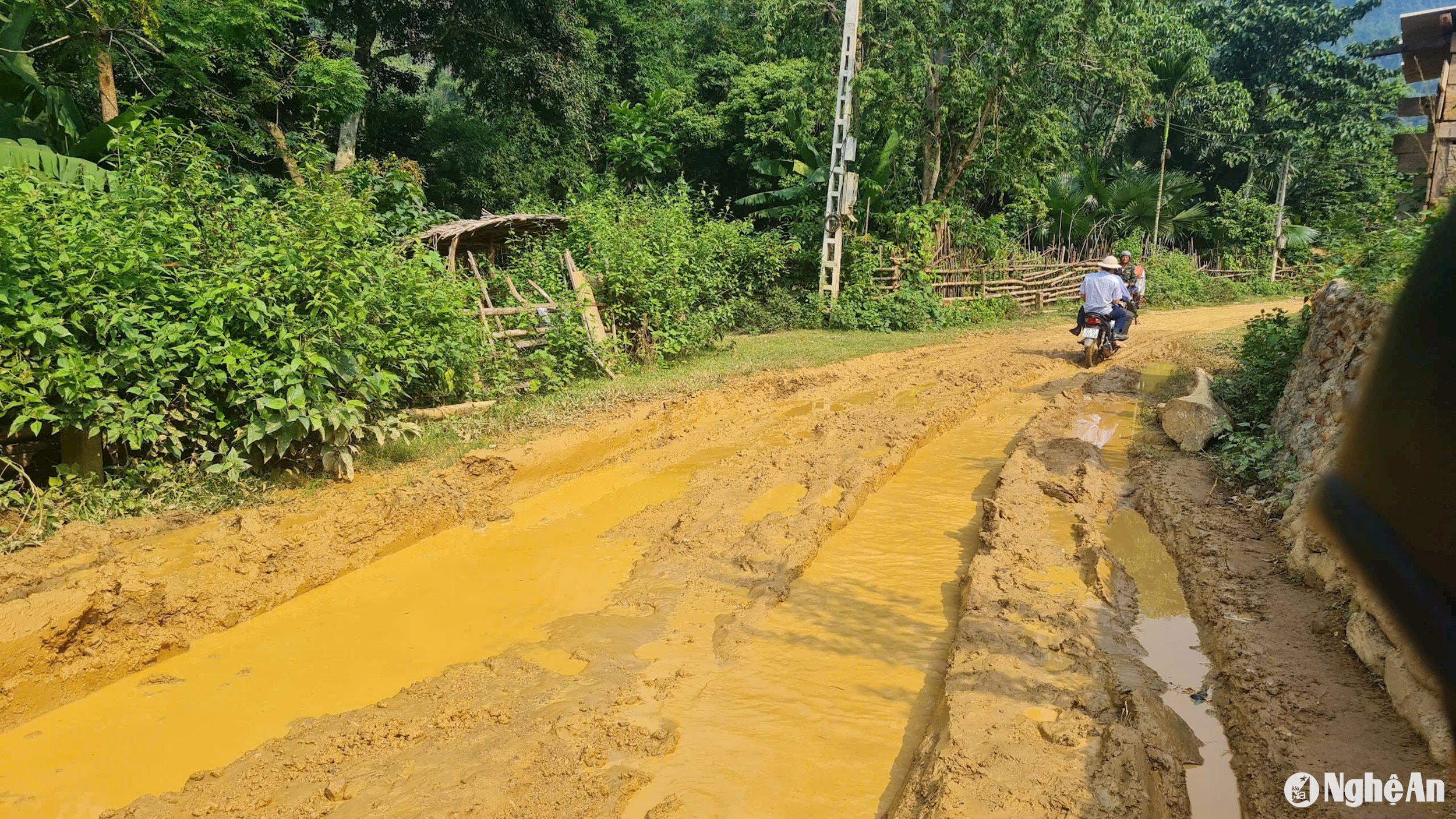
From the center of Nga My commune, to reach Na Kho village, one must pass through Canh, Trang, and Xop Kho villages, traveling over 20 km on a dirt road with many sharp turns and steep slopes. In addition, one must cross the overflows of streams and ravines.
Nga My is an inland commune in Tuong Duong district, located more than 60 km from the district center. The commune has a population of over 1,100 households distributed across 9 villages, divided into two zones: the outer zone and the inner zone. The outer zone comprises 5 villages situated along National Highway 48C, enjoying favorable natural conditions and basic infrastructure. The inner zone consists of 4 villages located in the buffer zone of the Pu Huong Nature Reserve, along the Nam Ngan and Nam Kho streams, including Trang, Canh, Xop Kho, and Na Kho villages.
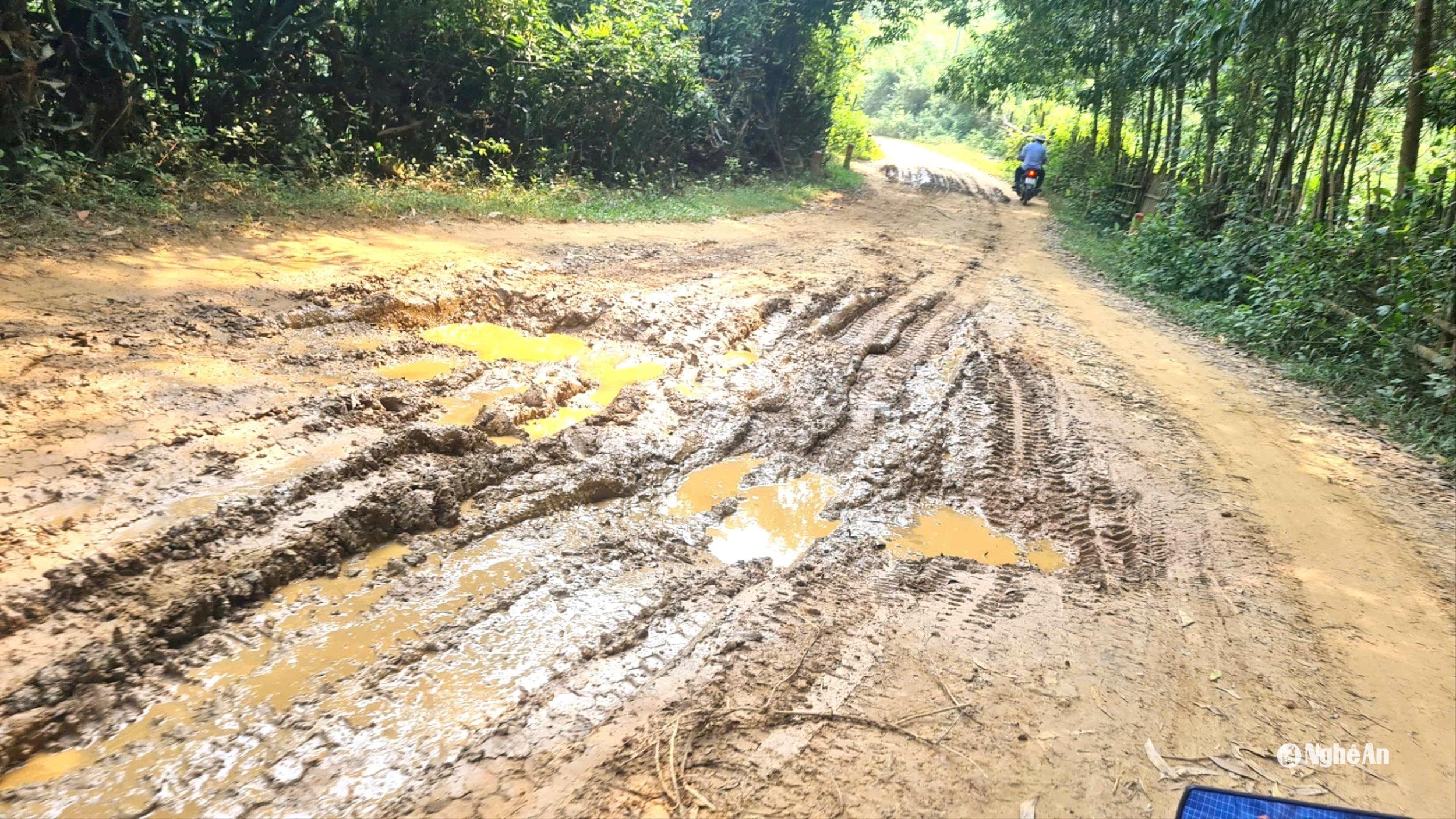
Na Kho village head Lu Van Uon said: “From the village to the center of Nga My commune is about 20 km, the roads are muddy, and the most difficult thing is the children's education. Children from grade 3 onwards go to the commune center to stay and study, and their parents or grandparents only come to pick them up on weekends.”
"The roads are so bad that when it rains, many children have to stay at school or temporarily stay at a relative's house because their parents can't come to pick them up when the motorbikes are impassable. And walking is too far."
The people of Na Kho village mainly rely on farming and livestock raising for their livelihood. Therefore, selling agricultural products is very important. During the harvest season, if the roads become muddy due to rain, most of the produce cannot be sold. "Although traders come to the village to buy acacia trees, corn, rice, medicinal herbs, as well as buffaloes, fish, and even local chickens and ducks, they don't come to buy them when the roads are slippery due to rain," said Lo Van Son, a resident of Na Kho village.
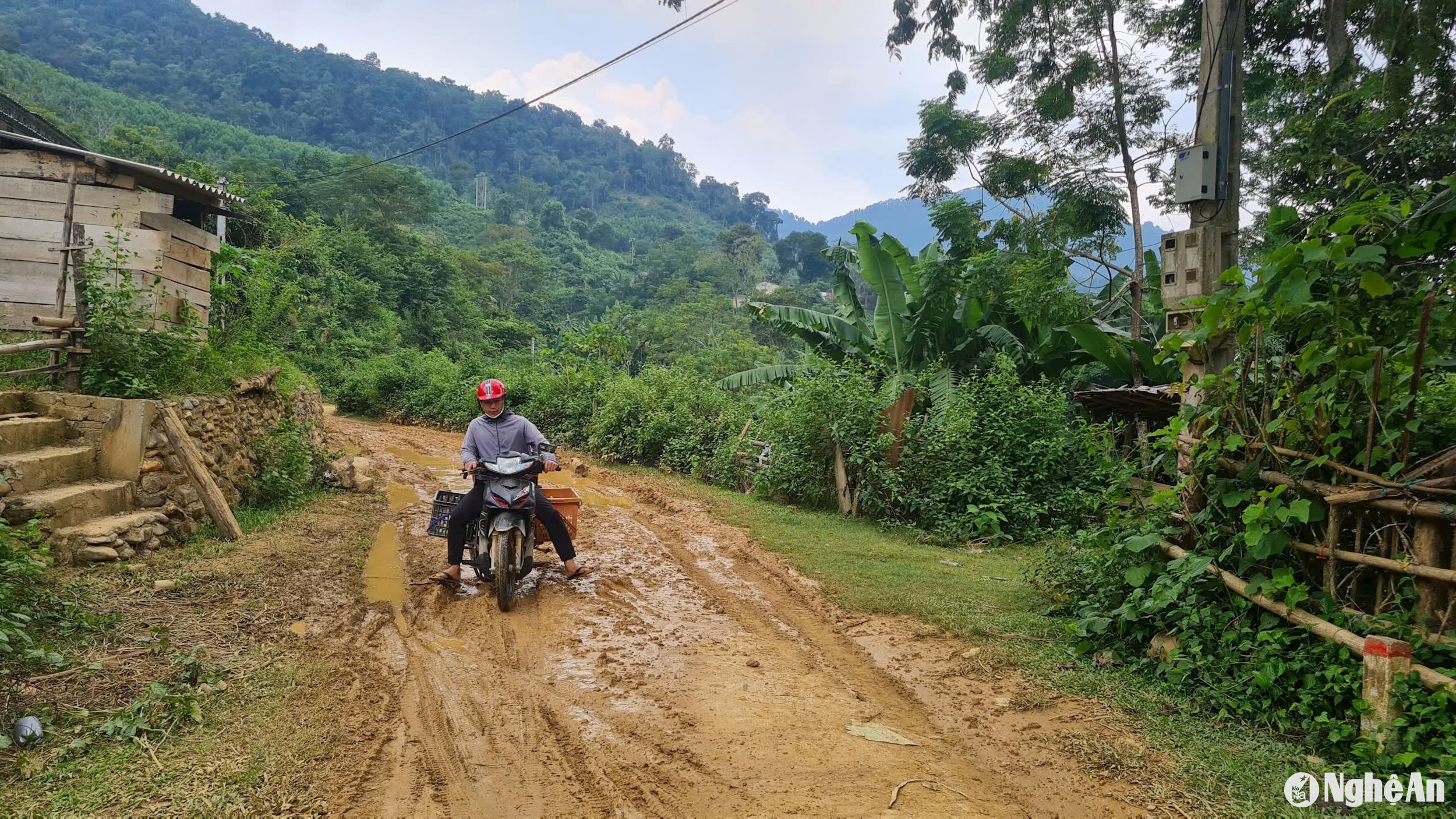
Mr. Kha Van Thu, Vice Chairman of the People's Committee of Nga My commune, said that transportation in the four remote villages is still very difficult. The dirt road system is only passable during the dry season; during the rainy season, they are often isolated due to the high water levels of the Nam Ngan and Nam Kho streams. In particular, half of Xop Kho and Canh villages, and the entirety of Na Kho and Na Ngan villages, are frequently cut off when water levels rise.
.png)
Following the heavy rains and flooding caused by typhoons No. 3 and No. 4, there have been 19 landslides on the roads leading to the villages in the inner areas of the commune. The most severely affected is the road to Na Ngan village, which is over 12 km long and has more than a dozen landslide points.
To date, the leaders of Nga My commune say that transportation to the villages in the inland areas remains a major challenge, compounded by natural disasters and landslides, causing countless difficulties for production, daily life, and the education of children in the area.


