
Preserving and promoting the value of the 'great school' on President Ho Chi Minh.
As part of the series of activities commemorating the 55th anniversary of President Ho Chi Minh's passing, the Ministry of Culture, Sports and Tourism recently organized a seminar on the preservation and promotion of the heritage values of the Ho Chi Minh Presidential Palace Historical Site, with the participation of numerous scientists, cultural researchers, and former staff members of the site.
The event once again affirmed the immense value of this special historical site – a school of exemplary moral conduct, a simple and noble lifestyle, and the dedication of President Ho Chi Minh's life to the country and its people.
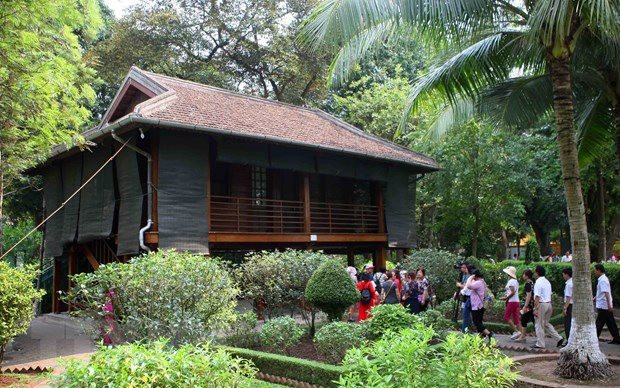
The Ho Chi Minh Memorial Area, within the overall Presidential Palace historical and cultural complex, is where President Ho Chi Minh lived and worked for the last 15 years of his life, from the time he and the resistance government returned to the capital after the victory at Dien Bien Phu (1954) until his death in September 1969. During this 15-year period, in his capacity as Chairman of the Party and President of the country, he, along with the Politburo and the Central Committee, formulated strategies and tactics for the construction of socialism in the North and the struggle for the liberation of the South and the reunification of the country.
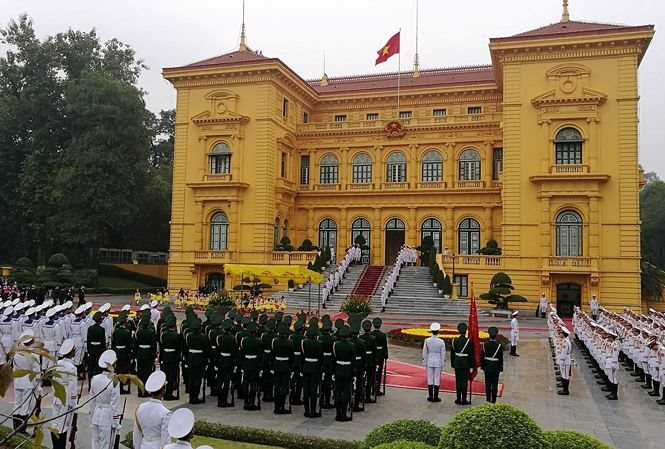
After President Ho Chi Minh's death on September 2, 1969, a complex of historical relics related to him was formed in the Presidential Palace area, including 13 historical buildings (the Presidential Palace, House 54, the Stilt House, the Politburo Meeting Room, House 67, Kitchen A, Kitchen B, the house where President Ho Chi Minh signed decrees, Bunker H66, Bunker D1...); 1,738 documents and artifacts originally belonging to the historical buildings; 7 outdoor relics such as: the fish pond, the Presidential Palace flower trellis, the mango tree path, the walking path, the wooden bridge over the pond… along with 50 historical trees that President Ho Chi Minh brought back to plant or directly cared for.
Despite enduring historical upheavals and fierce wars, the legacy of President Ho Chi Minh's residence and workplace at the Presidential Palace remains meticulously protected, minimizing any impact from nature and human activity, while continuously welcoming domestic and international visitors.
Besides the Mausoleum of President Ho Chi Minh, over the past 55 years, this complex of historical relics has welcomed nearly 90 million visitors from all over the country and from about 160 countries and territories around the world. Among them are many delegations of heads of state and high-ranking guests who have left behind heartfelt impressions of President Ho Chi Minh.
It can be affirmed that the Ho Chi Minh Memorial Complex at the Presidential Palace is one of the most valuable historical sites in many aspects; it is one of the few sites that still retains its original character, a vivid testament to the thoughts and moral example of a leader who dedicated his entire life to the country, the people, and progressive humanity. This place is a significant historical site, a vibrant school for educating generations today and in the future about Ho Chi Minh's ideology, morality, and style.
Therefore, promoting the value of the Ho Chi Minh Presidential Memorial Site is not only about preserving and safeguarding the artifacts associated with President Ho Chi Minh's life and work for future generations, but also about conveying the soul, character, life, and great career of President Ho Chi Minh to domestic and international tourists.
In fact, not only Vietnamese people but also international tourists, whenever they come to Hanoi, along with visiting the Mausoleum of President Ho Chi Minh, always take the time to visit and learn about the places where he lived and worked in his final years. These include House 67, a simple stilt house characteristic of the stilt house architecture of the ethnic minorities in the northern mountainous regions; the "mango tree-lined road with white blossoms swaying in the sunlight"; and President Ho Chi Minh's fish pond, where his image was reflected like a fairy-tale sage after stressful hours working with the Central Committee to devise leadership strategies to quickly liberate the South, unify the country, and reunite North and South Vietnam.
Documents, artifacts, and stories about President Ho Chi Minh's daily life, activities, and work all profoundly reflect his noble character, simple life, closeness to the people, love for the people, and respect for the people. Everyone feels that being around him is like seeing something precious, and the longer one stays, the more deeply one feels his lifelong dedication to serving the country and the people, his desire for their well-being, and his concern for the people before his own.
For every Vietnamese person today, each visit to the Mausoleum of President Ho Chi Minh, touring the place where he lived and worked in his final days, counting the steps up to the stilt house—the place that most vividly marks his life—is understood as the most concrete evidence of the simplicity and humility of a revolutionary leader, a glorious life full of hardship and sacrifice, incredibly noble, pure, and beautiful. For those working to manage the historical sites here, preserving the relics related to President Ho Chi Minh means preserving a monument to his thought, morality, and style. This is the profound spiritual value and significance of the special cultural heritage that he left us.
Spreading the values of the historical site means spreading the noble values of Ho Chi Minh's ethics and style, so that this place deserves to be a school of revolutionary ethics. Along with promoting the publication of publications in many languages around the world to introduce his life and career to a wide audience of people and international friends, researchers believe that it is necessary to continue researching and supplementing the display of documents and artifacts at the historical sites, ensuring the systematic, comprehensive, and synchronized promotion of the value of the historical site, including the former office of Prime Minister Pham Van Dong – his outstanding student and close associate in both work and daily life until the end of his life.
This year marks the 55th anniversary of President Ho Chi Minh's passing, 55 years since the implementation of his Last Will and Testament. Doing a good job of preserving and promoting the value of Ho Chi Minh's legacy, and absorbing the valuable experiences of previous generations, is the way for cultural workers and scientists to continue to better fulfill the task of preserving, protecting, and promoting this special national cultural heritage; so that Ho Chi Minh's thoughts and moral example will spread even more strongly, making a great contribution to the successful achievement of the goal of building a prosperous, strong, democratic, and civilized Vietnam as President Ho Chi Minh always wished.


