
Toxic winds from China - The culprit behind illnesses in many countries?
According to foreign sources, in mid-May, a wind carrying toxic gases from northeastern China blew into Japan, causing an outbreak of a disease called Kawasaki disease.
Is the disease from China?
On average, about 12,000 children in Japan are diagnosed with Kawasaki disease each year. This mysterious illness has remained unexplained for over 40 years, limiting treatment options. The disease causes a rash and swelling of the tongue, along with a high fever. In severe cases, if left untreated, it can lead to arterial swelling, aneurysms, and myocardial infarction, even death. The disease has recently flared up following the discovery of harmful winds blowing from northeastern China. Previously, the disease had also been detected in South Korea and the United States, both affected by similar winds from China, but these outbreaks were relatively brief.
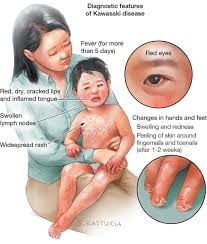 |
| Some symptoms of Kawasaki disease include fever lasting more than 5 days, dry lips, swollen tongue, and swelling of the hands and feet. |
According to research published in the Proceedings of the National Academy of Sciences (PNAS), the culprit behind recent childhood illnesses in Japan was toxic winds from China, but within just two days, the number of hospitalized children decreased as these winds reversed direction. This means it is not a contagious disease that spreads from person to person.
According to Professor Jane Burns, Director of the Kawasaki Disease Research Center at the University of California (USA), it is possible that many other places in the world also have people suffering from this disease, but science has focused on Northeast China, Japan, Hawaii, and the West Coast of North America to find the causative agent. Studies of air samples collected from suspected locations show that Kawasaki disease peaks when toxic winds from a large grain-growing area in Northeast China sweep across. In the study, air samples were taken from aircraft at altitudes above 2km in Japan for analysis. Most of these air samples contained fungi, especially Candida, a member of the yeast family, responsible for many common diseases worldwide. Studies on mice have shown that Candida is associated with coronary artery syndrome, similar to that seen in Kawasaki disease patients.
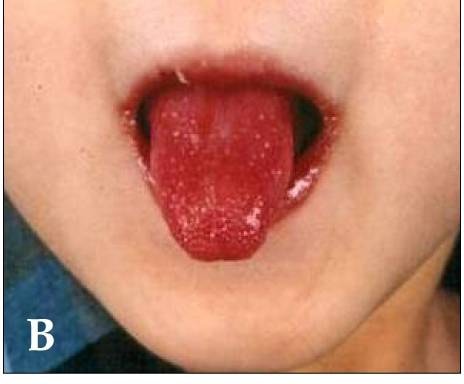 |
| A swollen and red tongue is one of the symptoms of Kawasaki disease. |
Because the disease is carried by wind, and the incubation period is about half a day, scientists also considered the possibility of infection spreading. However, in large cities, most children fell ill on the same day, and the number decreased immediately after the wind changed direction. This suggests that the possibility of transmission between children was ruled out. Based on these analyses, scientists believe that a toxin produced by a fungus living on crops is the culprit, then carried to Japan by the wind. However, the exact cause of Kawasaki disease remains unclear to science.
A brief overview of Kawasaki disease.
Kawasaki disease (KD) is a leading cause of heart disease in children, a disease that has held many mysteries and challenges for the medical field for over 40 years, especially the complication of acute coronary artery vasculitis in children. The causes of Kawasaki disease are still not fully understood, so there is no specific way to prevent or treat it. Because it is not contagious, children do not need to be isolated to avoid contact with infected children.
Kawasaki disease typically affects children between 6 months and 5 years of age. Common symptoms include fever, a red rash with mottled patches, redness, and sometimes appearing on the palms and soles of the feet, which is actually a sign of vasculitis.
Although Kawasaki disease cannot be prevented, it can be treated with gamma globulin, which involves infusing an immune protein (gamma globulin) intravenously to reduce the risk of coronary artery disease. Alternatively, high-dose aspirin can be used to prevent blood clots, and other methods prescribed by a doctor can be employed to prevent complications.
According to suckhoevadoisong


