
Keep the "ruler" straight to maintain discipline and maintain belief.
For inspection and supervision work to be effective, it must first begin with the impartiality, integrity, and honesty of the officials involved. In Nghe An, along with the innovation of inspection and supervision methods towards a proactive approach, from early on and from afar, the requirement for self-improvement among those working in inspection is becoming increasingly evident.
Take proactive steps to prevent violations.
The inspector holds a special "ruler" in their hand; with this ruler, they assess right and wrong, determine responsibility, and recommend disciplinary action for shortcomings and violations by Party organizations and members. Some conclusions directly affect the reputation, honor, and even the career of an official. Therefore, a seemingly simple but thought-provoking question arises: If the ruler is crooked, who will notice? First and foremost, it must be the person holding it.
The "measure" of an inspector is not only regulations, procedures, and legal grounds, but also character, impartiality, integrity, knowledge, experience, and methodology. A lack of impartiality leads to biased judgments; a lack of character can be influenced by relationships, power, or self-interest; a lack of knowledge may result in seeing the phenomenon but not recognizing its essence; and a lack of methodology may lead to incorrect identification of responsibility, extent, and causes. Therefore, the qualities of an inspector are not requirements separate from the job itself, but are an integral part of the quality of the job.
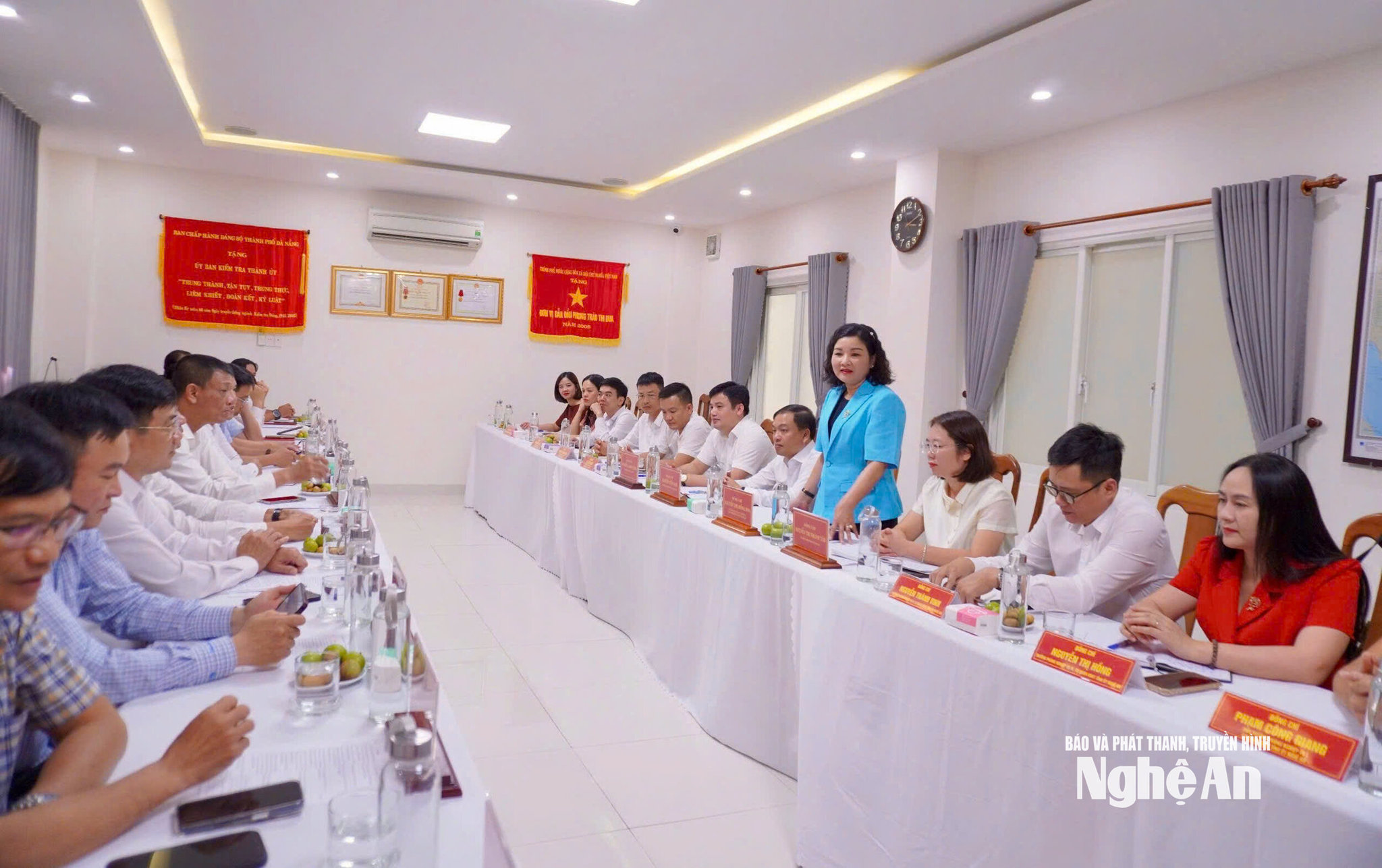
Resolution No. 05-NQ/TW dated April 7, 2026, of the Central Committee on reforming and improving the effectiveness of Party inspection, supervision, and discipline, sets forth the requirement to improve the quality, effectiveness, and efficiency of inspection and supervision work; strengthen control over power; proactively grasp the situation; prevent problems early and from afar; and at the same time, identify and protect positive factors and cadres who dare to think and act for the common good. This requires inspectors not only to have a straight "ruler" but also to be sufficiently qualified and sensitive to identify deviations when they first appear.
One of the notable changes today is that inspection and supervision work is shifting from a "wait until it happens" mindset to proactively monitoring the situation, regularly identifying risks, and promptly correcting them. The value of inspection, therefore, lies not only in detecting and handling violations but also in its ability to prevent violations from occurring.
The practice in Nghe An shows that this method is being implemented more and more clearly. From the beginning of 2026, the Provincial Party Standing Committee organized 14 specialized monitoring teams on key tasks such as implementing the two-tiered local government model, developing science and technology, digital transformation, disaster relief, and implementing key programs and projects; simultaneously, it organized 13 monitoring teams on the implementation of resolutions, action programs, and the development and implementation of Party committee regulations. Following the monitoring, the Provincial Party Standing Committee issued 6 directives to focus leadership, guidance, and address difficulties and obstacles in the implementation process.
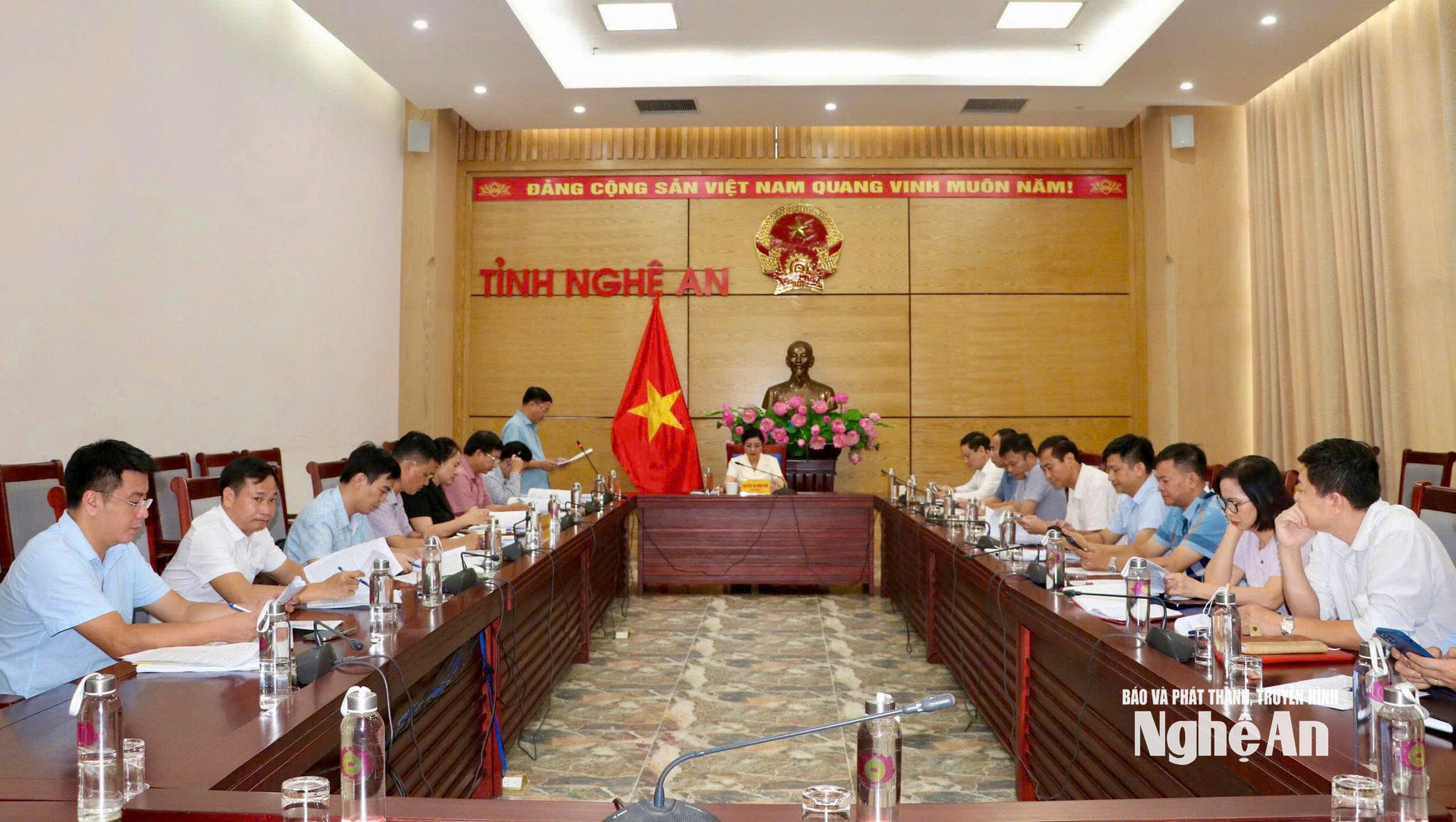
In 2025 and the first nine months of 2026, the Inspection Committees at all levels in Nghe An province conducted inspections when there were signs of violations involving 47 Party organizations and 89 Party members, including 53 Party members who were members of Party committees at various levels; they also inspected the implementation of inspection, supervision, and disciplinary tasks of the Party in 1,698 Party organizations. Disciplinary action was taken against 5 Party organizations and 158 Party members, including 64 Party committee members.
But the numbers regarding inspections and disciplinary actions only reflect a part of the results. More importantly, after the inspections, shortcomings are identified and corrected, risks are warned about, discipline is strictly enforced, and the Party organization functions better.
To do this, inspectors must be able to distinguish between signs and conclusions. A complaint is not a conclusion; an unusual occurrence does not necessarily mean a violation. There are cases that initially seem clear, but when comparing records, timelines, regulations, and hearing from multiple perspectives, the true nature of the situation may differ from the initial assessment. At that point, the most difficult thing is sometimes not reading more documents, but daring to re-examine one's own thinking.

The purpose of an audit is not to prove the auditor was right from the start, but to get as close as possible to the truth, to determine the true nature, responsibility, extent, and cause of the problem. Therefore, auditors must overcome prejudice, emotions, ego, deference, and a reluctance to confront issues. Before asking "who is right, who is wrong?", they should ask: "What else do I not know?"
Impartiality doesn't just mean being "unbiased," but rather viewing an event in its entirety while maintaining principles. Having compassion doesn't mean overlooking mistakes; strictness doesn't equate to generalizations. Inspectors must distinguish between arbitrariness and self-serving behavior; limitations in the process of carrying out a new, difficult task; individual responsibility; and systemic inadequacies that require proposed amendments.
This requirement becomes even more apparent in the implementation of new tasks, new organizational structures, and new management mechanisms. A decision, if detached from the legal context, implementation conditions, and specific authority, can lead to a different perspective. A limitation may stem from subjective factors, but it can also be related to overlapping regulations or objective issues. Therefore, the persuasiveness of an audit conclusion depends not only on correctly citing regulations, but also on the process of verifying documents, placing events in the correct context, individualizing responsibility, and clarifying the root causes.
The inspector must also be inspected.
Inspection and supervision work is linked to the right to review, evaluate, conclude, and recommend disciplinary action against Party organizations and members. If inspection is a tool to control power, then the power of those conducting the inspection must also be controlled. Regulation No. 131-QĐ/TW of the Politburo on controlling power, preventing and combating corruption and negative practices in Party inspection, supervision, and disciplinary enforcement clearly sets out requirements on this matter.
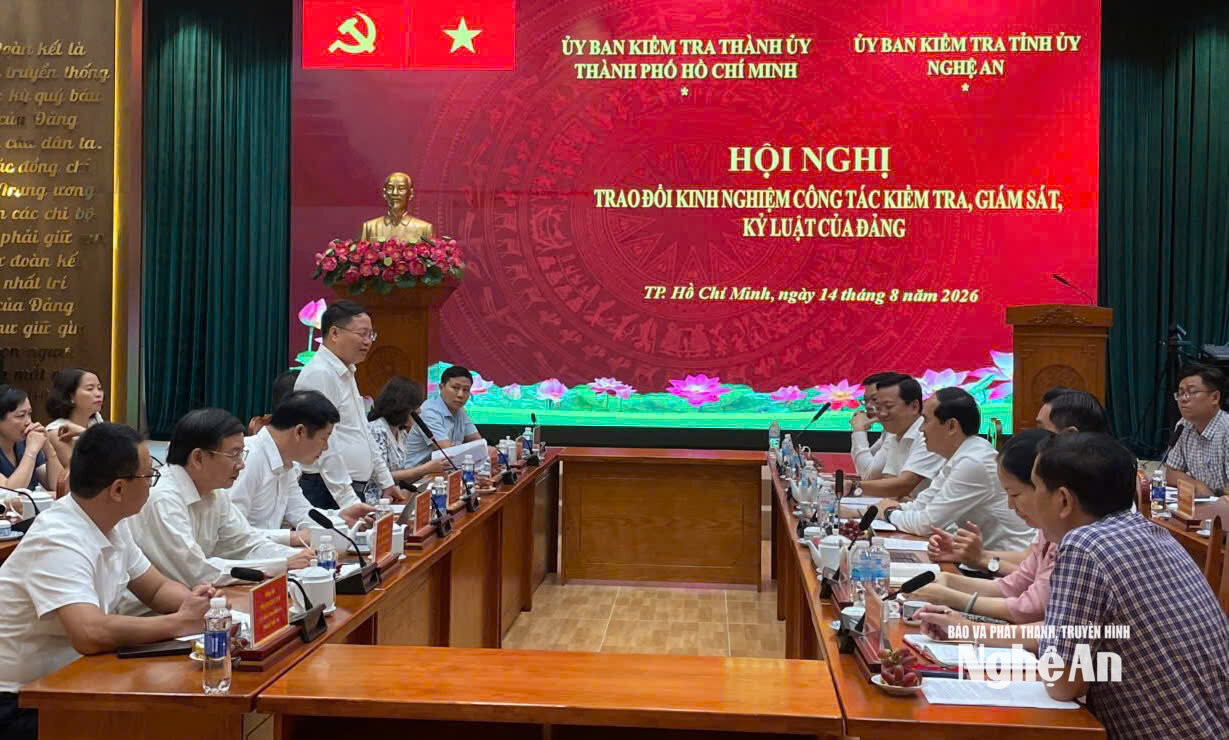
Organizational regulations, procedures, and oversight are necessary safeguards. But there is a layer of control that no regulation can completely replace: self-control from within each employee. This includes professional integrity, knowing how to maintain distance from relationships that could impact work, knowing how to refuse inappropriate influences, and accepting confrontation to protect truth and principles.
An organization that wants to be clean needs people who dare to inspect. But for the inspection process to be truly clean, it needs people who dare to inspect themselves.
In Nghe An, the need to improve the quality of inspection staff is being prioritized alongside the reform of operational methods. The Provincial Party Committee's Inspection Commission is designated as the specialized agency responsible for advising and assisting the Provincial Party Committee, the Standing Committee of the Provincial Party Committee, and the Provincial Party Committee's Inspection Commission in carrying out the tasks of inspection, supervision, and disciplinary enforcement within the Party; simultaneously, it researches and applies information technology and digital transformation in the work of inspection, supervision, and Party discipline.
In 2025 and the first nine months of 2026, the Nghe An Party Inspection Department will coordinate and organize five training courses, both in-person and online, to guide officials and civil servants of the Provincial Party Inspection Committee and the inspection committees of Party committees under the Provincial Party Committee on the management, exploitation, and use of software; four training courses on inspection, supervision, and disciplinary enforcement for 1,250 officials, including standing committee members of Party committees and inspection officers throughout the province; and send 77 inspection officers to participate in basic and advanced professional training courses at the Central Inspection Committee. The training content will focus on inspection and supervision, information gathering, regular monitoring, asset and income control, and digital transformation. This not only enhances knowledge but also demonstrates a shift in the operational mindset of the Party Inspection Department.
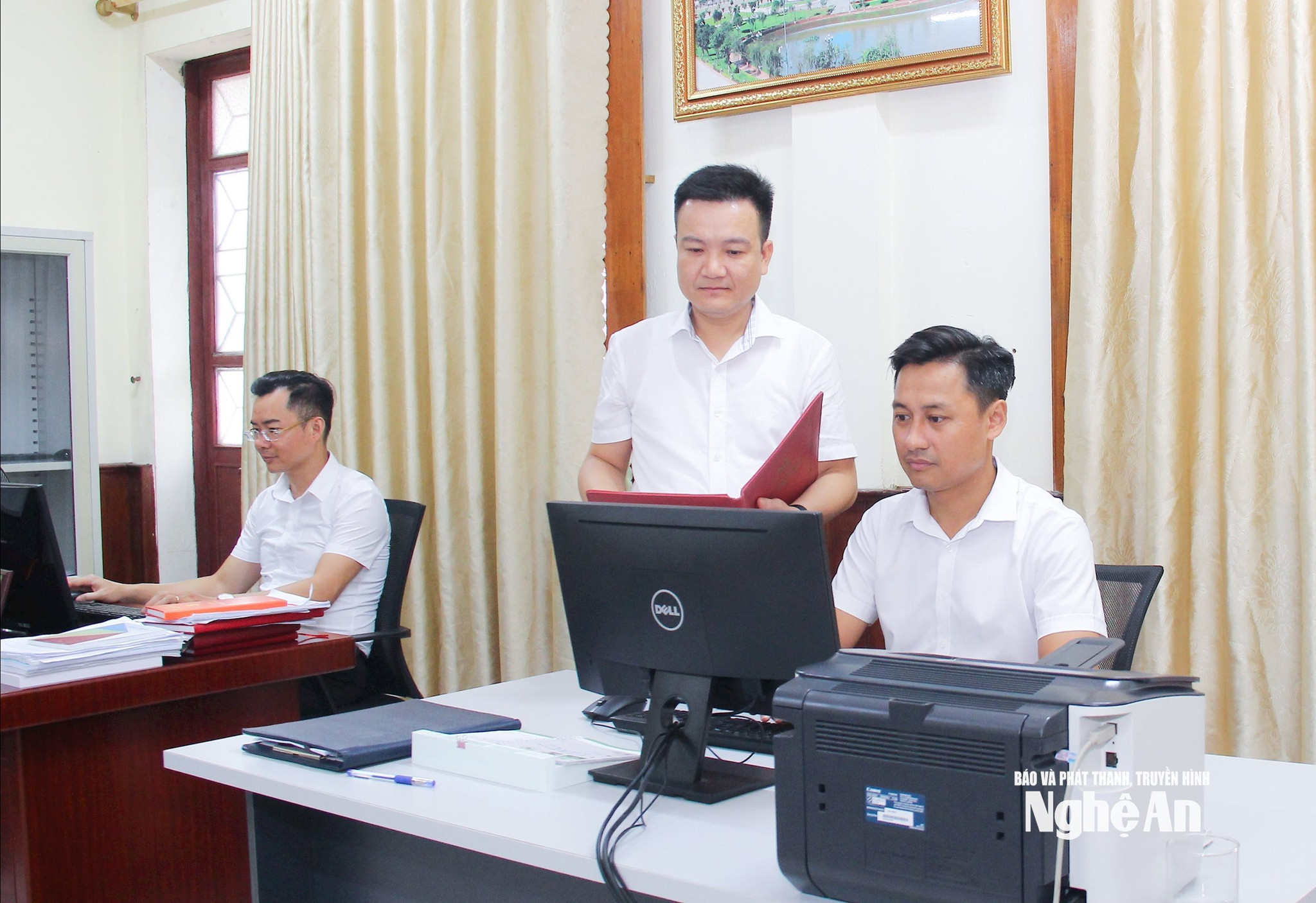
"Data-driven inspection and monitoring" is becoming the new direction. Properly connected and utilized data can help identify consistently delayed tasks, recurring defects, or anomalies that appear over time. Technology can make the "ruler" more precise, but it cannot replace the person holding it. Data can point to anomalies but cannot determine the motives; systems can warn of risks but cannot replace the human factor in considering evidence, circumstances, and principles to reach a conclusion.
Therefore, the more data there is, the more discernment is required. An anomaly does not automatically mean a violation has occurred. Technology can assist in professional work, but it cannot automatically make officials more impartial. That still begins with self-discipline.
Self-improvement is also demonstrated in seemingly small things: the attitude when hearing opinions that contradict one's own; caution regarding a detail that could affect a person's honor or reputation; keeping confidential information that has not yet been released; or rereading a file because there is still a point of uncertainty. These things may not appear in the report, but they contribute to determining whether a conclusion is trustworthy or not.
Each inspection brings to a close the files. But behind it lies the reputation of a Party organization, the honor and career of an official, a shortcoming that is promptly corrected, or a violation that must be dealt with severely. Therefore, the effectiveness of inspection work cannot be measured solely by the number of inspections or the number of cases processed. Some inspections are valuable because they uncover violations; others are even more valuable because they prevent a shortcoming from becoming a violation. Some conclusions are necessary to uphold discipline, but others are essential to affirm that a complaint is unfounded, to protect the person being complained about, and to uphold what is right.
In the process of Party building and rectification, the requirement to strictly maintain discipline always goes hand in hand with the requirement to protect what is right and encourage cadres to dare to think and act for the common good. To achieve this, inspection cadres must have sufficient courage to avoid favoritism and avoidance, but also to avoid prejudice; to be resolute in dealing with wrongdoings but not extreme in dealing with people; and to strictly uphold principles while fully understanding the circumstances and realities.
Ultimately, the question for inspectors remains: "Is the ruler I'm holding truly straight?" Straight in the face of relationships, interests, pressures, and even my own biases. But being straight isn't enough; that ruler must also be accurate in its knowledge, solid in its professional skills, and closely aligned with reality.
Because inspectors are not only responsible for what they discover, but also for fairness in their assessment of individuals, organizations, and events. Therefore, cultivating a straight "ruler" is not only a requirement of professional ethics. It is also a way to control power from within, protecting the integrity of Party discipline through the honesty of those enforcing it. To scrutinize others, one must first examine oneself; to maintain discipline, one must first maintain self-control. And for the ruler to accurately measure people's hearts, it must first be straight in the hands of the person holding it.


