
Tourism infrastructure: Identifying key areas for investment.
(Baonghean) - The policy of developing tourism into a key economic sector was directed by the Politburo through the issuance of Resolution No. 08-NQ/TW dated January 16, 2017. This has had a positive impact, encouraging localities in the province to increase investment in infrastructure for this sector. Along with budget allocation, the mobilization of social resources has been emphasized.
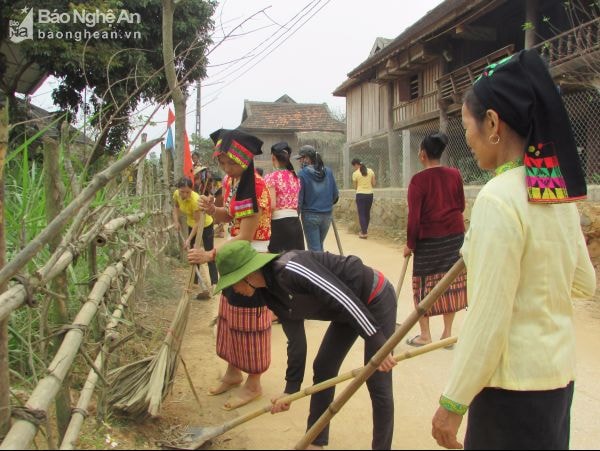 |
| Residents of Khe Ran village (Bong Khe - Con Cuong) mobilized to clean up the area on the weekend to welcome tourists. Photo: Tuong Vi |
Recognizing tourism as a key driver of growth, localities throughout the province have prioritized investment in tourism infrastructure through integrated solutions that combine budget allocation with attracting resources from businesses and households. Besides the well-planned investment in Cua Lo coastal town with the active participation of the State, businesses, and households, several other localities have also prioritized tourism development.
Yen Thanh district, known for its rice production, has identified nine tourism projects to be developed during the 2016-2020 period, with a total investment of 350 billion VND from businesses and the state budget, primarily from private enterprises. Notably, the Ve Vung Dam Eco-tourism Complex in Dong Thanh commune has received a memorandum of investment of over 200 billion VND from Bac A Group. These nine tourism projects in Yen Thanh district are linked to eco-spiritual tourism, connecting with 522 historical sites, temples, pagodas, Truc Lam Zen monasteries, and attractive scenic spots. Therefore, investment in infrastructure is crucial for the restoration, construction, and preservation of these structures, architecture, and accommodation areas. Furthermore, the district aims to develop homestay models, focusing on sustainable craft villages, farms, and family farms.
Dien Chau District is also emerging with a model that integrates coastal resort tourism with ecotourism in the midland region. Along the coast, hotels and guesthouses are being built by businesses and households in communes such as Dien Trung, Dien Thanh, Dien Hong, Dien Yen, Dien Hai, etc., with 12 hotels and 49 guesthouses totaling over 1,200 rooms; and more than 200 restaurants. Meanwhile, in Dien Lam commune, the Muong Thanh Safari tourist area is identified as the largest ecotourism area in Central Vietnam with an investment of over 2,500 billion VND (currently over 600 billion VND has been invested). Dien Chau is also developing tours and routes connecting key tourist destinations such as Nam Dan, Thanh Chuong, Cua Lo, or with ecotourism experiences in Con Cuong district and other mountainous districts.
To develop tourism into a key economic sector, Con Cuong district has identified key investment areas, integrating them with investment capital from domestic and foreign businesses. The district's strengths lie in tourism development that allows visitors to explore beautiful, pristine natural landscapes such as Khe Kem Waterfall, Khe Nuoc Moc Stream, Pha Lai Dam, Giang River boat tours, or discover the primeval forests with their rich flora and fauna in Pu Mat National Park. Additionally, it aims to bring tourists to local villages, allowing them to experience life with ethnic minorities through visits to traditional weaving villages, traditional rice wine making, and enjoying unique local cuisine with various local products.
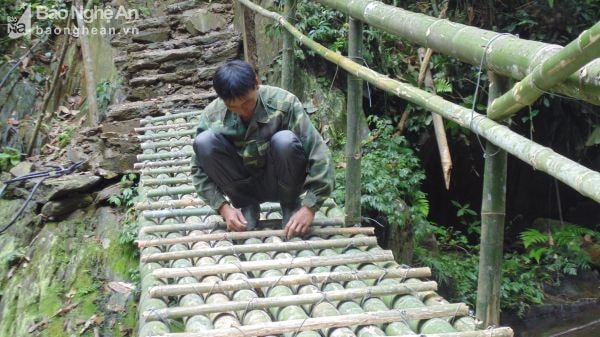 |
| Building a bridge to serve tourists in Pu Mat National Park. Photo: Ba Hau |
Ms. Kha Thi Tim, Vice Chairman of the People's Committee of Con Cuong District, added: To serve the development of tourism and attract investment in this field, the district is promoting the upgrading and expansion of transportation routes from the town to Mon Son - Pha Lai, Khe Kem waterfall, and Yen Thanh brocade weaving village. Currently, the district is opening a road from the center of Mon Son commune to Khe Khang, and at the same time building branch roads from the main road to ecological tourist destinations and historical sites, constructing 22 signposts to ecological tourist destinations, historical sites, and scenic spots in the district, and expanding mobile phone coverage to serve tourists. The district is also investing in building changing rooms, mobile toilets, and equipping additional life-saving equipment at tourist sites...
Specifically at the Nưa village community tourism site in Yên Khê commune, JICA (Japan International Cooperation Agency) invested in building three toilets and showers to serve tourists. In addition, the local people were encouraged to preserve and beautify the traditional stilt houses in Khe Rạn village to serve tourists. Along with government funding, many businesses and households actively participated in building shops and purchasing motorboats to serve tourists; these boats have been registered and numbered, and the boat owners have valid driving licenses.
Returning to nature is a trend that tourists seek to experience. This also presents an opportunity for the midland and mountainous districts of Nghe An province to unlock their tourism potential, gradually improving the income and living standards of their people. To promote tourism, in addition to raising awareness and improving tourism skills among the people, investment in transportation infrastructure, accommodation facilities, and services plays a decisive role. These areas require significant investment, while local and provincial budgets are limited and spread across many sectors, making the mobilization of capital from businesses a crucial factor.
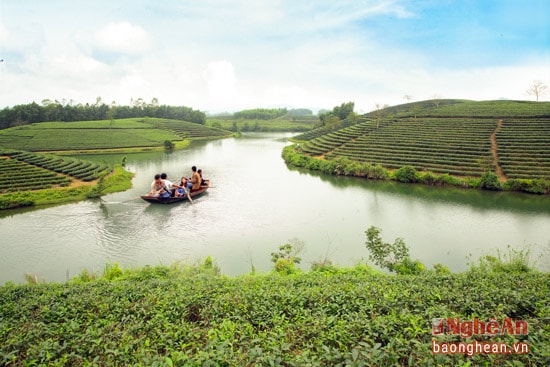 |
| Tourists visiting Thanh Chuong tea island. (Photo: Archival image) |
Investment models such as those of Muong Thanh Group in various locations, Vingroup (Cua Hoi), Bac A (Yen Thanh and other areas), Song Ngu Son (Cua Lo), Cienco 4 (Thanh Chuong tea island)... in building tourism infrastructure in localities of the province are a positive direction.
Due to budgetary constraints and difficulties in attracting resources, many districts such as Ky Son, Tuong Duong, Que Phong, and Quy Chau... have recognized the role of tourism but have been unable to invest in developing tourist destinations. During discussions, Mr. Nguyen Manh Cuong, Director of the Department of Tourism, shared: “Nghe An has enormous tourism potential, but investment in infrastructure to connect destinations, as well as resort and culinary services, has not kept pace with the needs of tourists. While many localities are experiencing rapid tourism development, it is necessary to identify key areas to effectively integrate investment resources, thereby spreading the benefits widely...”
| In 2017, Nghe An's tourism industry set a target of welcoming and serving 5 million tourists, including 3.6 million overnight visitors; and increasing tourism service revenue by 14-16% compared to 2016. |
Nguyen Son
| RELATED NEWS |
|---|


