
Dozens of workers in Nghe An province who suffered from pneumoconiosis have received compensation.
More than a month after Nghe An Newspaper reported on the issue, Chau Tien Co., Ltd. has paid compensation to 21 workers who suffered from pneumoconiosis while working at the company.
On January 25th, a representative from the Department of Labor, War Invalids and Social Affairs stated thatChau Tien Company Limited(located in Nam Cam Industrial Zone, Nghi Long, Nghi Loc), has just completed the payment process.Compensation was provided to 21 workers who contracted occupational diseases, totaling nearly 1.4 billion VND.
These 21 people are on the list.22 casesThey were diagnosed with pneumoconiosis while still working at the company. In one particular case, the individual did not undergo a medical examination for occupational disease and therefore was not eligible for compensation.

Additionally, on January 24th, Chau Tien Co., Ltd. also provided support and paid for other medical expenses and occupational disease treatment for 28 other cases, totaling 365 million VND. Accordingly, those who still possessed invoices and documents received 100% support, while those without documents or with invalid occupational disease examination and treatment documents only received 50%.
In March 2024, Chau Tien Co., Ltd. paid compensation to the relatives of workers who died from occupational silicosis. Specifically, the company paid compensation to the relatives of the deceased workers: Tran Huu Quang, Tran Trong Thi, Pham Quang Son, Tran Ngoc Hoa, and Hoang Van Son (all residing in Nghi Loc district) with a total amount of over 560 million VND.
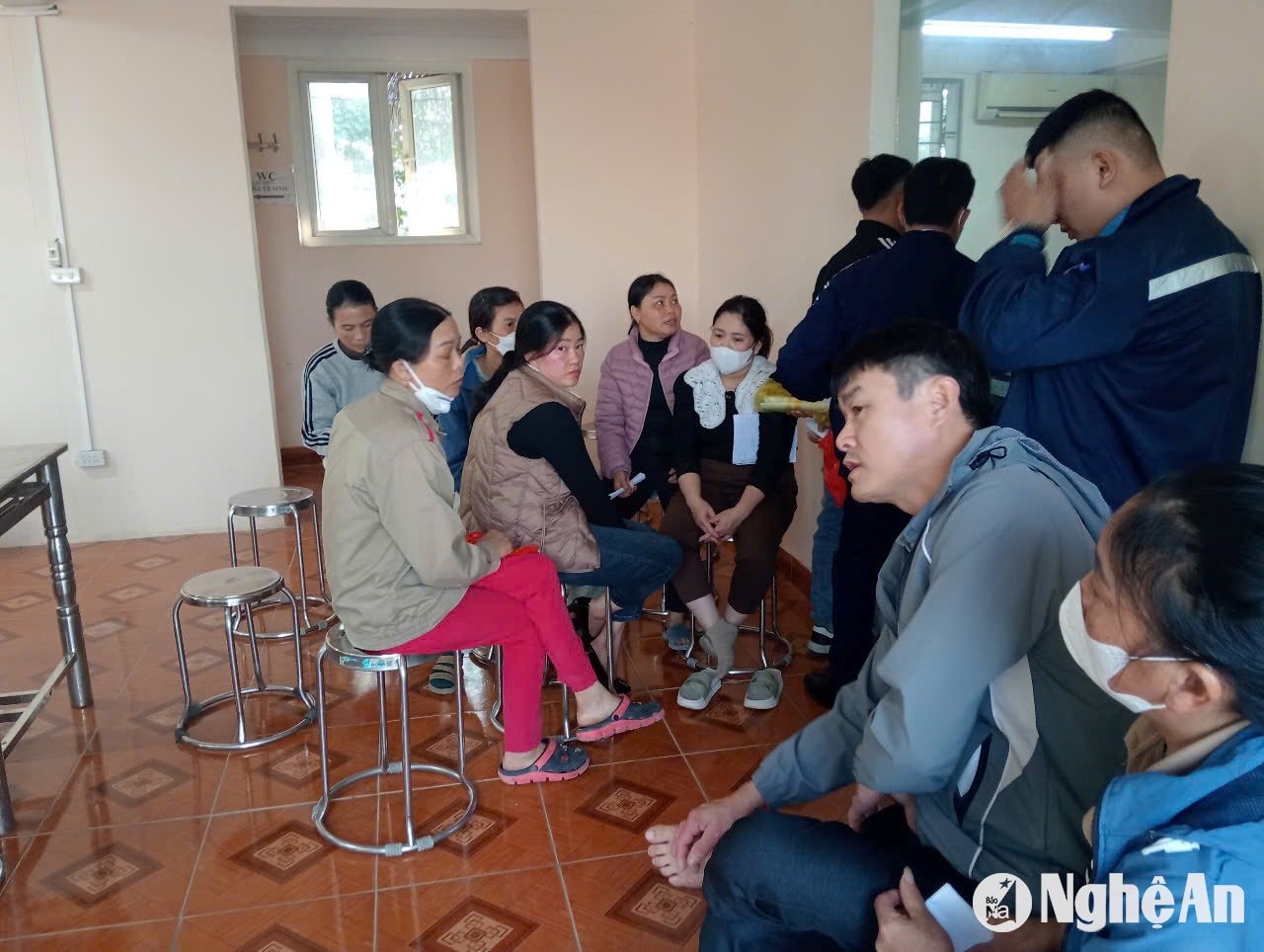
According to our investigation, out of more than 110 people who worked at Chau Tien Company between 2017 and 2023 and underwent medical examinations, 71 were diagnosed with occupational pneumoconiosis. However, to date, only 67 have been examined for reduced work capacity. Four people have yet to go to the assessment center for examination despite receiving invitations.
Of these, only 22 were identified as having occupational diseases before leaving Chau Tien Co., Ltd.; 45 were identified as having occupational diseases after they had left their jobs.
Regarding these 45 individuals, a representative from the Department of Labor, War Invalids and Social Affairs stated that the Law on Occupational Safety and Health and Circular No. 28/2021/TT-BLDTBXH dated December 28, 2021, issued by the Minister of Labor, War Invalids and Social Affairs, which details and guides some provisions of the Law on Occupational Safety and Health regarding the regime for workers suffering from occupational accidents and diseases, do not stipulate the employer's responsibility for compensation. Therefore, on July 29th, the department sent a letter requesting guidance from the Ministry of Labor, War Invalids and Social Affairs. “On August 23, 2024, the Department of Occupational Safety (Ministry of Labor, War Invalids and Social Affairs) responded with a letter. However, the letter only briefly stated that it requested compliance with the law,” the representative said.
"For workers at Chau Tien Co., Ltd. who were diagnosed with occupational diseases after leaving their jobs, there are no regulations regarding the employer's responsibility. Therefore, we face significant difficulties in demanding that the employer be held responsible for compensation, allowances, medical expenses, and costs of disability assessment. This is very unfair to some workers," added a representative from the Department of Labor, War Invalids and Social Affairs.

Meanwhile, many of the 45 workers on this list disagree with this view. “We saw a series of workers who used to work here die, so everyone was scared. That’s why we quit so we could get ourselves checked out because we felt our health was deteriorating. For many years while we worked there, the company didn’t organize occupational disease screenings for its workers. If we kept working there and waited for the company to conduct these screenings, who knows when that would happen. It’s the company’s fault, not ours,” said one worker who contracted an occupational disease after quitting.
Similarly, another person argued that if Chau Tien Co., Ltd. had followed regulations and regularly conducted occupational disease screenings for its workers, many workers would not have quit their jobs to seek medical attention on their own. “Even though we only discovered we had occupational diseases after we quit, if we hadn't worked there, we wouldn't have contracted them. If the company had complied with the law, we wouldn't have suffered from this terrible disease. Saying there will be no compensation now is incorrect,” this person said.


