
The journey to capture the "black wolf" of the drug trade.
(Baonghean)Through intelligence gathering, from the very beginning of 2012, the anti-drug trafficking force of the Nghe An Border Guard discovered many signs of drug trafficking activities from Laos into Nghe An via two routes: Firstly, transporting drugs through Thanh Thuy Border Gate, which only involved 2-3 trips per month because the number of people passing through this border gate was low, making it easy to attract attention; secondly, transporting drugs through the two flanks of Cau Treo Border Gate in Ha Tinh, then traveling along the Ho Chi Minh Highway towards Thanh Thuy - Nghe An.
Typically, when heavily targeted and pursued on National Highway 8, they shift their transportation routes to the Ho Chi Minh – Thanh Thuy route. According to investigators, since 2010, this has been the main route for several drug trafficking rings involving ethnic Hmong individuals from Nghe An who have migrated to Laos. The drugs transported are primarily heroin and methamphetamine in large quantities. Members of these rings minimize the disclosure of their identities and connections, sometimes changing their full names, addresses, etc., and frequently use slang in their transactions.
To detect and dismantle this drug trafficking ring, the anti-drug trafficking investigators of the Nghe An Border Guard Command regularly monitored key areas to carry out operational measures. After a period of diligent construction, a secret network was established by the investigators in key areas both inland and inland. The profiles of the individuals involved in the drug trafficking rings began to emerge. The investigators discovered T - a Laotian "kingpin" in Lac Xao town, Bolikhamsai province (Laos) - who regularly organized the transportation of drugs from there to Vietnam via the Cau Treo International Border Gate (Ha Tinh) and Thanh Thuy Border Gate (Nghe An). Each trip typically involved transporting 10-20 pairs of heroin. T was the official "dealer" of a "godfather" in Vientiane (Laos).
Recognizing this as a large-scale drug trafficking ring employing highly sophisticated and cunning methods, involving two neighboring provinces and the border between two countries, the Nghe An Border Guard Command decided to establish a special investigation case, code-named 313L, to dismantle it. Using professional investigative techniques, the special investigation team gained a relatively clear understanding of the ring's internal workings and main methods. After the drugs were obtained from the Golden Triangle area, they were packed into containers and transported to Lac Xao.
Here, drugs are smuggled through the forest and carried across the border. After the transporters successfully carry the goods across the border, another group acts as the buyer, receiving the goods and delivering them to the buyer. The delivery location is not predetermined but is determined by phone call. The buyer then travels by car or motorbike along the Ho Chi Minh Trail, contacts the person guarding the goods, and quickly leaves the scene after the money is exchanged. Using this method, the perpetrators have successfully transported large quantities of drugs into Vietnam for sale.
Thus, the methods and tactics of the suspects operating across the border have been essentially clarified by the investigators. The challenge now is to sever this dangerous "octopus tentacle," while simultaneously continuing to investigate and promptly apprehend the suspects within Vietnam. The special task force developed a meticulous plan to crack the case, with the guiding principle being close surveillance, thorough investigation, accurate detection, and timely deployment to "cut off the transportation link" and arrest the suspects within the country. To meet the requirement of tightly controlling the suspects and solving the case, the Anti-Drug Trafficking Department (Border Guard Command) reinforced the Border Guard's anti-drug trafficking force in the province with technical intelligence. All the suspects' phone numbers were placed under 24/7 surveillance. The task force was ordered to be ready to deploy at any time.
The reconnaissance teams successively reported on the activities of the suspects. The opportunity to crack the case arose when both the reconnaissance and technical teams reported that the suspects were preparing a large shipment, scheduled for delivery on July 18, 2012. The task forces were immediately deployed, and the Ho Chi Minh Highway from the Cau Treo border gate towards Thanh Thuy was secretly and tightly controlled. At exactly 10:30 PM on July 18, 2012, the target appeared on the Ho Chi Minh Highway in the border area of Thanh Thuy commune, Thanh Chuong district. The arrest warrant was issued, and the reconnaissance teams of the Anti-Drug Trafficking Department, the Anti-Drug Trafficking Bureau, and the Thanh Thuy Border Guard Post simultaneously approached and apprehended Mua Ba Tu on the spot, along with the seized evidence: 22 blocks of heroin and 12,000 synthetic drug pills that were being transported.
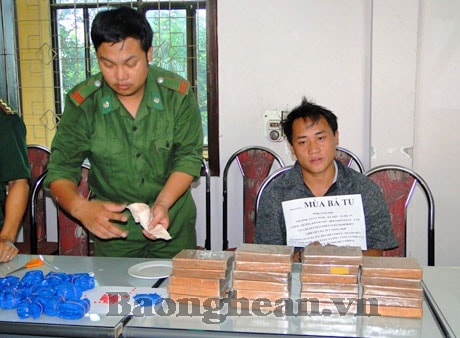
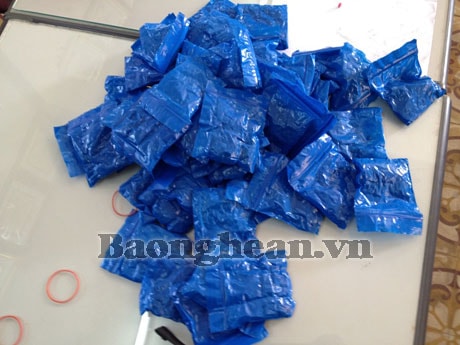
The suspect Tu and the seized evidence were confiscated in case 313L.
Mùa Bá Tu was originally from Na Ngoi commune, Kỳ Sơn district. In 2002, after marrying a Laotian woman, Tu left his hometown and migrated to Lạc Xao town, Khăm Cợt district, Bolikhamsai province, where he joined the drug trafficking ring of "kingpin" T. Tu quickly became a valuable assistant to this "kingpin," nicknamed "Black Wolf," because in addition to his agility and recklessness, Tu also had the advantage of speaking Vietnamese and being familiar with the Nghệ An area. In this shipment, after receiving instructions from the "kingpin" in Lạc Xao town, Tu used a travel permit to enter Vietnam through the border gate and then rode a motorbike to receive the goods transported from Laos via the forest by his accomplices, delivering them to Vietnamese customers.
Thus, after many months, Project 313L concluded successfully; a crucial link was apprehended, providing a basis for authorities to continue investigating related drug traffickers domestically. Project 313L was a large-scale operation involving the coordinated efforts of the Anti-Drug Trafficking Department and the Nghe An Border Guard to combat the "kingpins" leading illegal drug trafficking and transportation networks from Laos across the Nghe An and Ha Tinh borders into the interior. The success of the project is the result of the perseverance and resolute spirit of the Anti-Drug Trafficking Department and the Nghe An Border Guard in attacking drug criminals right from their strongholds across the border.
Le Thach


