
The journey is not simple.
(Baonghean.vn) - Last week, when the revenue collection figures for Nghe An province in particular, and provinces in the North Central region in general, appeared in the media, a segment of netizens immediately reacted strongly. This can be seen as a positive sign, as many people are increasingly paying more attention to fundamental issues facing their province.
Alongside critical comments, there were also many suggestions and proposals. While they might be simple, rough, fragmented, or impractical, all contributions are valuable. It's easy to see that regardless of the emotional state, perspective, or manner of expression, what underlies it all is a burning desire for the development of their homeland.
It can be affirmed thatBuilding Nghe An into a prosperous province in the future.This is a legitimate and beautiful aspiration of the "people's will," and it seems to coincide with what the "Party's will" has been and is striving for.
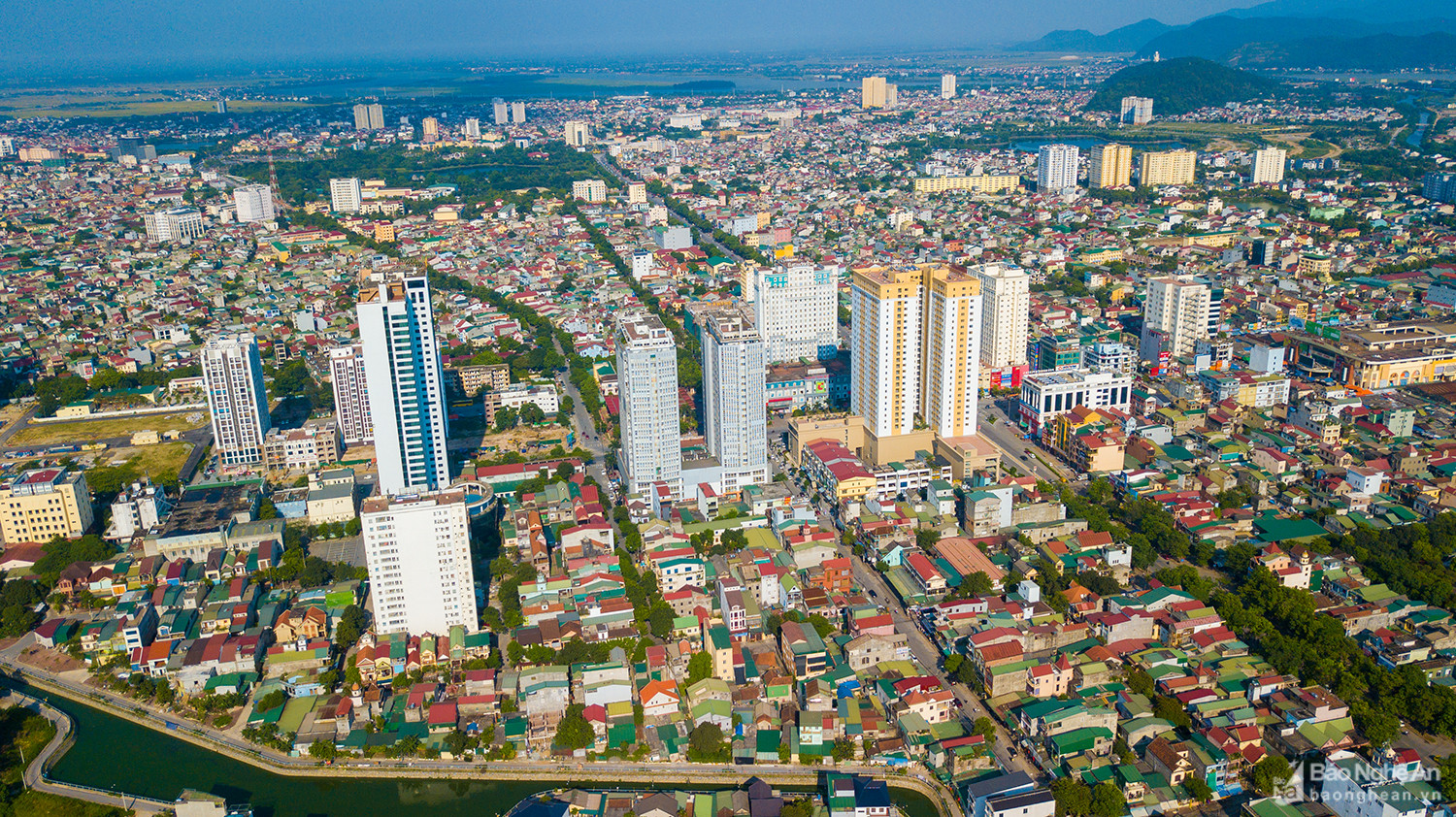 |
Panoramic view of Vinh city. Photo: Le Thang |
"Nghe An becoming a prosperous province" was a wish of President Ho Chi Minh during his lifetime, and also the aspiration of the entire nation. Before sitting down to write, I searched online for the keyword phrase "Nghe An becoming a prosperous province" and received 1,246,620 results. These included statements from leaders and experts from many years ago, even from many... terms. This, to some extent, shows that the title of "prosperous province" was once a desire and remains one today.
In common understanding, "fair" is above average, while "best" must be a level higher. Therefore, when President Ho Chi Minh said, "Nghe An has become one of the best provinces in the North," he likely meant the province to be among the top performers. Based on this reasoning, we can tentatively divide the process into three stages: the first is "escaping poverty," the second is "fair," and the third is reaching "best." Clearly, this cannot be a simple journey.
First, let me ask: how far have we progressed? Where does Nghe An stand on the socio-economic map of the "Northern region"? No one is waiting for us, and in recent years we haven't been stagnant. Evidence of this is the 1.44-fold increase in economic size and the 1.57-fold increase in per capita GRDP.
To be fair, in recent decades Nghe An province has made significant progress in all areas. The average economic growth rate in the 5 years from 2006 to 2010 reached 9.75%. The average growth rate in the period from 2011 to 2015 reached 7.89%. The growth rate in the period from 2015 to 2018 was approximately 8% per year. In 2019 alone (before the pandemic), GRDP growth reached 9.03%; GRDP per capita reached 43.08 million VND.
Thus, over the past 15 years, Nghe An's economy has consistently experienced significant growth, exceeding the national average. In particular, the economic structure has shifted positively, with the proportion of industry, construction, and services increasing from 77.62% in 2018 to 78.64% in 2019; while the proportion of agriculture, forestry, and fisheries decreased from 22.38% in 2018 to 21.36% in 2019. (Due to the impact of the pandemic, the author has refrained from using data from 2020 and 2021 for illustration purposes).
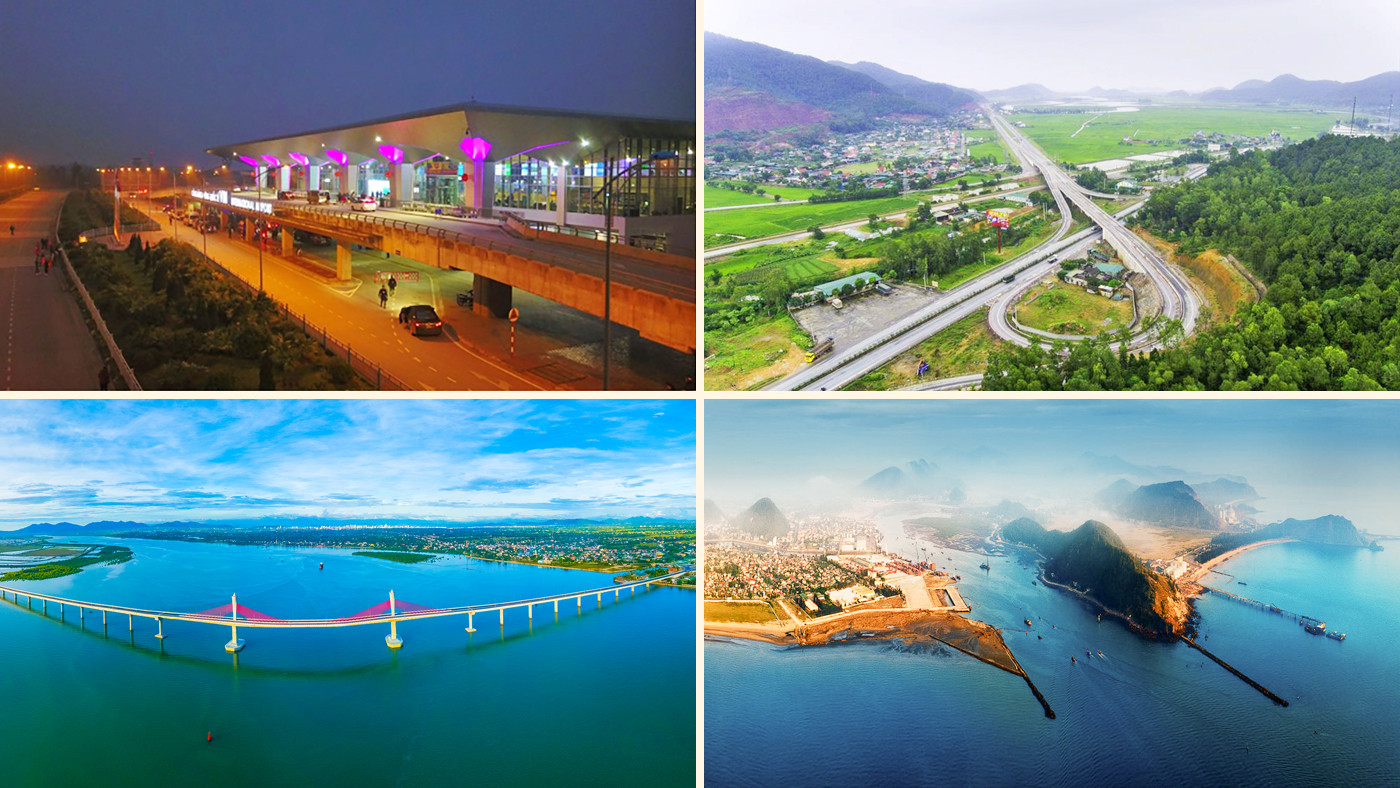 |
Nghe An province is accelerating the process of developing its provincial planning for the period 2021-2030, with a vision to 2050. (Photo credit: Sach Nguyen - Thanh Cuong - Le Thang) |
One of the figures causing a stir online is that in 2021, Nghe An ranked fourth in car purchases (only behind Hanoi, Ho Chi Minh City, and Hai Phong). The urban landscape is changing daily. Nighttime economy (pedestrian streets), once a foreign term, has suddenly become familiar. Nghe An remains a reputable province in the field of education through national and international examinations. Security and defense are maintained. Administrative reforms have made significant progress… The Provincial Competitiveness Index (PCI) before the pandemic rose to 19th place nationwide. Clearly, these are positive highlights for the province's socio-economic picture.
However, what no one can deny, and what no one wishes for, is that Nghe An remains a poor province. Per capita income is still low compared to the national average.industrial economic indexHowever, the urban economy remains modest. The issue of overspending is still a problem that needs a solution. Becoming a "prosperous province" is still a difficult goal that lies ahead.
Admittedly, we cannot assess our growth optimistically in a static state. This means we shouldn't just compare ourselves to ourselves, forgetting that while we grow, other localities are also maturing. We compare vertically while neglecting horizontally. As long as we are satisfied with growth based on the model of "the following year is higher than the previous year," the title of "prosperous province" will remain a very distant goal. This is perhaps one of the reasons why netizens are "discussing online" on the internet. Clearly, from the perspective of budget revenue, our two neighboring provinces seem to be "doing better." In terms of current figures, the provinces adjacent to Nghe An have clearly achieved very important and encouraging results; these are important reference points, although using a few contemporary indicators to assess the overall strategy is probably insufficient.
We talk about the advantage of "abundant land and a large population," but is that a real advantage for Nghe An when 80% of our land is forest? Has the advantage of a large population truly become a socio-economic driving force when the recent "repatriation due to the pandemic" revealed the reality of where young Nghe An workers are choosing to make a living?
We talk about "silver seas," but do we have the capacity to build deep-water ports like other regions? We talk about "having an international airport," but does it live up to the "international" label, or is it just a "side station" for journeys?
We pride ourselves on our academic achievements, but how many return to dedicate their lives to their homeland? The term "prosperous province" remains a distant dream if we continue to delude ourselves with self-proclaimed advantages! Israel has no advantages in agriculture, and Singapore doesn't have "abundant land and a large population."
The magnitude of change doesn't just depend on the magnitude of expectations. Perhaps it's time for the people of our province to break free from the mindset of "next year better than last year" in order to achieve the "Lam River miracle."
Perhaps it's no coincidence that netizens are so shocked and interested in this.economic and budget figuresThat's right. It's not just that they're "impatient," but I think they realize that the yearning in cadres, Party members, and the people has been awakened. They see that Nghe An is beginning to change. Positive growth patterns have formed, and a new vitality has been created. They trust and have high expectations for the young and enthusiastic leadership. Nothing is impossible if we can activate the inherent strength of the people of Nghe An. Of course, it will never be a simple journey.


