
The hawk-eye system has been officially implemented in the Premier League.
After a long period of debate, discussion, and testing of its effectiveness, the Hawk-eye system (determining the ball's position relative to the goal line) has finally been officially put into practice. The assistance of this system promises to create a historic turning point in the approach to football, starting with the Premier League.
After a long period of debate, discussion, and testing of its effectiveness, the Hawk-eye system (determining the ball's position relative to the goal line) has finally been officially put into practice. The assistance of this system promises to create a historic turning point in the approach to football, starting with the Premier League.
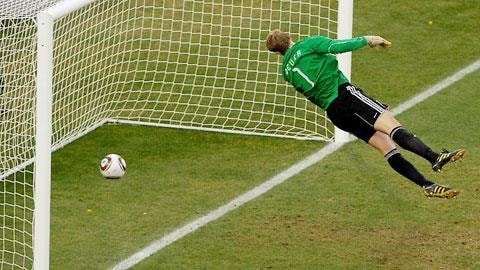
Without Hawk-eye, Lampard's goal against Germany at the 2010 World Cup would not have been allowed.
“This is the biggest change in 150 years, since we introduced the rules to football,” said Alex Horne, the general secretary of the English Football Association, expressing his clear excitement ahead of the official implementation of the Hawk-eye system in the Premier League starting from the opening match of the 2013/14 season.
So, how will the introduction of GDS change the Premier League, and what benefits will it bring to football – a sport that, according to FIFA, is played by humans, not machines?
HAWK-EYE PUSHES JUST THE VERY CLOSE TO ABSOLUTE FAIRNESS
According to common theory, Hawk-eye will bring about a level of fairness that cannot be achieved solely through human ability. Say goodbye to "ghost goals," and goodbye to controversial situations on the goal line; Hawk-eye will be precise to the centimeter, something the human eye or television broadcasts cannot pinpoint. Fairness, at least around the two goalposts, is absolutely guaranteed.
An era of football and technology – that's a concept many people still dream of, but haven't yet overcome the barrier of "football is a game of 22 people." Take, for example, offside calls – a nightmare, a "black hole" of errors for referees worldwide in recent years – which could be relatively effectively resolved if a system similar to Hawk-eye were implemented. Similarly, determining whether a penalty should be awarded could also be done with the help of technology.
BEWARE OF DOUBLE-EDGED KNIVES
However, according to some in the public, Hawk-eye still has flaws that create controversy. First, there's the Telegraph's question: Could Hawk-eye be hacked?
This possibility cannot be ruled out. There have been concerns about the fairness of even machines if they are subject to human intervention. In various ways, hackers could interfere with the accuracy of Hawk-eye, and of course, this directly affects the outcome of the match. Inadvertently, the introduction of machines into football indirectly bridges the gap to a new type of football crime: cybercrime.
CONCLUDE
Of course, change involves risk. But weighing the pros and cons of the Hawk-eye system, it's clear that the benefits and effects it (potentially) brings are entirely worth the risks.
How does Hawk-eye work?
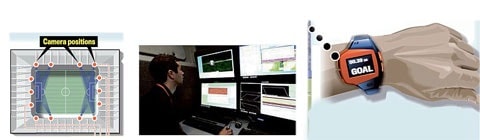
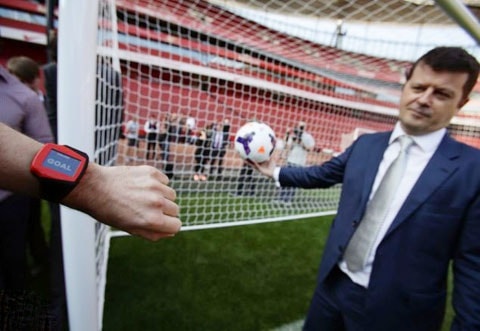
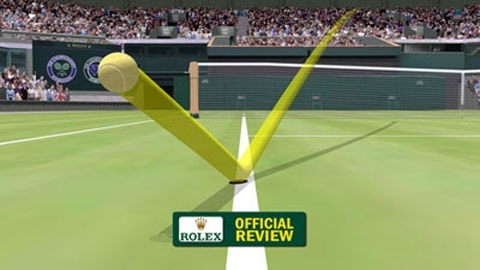
Fourteen cameras installed around the stadium will determine whether the ball has crossed the goal line (image 1). If the ball crosses the goal line, the central computer system will immediately send a message to the referee's wristwatch (image 3). In addition, this system also provides an audio alert (a shout: Goal!) to the referee's headset. Simultaneously, the central computer also creates a situational graphic to be displayed on the stadium's large screen for 20 seconds and then on television (image 2). This method is similar to that used in tennis.
Hawk-eye operating costs
The cost to install this system is £250,000 per stadium. This amount does not include additional costs, and the club that owns the stadium installing the equipment must bear all the expenses.
Is there a slow-motion version?
A controversial situation handled by Hawk-eye will be replayed in slow motion and depicted using computer graphics on a large screen. On television, Hawk-eye's images will be shown approximately 20-30 seconds after the controversial situation occurs. Whether the ball has crossed the goal line or not is displayed at 320 pixels per second.
According to Bongdaplus - National Team


