
Understanding product quality correctly
(Baonghean)To encourage Vietnamese people to choose Vietnamese products, we shouldn't just target consumers, but also promote and appeal to their patriotism. For domestic products to truly gain consumer trust and achieve sustainable development, the involvement of many parties is crucial, including regulatory agencies and manufacturers.
Part 1: What constitutes product quality?
According to Mr. Phan Ngoc Quang, Deputy Head of the Nghe An Provincial Department of Standards, Metrology and Quality, the quality of goods is assessed based on two criteria: quality and quantity.
Quality refers to the material components that make up the product's content (features, uses), while quantity refers to the measured amount of the product in units.The quantity corresponds to the characteristics of the product for packaging to facilitate transportation and dosage for use. The material components of the product's content are intended to perform the function most effectively that consumers desire. For example: In food, these are salt, sugar, fat, minerals, starch, vitamins, etc., which, through digestion, produce calories for the body; in pharmaceuticals, these are herbal active ingredients, chemical compounds, excipients, derivatives, etc., which help the body control harmful viruses and stimulate cell regeneration; in fertilizers, these are nitrogen, phosphorus, potassium, etc., which provide nutrients for plant growth, etc. The quantity is measured in units such as grams, kilograms, ml, liters, mm, cm, mm², cm², etc., according to packaging methods such as bags, sacks, boxes, bottles, jars, blisters, bundles, rolls, etc.
Information regarding both quality and quantity must be included on the product or packaging to help consumers understand how to use and inspect the product, and to allow manufacturers to affirm their brand and responsibility for their products.
So, are the quality and quantity of a product subject to any mandatory regulations?
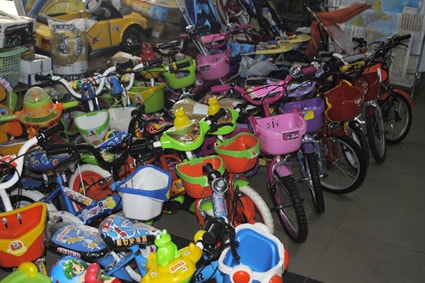
According to Mr. Phan Ngoc Quang, in Vietnam, goods are divided into two groups:Group 1A product or commodity, when transported, stored, preserved, and used properly and for its intended purpose, does not cause harm to people, animals, plants, property, or the environment., such as books, stationery, cultural products, etc. For this group of products, both quality and quantity are self-declared by the manufacturer, who is also responsible for ensuring the product conforms to the declared standards. Group 2 includes...Products and goods that have the potential to cause safety hazards. This is the groupEven under reasonable and proper conditions of transportation, storage, preservation, and use, products and goods still have the potential to cause harm to people, animals, plants, property, and the environment.Such as electrical appliances, helmets, equipment using radiation, high-pressure equipment, equipment subject to lifting, contracting, and pulling forces, equipment that is easily damaging, flammable, explosive, high-speed, etc. This group must meet the published standards and comply with national technical regulations issued by the state.
|
Who will conduct the inspection?
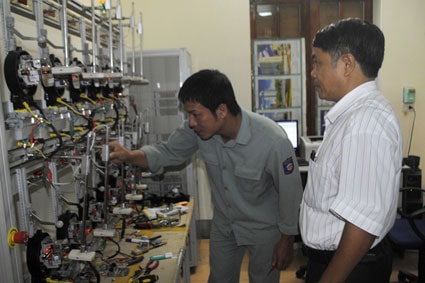
Currently, product and goods quality management is assigned to many ministries and sectors. These include the health sector with pharmaceuticals, vaccines, and medical equipment; the agriculture sector with fertilizers, plant and animal seeds, and animal feed; the transport sector with vehicles, safety signaling and support systems, and monitoring and management equipment; the construction sector with construction materials and tools; and the environment sector with equipment for testing water, air, noise, and electromagnetic pollution, etc. Therefore, within each sector, departments must be established to perform the function of inspecting and evaluating the conformity of product and goods quality according to their respective fields.
For example, the healthcare sector has a Center for Preventive Medicine and a Center for Pharmaceutical Testing; the natural resources and environment sector has an Environmental Monitoring Center; the transportation sector has a Center for Vehicle Registration and Inspection, etc.
Besides technical service units under ministries, sectors, and localities, the state also encourages the socialization of product and goods quality inspection activities. However, due to the rapid pace of socio-economic development, increasingly modern production technology, and the production of many types of products and goods, many fields require modern, expensive equipment and a relatively long time to obtain results for accurate product composition testing. Examples include testing the composition of pharmaceuticals, preservatives in packaged and fresh foods, pesticide residues in crops, growth stimulants in livestock, and the harmful effects of inorganic fertilizers on soil degradation. Therefore, there are still shortcomings in investing in the construction of product and goods quality inspection facilities to meet the timely demands of production and management.
Currently, in Nghe An, many samples that need to be tested still have to be transported hundreds of kilometers, resulting in excessively long waiting times and high costs. Consequently, many product codes and batches suspected of wrongdoing during inspections have been rejected.The long wait for test results makes it difficult to reach conclusions and take timely action.Let me give you an example to consider: At the former Ha Tay Brewery, the technology and equipment were imported from Denmark, and production was supervised by foreign experts. Every day, product samples were sent by air to the parent company for testing. Therefore, the quality of Tiger and Heineken beers produced at this factory has remained consistent for decades. This is a sustainable business practice based on their own credibility.
(to be continued)
Minh Thong


