
A new form of sugar smuggling: Temporary import, no re-export.
According to customs officials, there have been instances recently where individuals have been only temporarily importing sugar, but instead of re-exporting the temporarily imported quantity as required, they have been smuggling it into the domestic market for consumption.
According to the Anti-Smuggling Investigation Department of the General Department of Customs, in 2011-2012 and the first six months of 2013, the temporary import-re-export (TN-TX) of sugar was quite active, leading to acts of exploitation for smuggling and trade fraud...
Smuggling of temporarily imported sugar into the country.
According to customs officials, there have been instances recently where individuals have been importing sugar but not re-exporting it as required, instead smuggling it into the country for consumption. Some individuals even transported sugar but declared it as potato starch to deceive authorities, yet were still apprehended by Lang Son Customs.
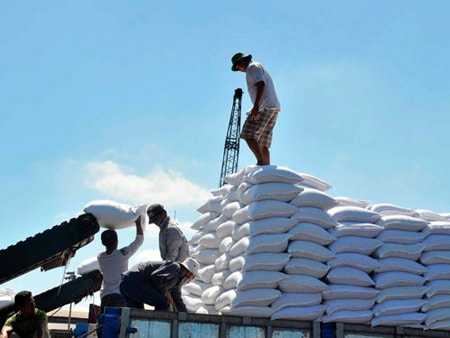
Violations in the temporary import and re-export of sugar are on the rise (illustrative image).
From mid-2012 to the present, customs authorities have detected and handled 102 violations related to the import and export of sugar, involving approximately 13,805 tons of goods, and imposed administrative fines totaling 2.432 billion VND. The majority of these violations involved failure to properly settle import and export documents, unauthorized breaking of seals, unauthorized loading and unloading of goods under customs inspection and supervision, or failure to import and export goods in accordance with regulations.
A typical case recently occurred when the Anti-Smuggling Investigation Department discovered a business processing customs procedures for 500 tons of sugar that had been imported from Hai Phong via the Cau Treo border gate (Ha Tinh province) to Laos. According to the business's declaration, the shipment was sold to a Chinese company and was designated for delivery in Laos via the Cau Treo border gate. However, verification by Chinese customs revealed that the company had ceased operations and had no import/export transactions.
The above is just one of many typical cases that the Customs agency has discovered recently. Regarding this issue, Mr. Nguyen Thanh Long - Chairman of the Vietnam Sugar Association - commented.
The two ministries have differing viewpoints.
Mr. Long argued that if the Ministry of Industry and Trade continues to allow the import and export of sugar via unofficial routes and border crossings, it will "kill" the domestic sugar industry, including millions of sugarcane farmers who are currently supported by sugar factories.
Abolish temporary import-re-export to protect sugarcane farmers. |
Nevertheless, Mr. Tran Thanh Hai, Deputy Director of the Import-Export Department (Ministry of Industry and Trade), affirmed that the Ministry of Finance and the General Department of Customs are currently strengthening measures to monitor the import and export of sugar, especially the transportation and circulation within the country.
Mr. Hai also stated that, according to the new Tax Management Law, when importing sugar under the temporary import/export scheme, businesses must pay taxes immediately. Only after the sugar is officially imported will they be eligible for a tax refund. The import tax on sugar under the temporary import/export scheme has now reached over 80%; furthermore, authorities conduct 100% on-site inspections of all sugar shipments under the temporary import/export scheme...
However, to put an end to this situation, the Ministry of Finance recently proposed ending the import-export business. Mr. Hai argued that the Ministry of Finance's opinion on stopping the import-export business for sugar only focuses on the negative impact of sugar smuggling into the domestic market, without specifying the value or quantity, making it difficult to convince people to stop this business. "Currently, the Ministry of Industry and Trade does not see a clear reason to stop the import-export of sugar," Mr. Hai affirmed.
According to danviet.vn.PH


