
Has peace finally come to Nagorno-Karabakh?
(Baonghean.vn) - Faced with military defeats, Armenia has been forced to accept an agreement to end its protracted conflict with its difficult neighbor. Meanwhile, thanks to Russia's active mediation, Azerbaijan has reaped considerable concessions it had craved for decades in negotiations surrounding the breakaway Nagorno-Karabakh region.
"Neither victory nor defeat."
The New York Times reported on November 10th that Armenian Prime Minister Nikol Pashinyan had officially signed a settlement agreement brokered by Russia the previous day, aiming to put an end to the conflict.The war took place in Nagorno-Karabakh.This would mean Armenia relinquishing the disputed territory and bowing to numerous other demands, but perhaps this is the most viable option given Pashinyan's impending defeat on the battlefield.
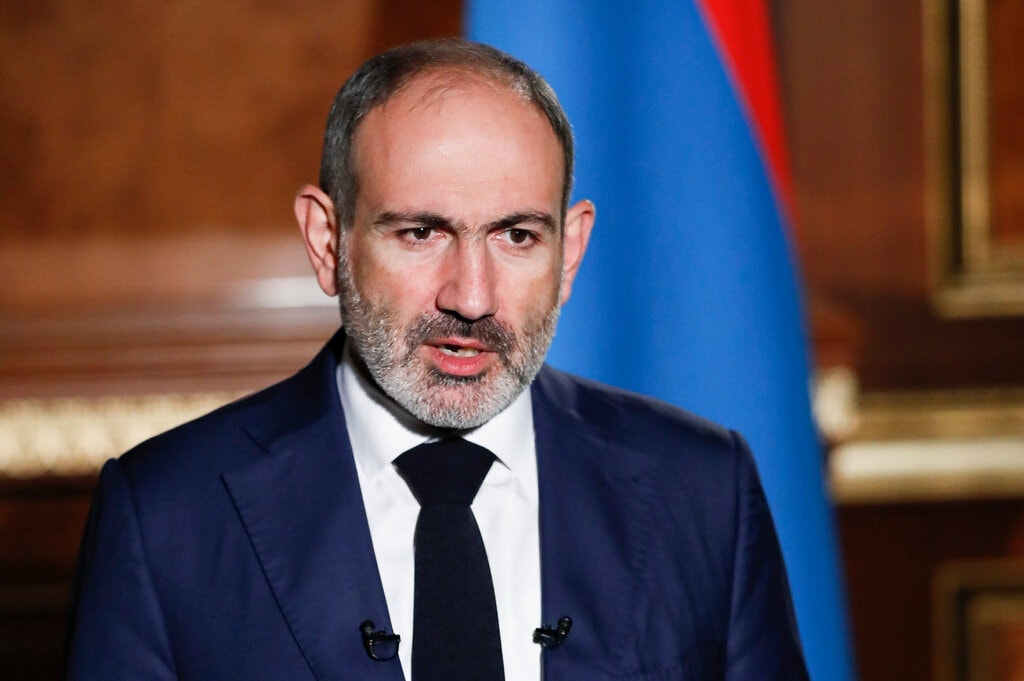 |
| Armenian Prime Minister Nikol Pashinyan said the recent settlement was a very difficult decision for him and the entire nation. (Photo: PAN) |
According to the agreement signed between this leader and Russian President Vladimir V. Putin and Azerbaijani President Ilham Aliyev, Armenian troops will withdraw from the Nagorno-Karabakh region and will be replaced by Russian peacekeeping forces. Furthermore, the warring parties will cease hostilities and prepare for the arrival of the Russian peacekeeping forces. Thus, after the collapse of three fragile ceasefires negotiated by Russia, France, and the United States, a more positive sign has finally emerged for this much-discussed dispute.
Some argue that the agreement reached on November 9th can be seen as a large-scale redrawing of the security map of the South Caucasus, a sensitive and volatile region sandwiched between Turkey, Russia, and Iran. This arrangement also affirms the role and position of an increasingly assertive Türkiye in the region, with its stance supporting Azerbaijan in the conflict that began in September.
In a statement posted on social media announcing the newly signed agreement, Pashinyan said: “I have made a very difficult decision, both for myself and for all of us. This is not a victory, but neither is it a defeat.” In fact, this agreement ends a quarter-century of Armenian military control over the remote mountainous region of Nagorno-Karabakh. And now, Russia will take charge of guarding this border.
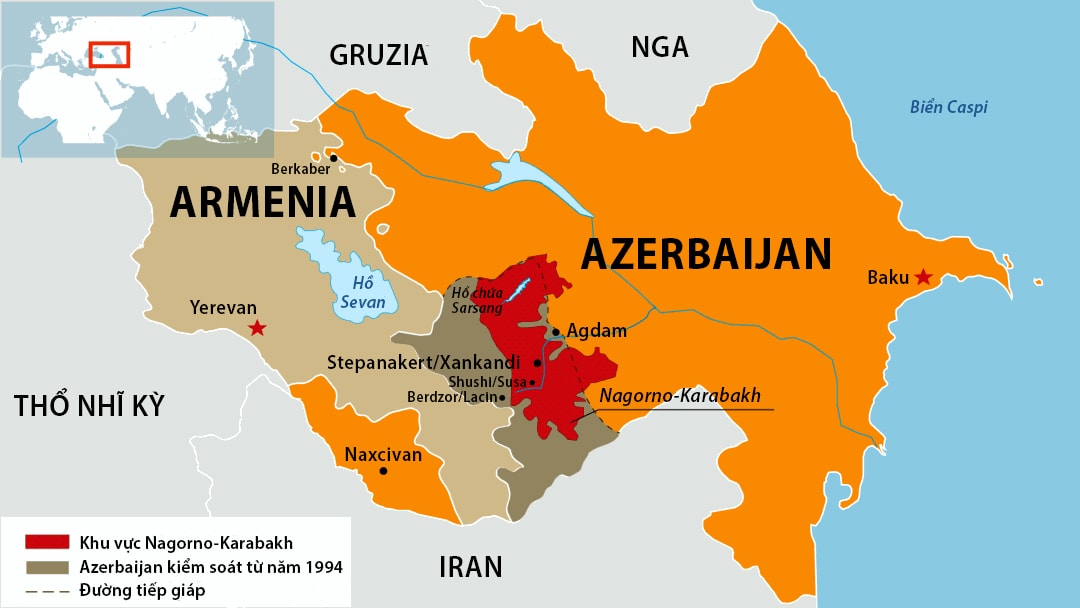 |
| Nagorno-Karabakh region. Graphic: RFE/RL |
Does the item return to its original owner?
It should be reiterated,Nagorno-Karabakh regionAlthough predominantly Armenian inhabited, the region lies within Azerbaijan's Soviet-era borders, and it declared independence before the collapse of the Soviet Union. Now, for Azerbaijanis, the proposed settlement offers the prospect that at least some of the hundreds of thousands displaced by the 1994 war for secession may return. That war ended with a paradoxical scenario: a ceasefire that was seen as disastrous but ultimately unavoidable for Azerbaijan following Armenian military victories.
With this new agreement, Russian leader Putin said it would require both Armenian and Azerbaijani troops to immediately cease their current occupations. This further solidifies Azerbaijan's capture of the strategic town of Shusha, as it is called by its people, or Shushi to Armenians. It is the second largest town in the region and is less than 10 kilometers from the breakaway capital Stepanakert.
Armenia also lost control of the supply route that brought military supplies to the mountainous region, and cutting this route would also extinguish any hope of Armenian defenders continuing to hold out there if the fighting continued.
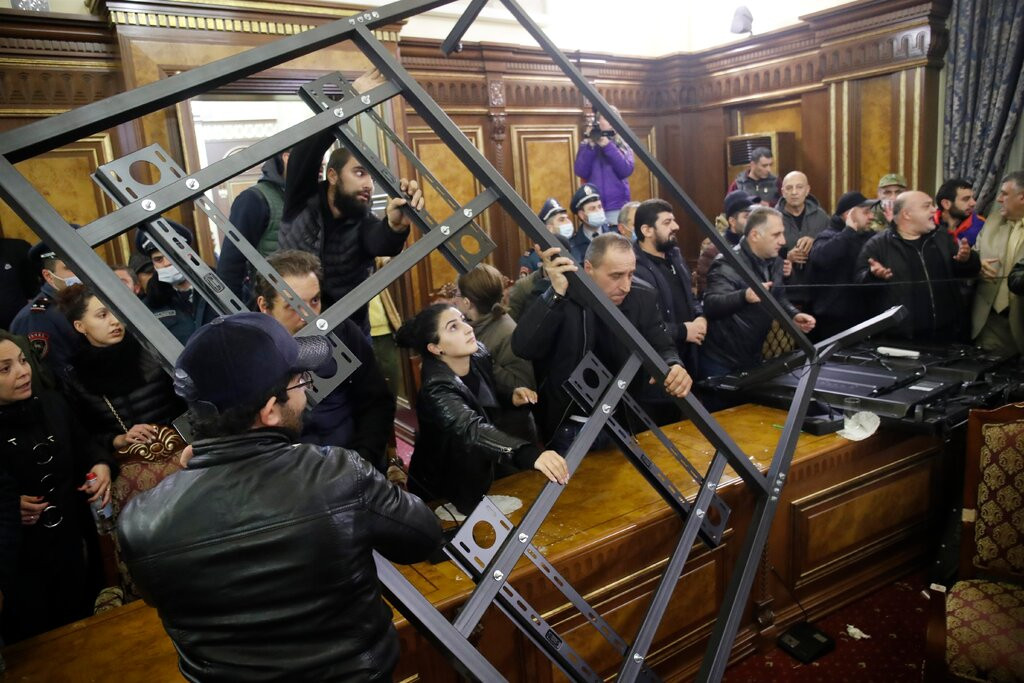 |
| Crowds stormed the government building in Yerevan, the capital of Armenia, following Pashinyan's announcement. Photo: AP |
“I made this decision as a result of a thorough analysis of the military situation,” Pashinyan wrote. The leader said the agreement was “the best solution in the current situation.” Just hours after his announcement, protests erupted in Armenia’s capital, Yerevan. A mob broke into the government building, tearing Pashinyan’s nameplate off the door of the prime minister’s office to express their anger and discontent.
For the past 25 years, the separatist authorities in Nagorno-Karabakh have controlled seven occupied districts of Azerbaijan. These are sparsely populated areas, consisting only of abandoned villages and dilapidated stone houses. Armenia has repeatedly rejected UN resolutions calling for the return of its citizens, perhaps believing that holding these districts provides a military advantage, and has so far remained adamant about refusing any arrangements that would allow its people to return home.
But now, with the agreement reached earlier this week, Azerbaijan has gotten what it had been seeking for years in negotiations, including, of course, the return of displaced people to their homes. In addition to that...withdraw troops from the area.Armenia also had to agree to relinquish control of small Armenian minority areas within Azerbaijan's territory but outside Nagorno-Karabakh; open a transport corridor for Azerbaijan to pass through Armenia to the Nakhichevan region of Azerbaijan; and allow the United Nations to monitor the repatriation of displaced people after the war.
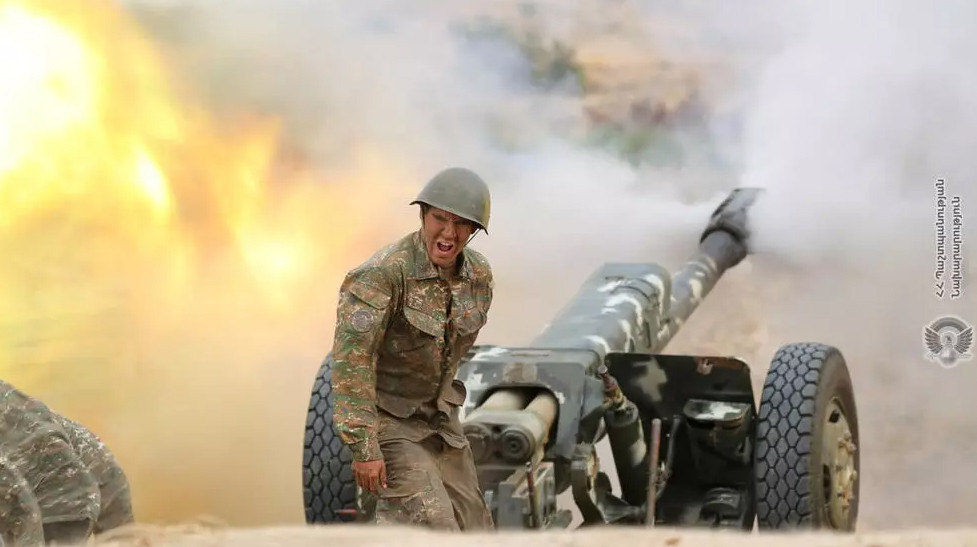 |
| Armenian forces in the Upper Karabakh region resist an attack by Azerbaijani troops. Photo: Armenian Ministry of Defense. |
As for Stepanakert, the capital of Nagorno-Karabakh, although it was saved from what seemed like an impending military attack, it will now depend on Russian peacekeeping forces for its safety. The "blue beret" soldiers will be deployed there for five years and will also guard the access route through a pass called the Lachin Corridor, along with a buffer zone of approximately 5 km along it. Furthermore, having lost control of Shusha/Shushi, Armenia was forced to accept the agreement's requirement to build a new access road through this town, now in Azerbaijan's hands. If realized, this would clearly be another major loss, another blow to Armenia's "mission" in Nagorno-Karabakh.


