
Learning from and following President Ho Chi Minh's example on selecting cadres in the new era.
To effectively implement the spirit of Directive No. 35-CT/TW of the Politburo and the guidance of General Secretary To Lam, Party committees at all levels and each cadre and Party member must deeply understand and internalize what President Ho Chi Minh taught, and learn from and follow his example regarding the selection of cadres in the new era.
Nguyen The Trung• February 20, 2025, 8:00 AM
On June 14, 2024, the Politburo issued Directive No. 35-CT/TW on Party congresses at all levels, leading up to the 14th National Congress of the Party. The directive sets out very strict requirements and content, including personnel work and the election of Party committees. In his New Year's address for 2025, General Secretary To Lam clearly instructed: “Regarding personnel work, this is a crucial task, the ‘key’ of ‘keys,’ with decisive significance for the successful implementation of the Party’s policies and guidelines to lead the country into a new era.”(1).
To effectively implement the spirit of Directive No. 35-CT/TW of the Politburo and the guidance of General Secretary To Lam, Party committees at all levels and each cadre and Party member must deeply understand and internalize what President Ho Chi Minh taught, and learn from and follow his example regarding the selection of cadres in the new era.
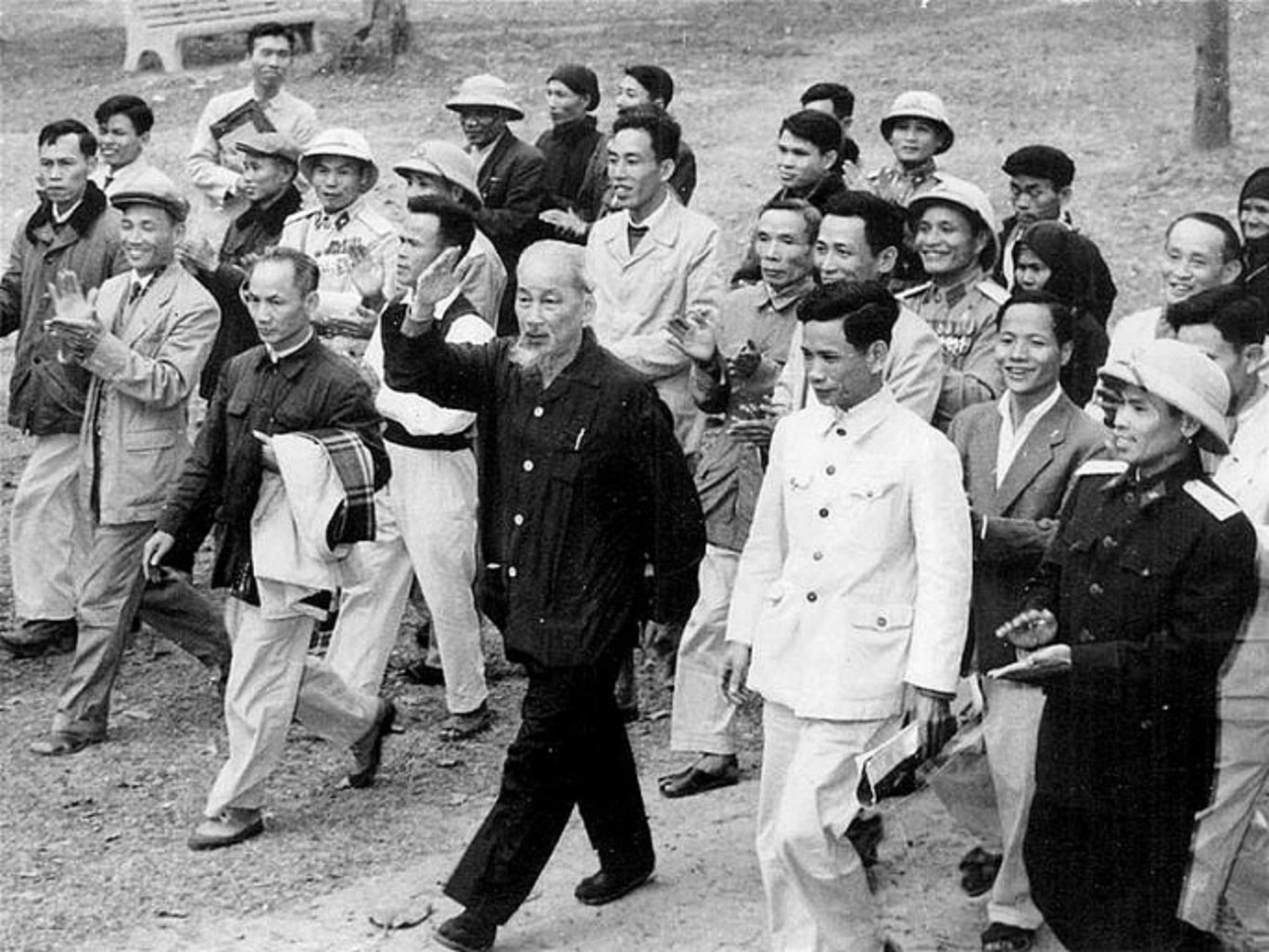
Throughout his leadership of the Vietnamese revolution, President Ho Chi Minh paid special attention to personnel work, to the selection of virtuous and talented individuals, and to the utilization and management of cadres. He said: "Cadres are the foundation of all work."(2)"The success or failure of any undertaking depends on whether the staff are good or bad."(3)In selecting cadres, he paid attention to both virtue and talent. He said: “Just as a river needs a source to have water, without a source the river dries up. A tree must have roots, without roots the tree withers. A revolutionary must have morality; without morality, no matter how talented they are, they cannot lead the people.”(4)Therefore, immediately after the success of the August Revolution, Uncle Ho paid great attention to valuing and utilizing talent, and managing cadres. According to him: “We must remember that everyone has both good and bad qualities. We must use people's good qualities and help them correct their weaknesses. Using people is like using wood. A skilled craftsman can use large, small, straight, or curved pieces of wood according to the situation.”(5)He also instructed: "Those with great talent should be used for important tasks, those with lesser talent should be assigned to smaller tasks; whoever has the ability for a particular job should be immediately placed in that job."(6)Uncle Ho was very concerned and reminded officials responsible for personnel decisions: "If you have the power to appoint people, you must appoint those who are talented and capable. Don't appoint people to positions just because they are relatives or friends. Don't suppress those who are more talented than yourself for fear of losing your position."(7)"When considering appointing an official, it is necessary to carefully examine whether that person is close to the people, whether they are trusted and respected by the people. It is also necessary to consider what kind of work that person is suited to. If a talented person is not used in a way that suits their abilities, they will not accomplish anything."(8)In appointing officials, Uncle Ho emphasized the need to select those who could set a good example for the people. He said, "A living example is worth more than a hundred propaganda speeches."(9)The President criticized those who: "Are nepotistic, forming cliques and factions, bringing in relatives and friends, even those without talent, to various positions. Those with talent and virtue who don't please them are pushed aside. They forget that this is public business, not the private affairs of anyone's family."(10).
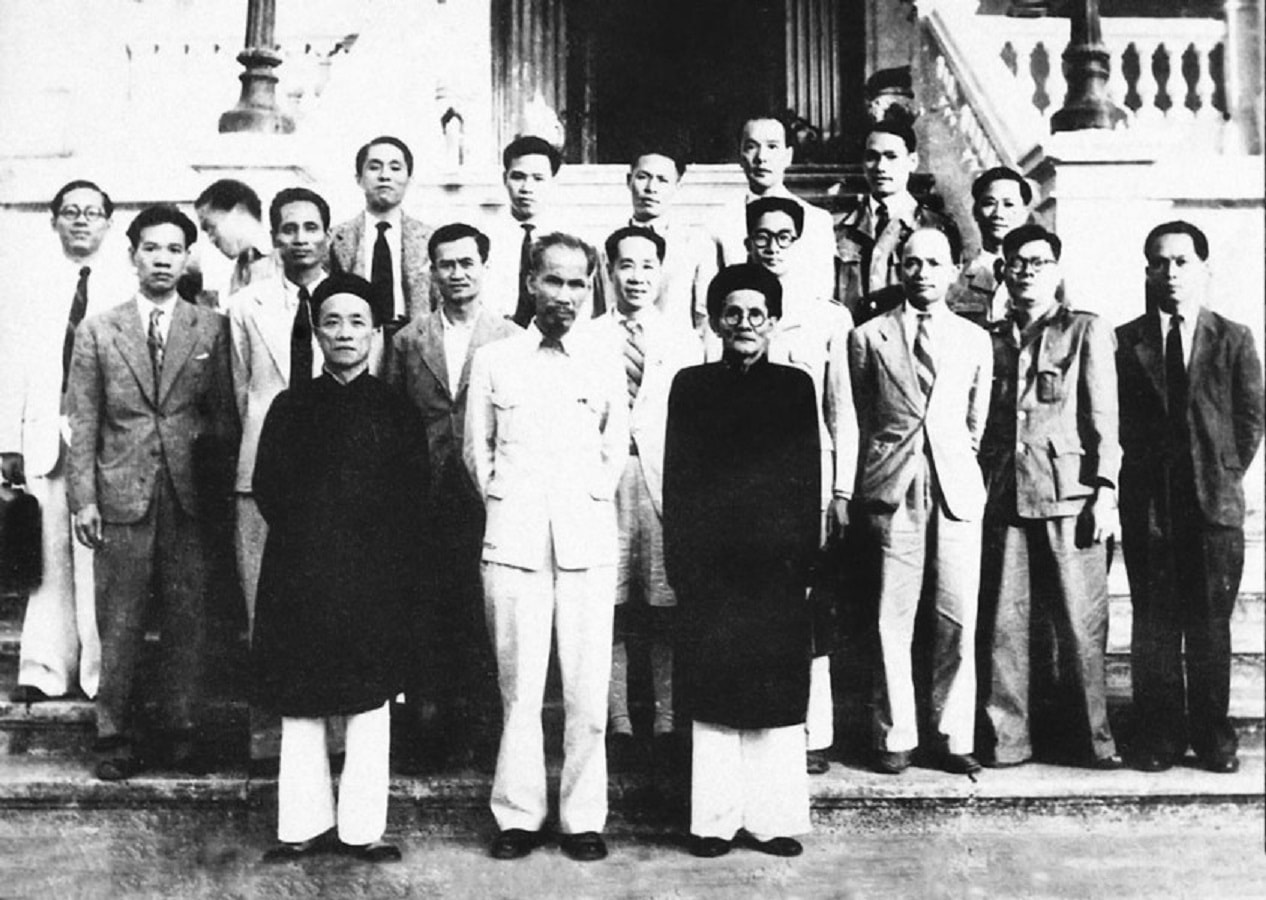
It was thanks to these correct and insightful viewpoints that, when the country had just gained independence and faced countless difficulties, both internal and external enemies, President Ho Chi Minh and our Party were very successful in uniting and gathering all strata of the people through personnel work. President Ho Chi Minh invited a number of patriotic intellectuals, scholars, and officials from the feudal regime who possessed knowledge and experience to assist the Government. Among them were Mr. Bui Bang Doan - former Minister of Justice, who became Head of the Standing Committee of the National Assembly; Mr. Huynh Thuc Khang - former Director of the Central Annam People's Representative Assembly, who became Minister of Interior and later Vice President; and Mr. Phan Ke Toai - former Imperial Commissioner, who became Minister of Interior. Through this approach, President Ho Chi Minh gathered the best minds of the nation to participate in the resistance war for national liberation and nation-building. Many intellectuals living abroad, despite having high incomes and better working conditions, voluntarily returned to help the country, such as engineer Tran Dai Nghia, mathematics professor Le Van Thiem, agricultural scientist Luong Dinh Cua, medical doctor Dang Van Ngu, doctor Tran Huu Tuoc, Nguyen Khac Vien, etc. At the same time, many outstanding intellectuals such as professor Ta Quang Buu, professor Ton That Tung, Ho Dac Di, lawyer Phan Anh, professor Hoang Minh Giam, Nguyen Van Huyen, Nguy Nhu Kon Tum, doctor Vu Dinh Tung, etc., were highly valued and utilized their talents to serve the country. In particular, President Ho Chi Minh was a far-sighted and insightful leader who accurately and effectively assessed, considered, and selected cadres. He assigned Comrade Vo Nguyen Giap to lead the army even though he had never attended a military school. At that time, he was a history teacher at the Thang Long private school, and he was later promoted directly to General. Many cadres chosen and assigned tasks by President Ho Chi Minh, such as comrades Truong Chinh, Le Duan, Pham Van Dong, Nguyen Chi Thanh, etc., all became outstanding leaders of the country.
Recently, the Party and State of Vietnam have issued important documents on personnel work, such as Resolution No. 26-NQ/TW dated May 19, 2018, of the Central Committee "On focusing on building a contingent of cadres at all levels, especially strategic-level cadres, with sufficient qualities, capabilities, and prestige commensurate with the tasks"; the Politburo issued Regulation No. 50-QĐ/TW dated December 27, 2021, "On personnel planning"; Regulation No. 80-QĐ/TW dated August 18, 2022, "On decentralizing personnel management and appointing and nominating candidates"; Conclusion No. 118-KL/TW dated January 18, 2025, "On adjusting and supplementing some contents of Directive No. 35-CT/TW dated June 14, 2024, on Party congresses at all levels, leading to the 14th National Congress of the Party,"...
In accordance with the spirit of Directive No. 35-CT/TW and Conclusion No. 118-KL/TW of the Politburo, party congresses from the grassroots level to the congresses of party committees directly under the Central Committee for the 2025-2030 term will all take place in 2025, leading up to the 14th National Congress of the Party for the 2025-2030 term.
The year 2025 marks many significant events for the country: the 95th anniversary of the founding of the Communist Party of Vietnam and its role in steering the nation's revolution (February 3, 1930 - February 3, 2025), the 50th anniversary of the complete liberation of the South and national reunification (April 30, 1975 - April 30, 2025), the 80th anniversary of the August Revolution and National Day on September 2nd, the birth of the Democratic Republic of Vietnam, now the Socialist Republic of Vietnam (1945 - 2025), and 2025 is also the 39th year of the renovation, integration, and development of the country initiated and led by our Party since the Spring of 1986,…
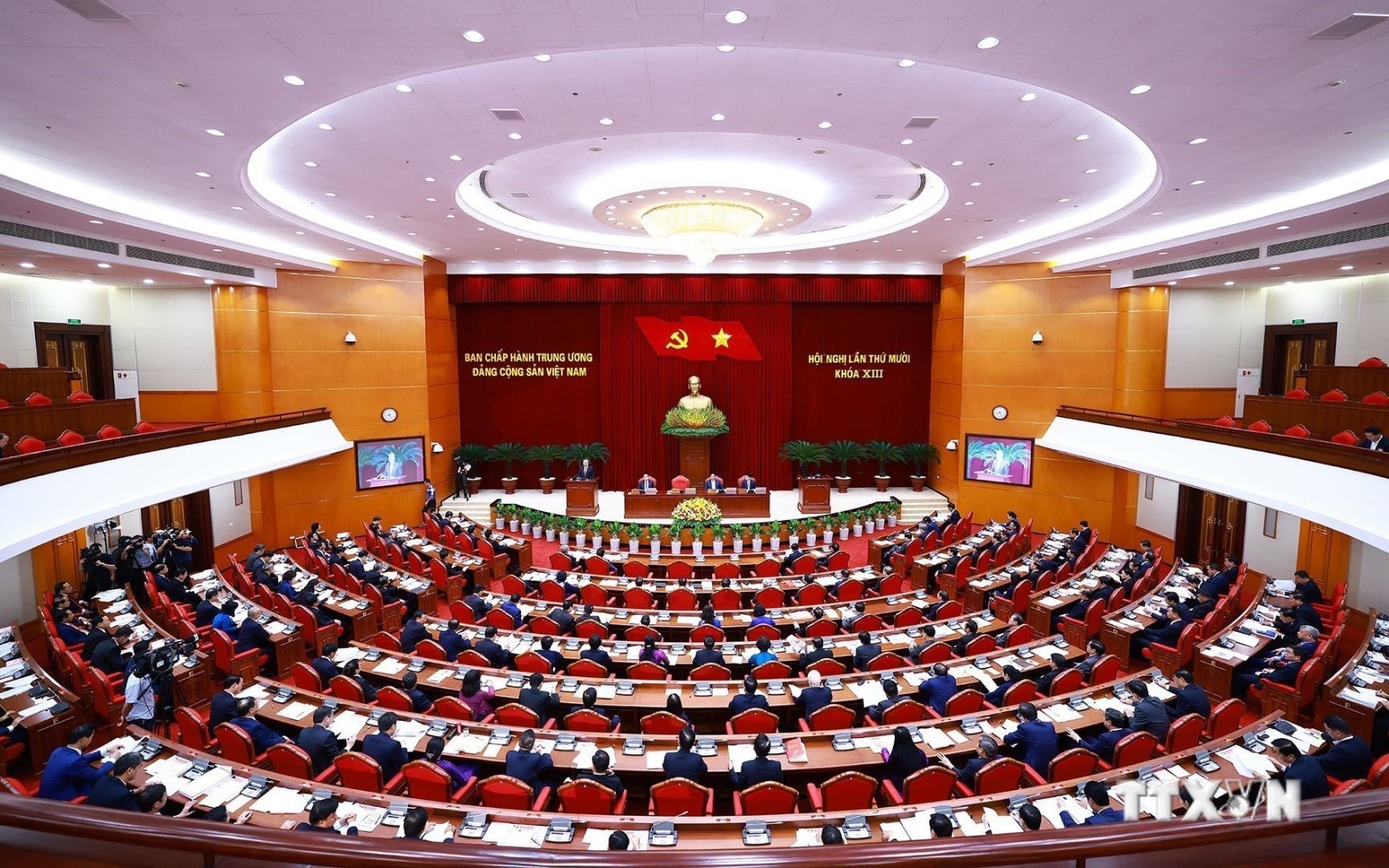
Thoroughly understanding President Ho Chi Minh's profound and heartfelt guidance on selecting cadres to learn from and follow his example in building and electing outstanding Party members who truly possess virtue and talent to participate in the new Party committees. Based on this, Party committees will best fulfill their assigned political tasks, achieving and surpassing the goals and targets set forth in the resolutions of the 2025-2030 Party Congress. In particular, the highest quality selection of the 14th Central Committee of the Party will continue to lead our country into a new era of development, achieving many new great achievements towards the goal of a prosperous people, a strong nation, democracy, fairness, and civilization in accordance with the socialist orientation.
----------
(1) Nhan Dan Newspaper, Spring issue of At Ty year, 2025, p.4.
(2) Ho Chi Minh: Complete Works, National Political Publishing House, Vol. 5, p. 309.
(3) Ho Chi Minh: Complete Works, op. cit., vol. 5, p. 313.
(4) Ho Chi Minh: Complete Works, op. cit., vol. 5, p. 292.
(5) Ho Chi Minh: Complete Works, op. cit., vol. 5, p. 88.
(6) Ho Chi Minh: Complete Works, op. cit., vol. 4, p. 43.
(7) Ho Chi Minh: Complete Works, op. cit., vol. 5, p. 123.
(8) Ho Chi Minh: Complete Works, op. cit., vol. 5, p. 314.
(9) Ho Chi Minh: Complete Works, op. cit., vol. 1, p. 284.
(10) Ho Chi Minh: Complete Works, op. cit., vol. 4, p. 65.


