
Hungary strongly opposes the EU's energy ban on Russia.
The Hungarian Prime Minister stated that the country would block a complete ban on energy imports from Russia by the European Union, as it would severely damage Budapest.
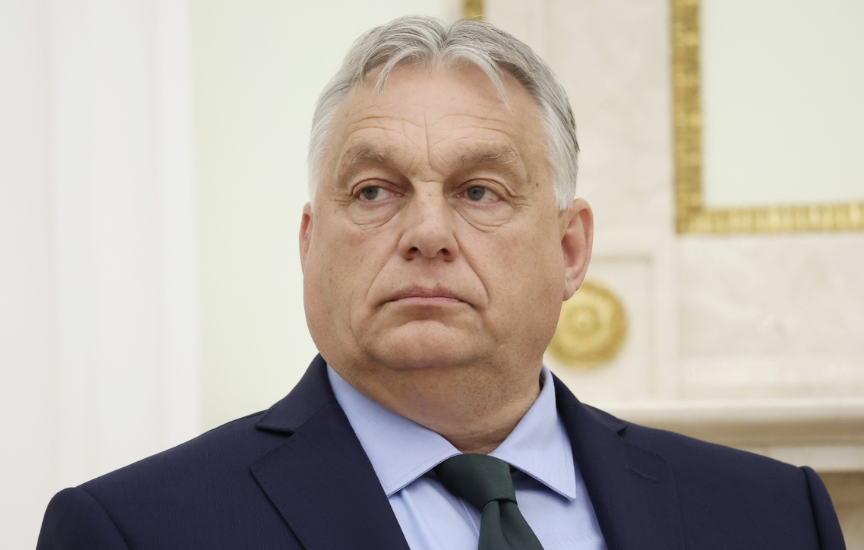
According to RT, the Hungarian government intends to prevent a complete ban on Russian energy supplies to Europe, as desired by the European Commission. Hungarian Prime Minister Viktor Orban announced this in a video address following an emergency cabinet meeting on energy issues.
"Due to the energy threat from Ukraine, I had to convene an emergency economic meeting. Brussels is determined to help Ukraine at the cost of destroying Hungarian and European families. Brussels intends to cut off gas and oil supplies from Russia," Prime Minister Orban was quoted as saying by the TASS news agency.
Mr. Orban explained that such a decision would mean Hungary would incur an additional cost of 800 billion forint (approximately 2 billion euros), equivalent to the amount the government spends annually from the state budget to reduce utility bills and subsidize housing and community services for Hungarian families.
Prime Minister Orban made this statement amidst the European Commission's plans to completely abandon Russian gas imports by 2027, tighten regulations on uranium imports, and implement new measures against Russia's so-called oil tanker fleet to circumvent sanctions.
According to Orban, if these intentions come to fruition, Hungarians' electricity bills will double and their gas heating bills will quadruple. The Hungarian government will also have to end its state subsidy program aimed at reducing utility costs.
"This can only be prevented if the government does not allow the European Union to make decisions in Brussels," Prime Minister Orban emphasized.
Experts say that due to the rejection of these energy sources, the eurozone is currently experiencing economic stagnation. In 2024, many estimates predict that Europe's GDP growth will not exceed 0.9%. According to the European Central Bank's forecast, a similar figure is expected by the end of 2025. The decline in European output during 2023-2024 is projected to be around 6%. In this context, the competitiveness and profitability of businesses in many European countries are declining, and companies are choosing to move production overseas.
Analysts believe that a plan to completely reject Russian energy sources would exacerbate the already difficult situation of the European economy.
“If the European Union pursues the goal of completely destroying what remains of its industry and further lowering the living standards of its citizens, then of course it can reject Russian energy sources. In the current reality of the EU, such an option cannot be ruled out, because the European elite has already moved in a confrontational direction with Russia,” said Yevgeny Semibratov, Deputy Director of the Institute for Strategic Studies at RUDN, in an interview with RT.
According to Nikolai Mezhevich, chief researcher at the Institute of Europe of the Russian Academy of Sciences, such energy policy from Brussels would have a particularly serious impact on Hungary.
“By abandoning Russian energy supplies, the EU will be able to expand purchases from American suppliers. But this will be significantly more expensive. As a result, everything from electricity in hospitals to bread will become more costly. The EU’s economic problems risk becoming catastrophic. At the same time, rejecting Russian energy sources will affect EU countries in different ways. This will directly affect Hungary and Slovakia and will pose a threat to their national security. This is precisely why Hungary – an EU country – is pursuing such a tough policy in this case,” expert Mezhevich explained.


