
An iPhone can be hacked simply by accessing a website infected with malware.
Hackers are exploiting thousands of legitimate websites and online advertisements to spread spyware, targeting iPhones that haven't received security patches.
Users don't necessarily have to click on suspicious links or download questionable apps to be at risk of attack. Some new campaigns discovered by cybersecurity experts can exploit vulnerabilities on iPhones through compromised websites or advertisements.
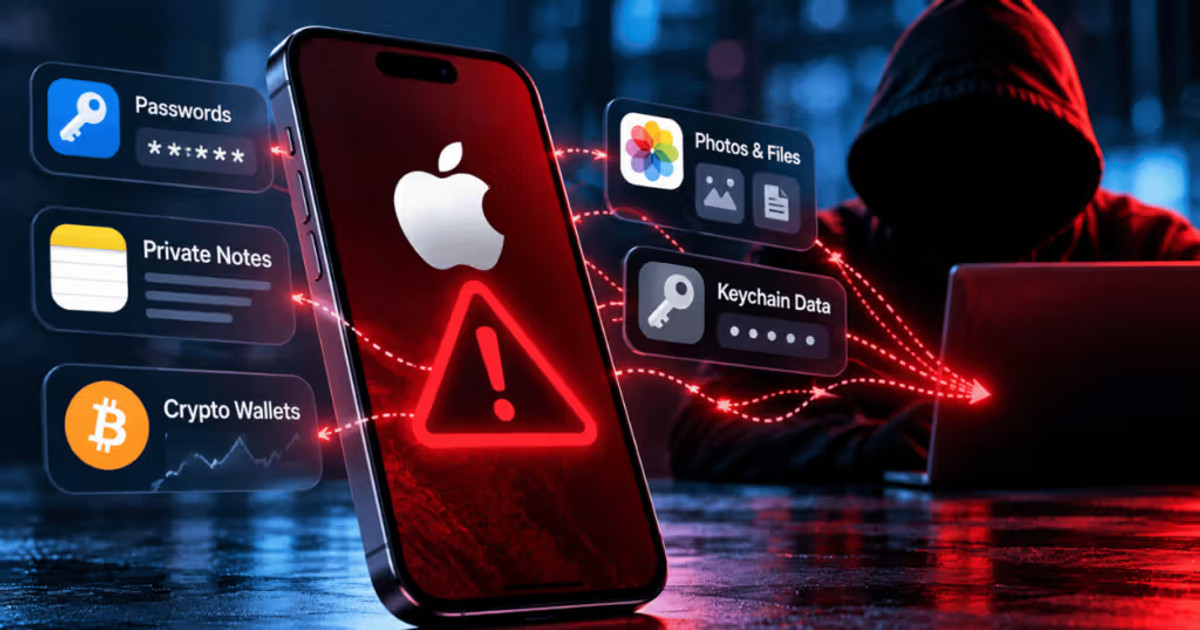
Researchers have warned that thousands of legitimate websites are being exploited as channels to spread malware targeting Apple devices. Notably, in some cases, users can become targets simply by accessing the website or browsing malicious advertisements.
Thousands of legitimate websites are being exploited to spread malware.
According to Forbes, the attack campaign was discovered after cybersecurity expert Scott Helme, founder of Report URI, found malware appearing on numerous websites. Report URI then collaborated with security company iVerify to investigate the activity.
The results showed that at least 6,600 legitimate websites were exploited, with a total of approximately 49 million visits per month. Of these, 248 websites directly distributed spyware targeting iPhones, with about 8 million visits per month.
What's concerning is that most of these websites didn't actively participate in spreading malware. The hackers simply hijacked old domain names previously used by advertising services, data analytics companies, or website support tools.
Typically, websites integrate third-party services by inserting a small piece of code into the page. When the service provider ceases operations and abandons the domain name, this code may still remain on the website. Hackers buy these expired domains and inject malicious code, causing websites that still load content from the old domain to inadvertently become redirected to other sites.
Report URI has dubbed this activity DeadTag. According to the research team's analysis, those behind the campaign may be selectively targeting visitors and redirecting them to malicious content, rather than attacking everyone.
Hackers can steal passwords and cryptocurrency wallet data.
One of the campaign's goals was to distribute exploit kits for iPhones, including Coruna and DarkSword.
These are toolkits that exploit numerous security vulnerabilities in the iOS operating system and browsers, allowing hackers to execute malicious code on devices if the corresponding software version has not been patched.
According to research by Report URI and iVerify, these toolkits can be distributed through compromised websites or malicious advertisements. When users access a website containing the exploit code, or browse through malicious ads in some cases, the attack can occur automatically without them clicking on a link or downloading an application.
Researchers documented a case where an employee's device at a client organization was compromised after the employee scrolled through a soccer advertisement on Instagram. The advertisement was designed to trigger an exploit on the device.
Sau khi xâm nhập thành công, phần mềm gián điệp có thể tìm cách đánh cắp mật khẩu và thông tin bí mật được lưu trong Keychain của iPhone. Đây là hệ thống quản lý thông tin xác thực của Apple, dùng để lưu trữ an toàn mật khẩu và một số dữ liệu nhạy cảm.
Mục tiêu chính được các nhà nghiên cứu nhận định là trục lợi tài chính, đặc biệt thông qua việc chiếm đoạt tài sản tiền điện tử. Tuy nhiên, khả năng thu thập nhiều loại dữ liệu trên điện thoại cũng khiến nguy cơ lộ thông tin cá nhân và tài khoản trở nên đáng lo ngại.
Những iPhone chưa cập nhật iOS có nguy cơ bị tấn công
Không phải mọi iPhone truy cập website đều bị nhiễm mã độc. Các bộ công cụ khai thác được mô tả trong nghiên cứu chủ yếu nhắm đến những thiết bị chạy phiên bản iOS có lỗ hổng tương ứng.
Theo Report URI, Coruna được sử dụng để nhắm vào các phiên bản iOS từ 13 đến 17.2.1, trong khi DarkSword nhắm đến một số phiên bản iOS thuộc nhánh 18.4 đến 18.7.
Apple đã phát hành các bản cập nhật để khắc phục những lỗ hổng mà các bộ công cụ này khai thác. Vì vậy, những thiết bị đã cài đặt phiên bản iOS có bản vá tương ứng sẽ được bảo vệ trước các phương thức tấn công đã biết này.
Tuy nhiên, việc các nhóm tin tặc tìm cách điều chỉnh công cụ để khai thác những lỗ hổng mới vẫn là nguy cơ cần lưu ý. Nghiên cứu của iVerify và Report URI cũng ghi nhận dấu hiệu các đối tượng chuẩn bị hạ tầng để có thể phân phối những bộ công cụ khai thác mới trong tương lai.
Người dùng cần làm gì để bảo vệ iPhone?
Biện pháp quan trọng nhất là cập nhật iOS lên phiên bản mới nhất mà thiết bị hỗ trợ. Các bản cập nhật không chỉ bổ sung tính năng mà còn khắc phục lỗ hổng có thể bị tin tặc khai thác.
Users can check for and update by opening Settings > General > Software Update. If a new update is available, it should be downloaded and installed according to the instructions.
In addition, users should:
Enable automatic updates:This helps your device receive security patches sooner when Apple releases them.
Be cautious with websites and advertisements:Do not install applications, configure settings, or manage device profiles at the request of unreliable websites.
Protect your important accounts:Use two-factor authentication, separate passwords, and do not store cryptocurrency wallet recovery information in easily accessible locations.
Don't underestimate familiar websites:A legitimate website can still be compromised or receive malware from a third-party service.
If you suspect your device has been compromised, you should update iOS, check important accounts from another trusted device, and change any potentially compromised passwords. For cryptocurrency wallets, prioritizing asset protection and wallet recovery information is crucial.
The campaign mentioned by Forbes shows that hackers are exploiting even the least-noticed elements of the advertising and website ecosystem to spread malware. Therefore, in addition to being vigilant when accessing the Internet, maintaining an updated operating system is one of the most practical ways to reduce the risk of being exploited through known vulnerabilities.


