
Iran restores its network of underground missile cities after airstrikes.
Iran is working to clear the entrances to its destroyed missile silos in an effort to restore its combat capability, despite attacks from the US and Israel.
Iran is undertaking large-scale restoration operations of its underground missile base network following airstrikes from hostile forces. The latest satellite imagery shows Tehran attempting to re-establish access to strategically protected launch sites deep within mountains.
Efforts are underway to excavate and clear the entrance to the underground tunnel.
According to CNN, satellite images show the presence of excavators and other heavy machinery at the damaged tunnel entrances. The main task of the engineering team is to remove large volumes of earth and rock from the blocked tunnels, then transport them out by truck to clear the way for mobile launch platforms.
Previously, airstrikes from the US and Israel focused firepower on the entry points to these facilities. The goal of this tactic was to blockade the "missile cities," preventing the launchers from being moved out to fire or withdrawn inside for reloading. However, assessments from the US intelligence community indicate that approximately 50% of Iran's launchers remain intact, although some are currently temporarily buried.
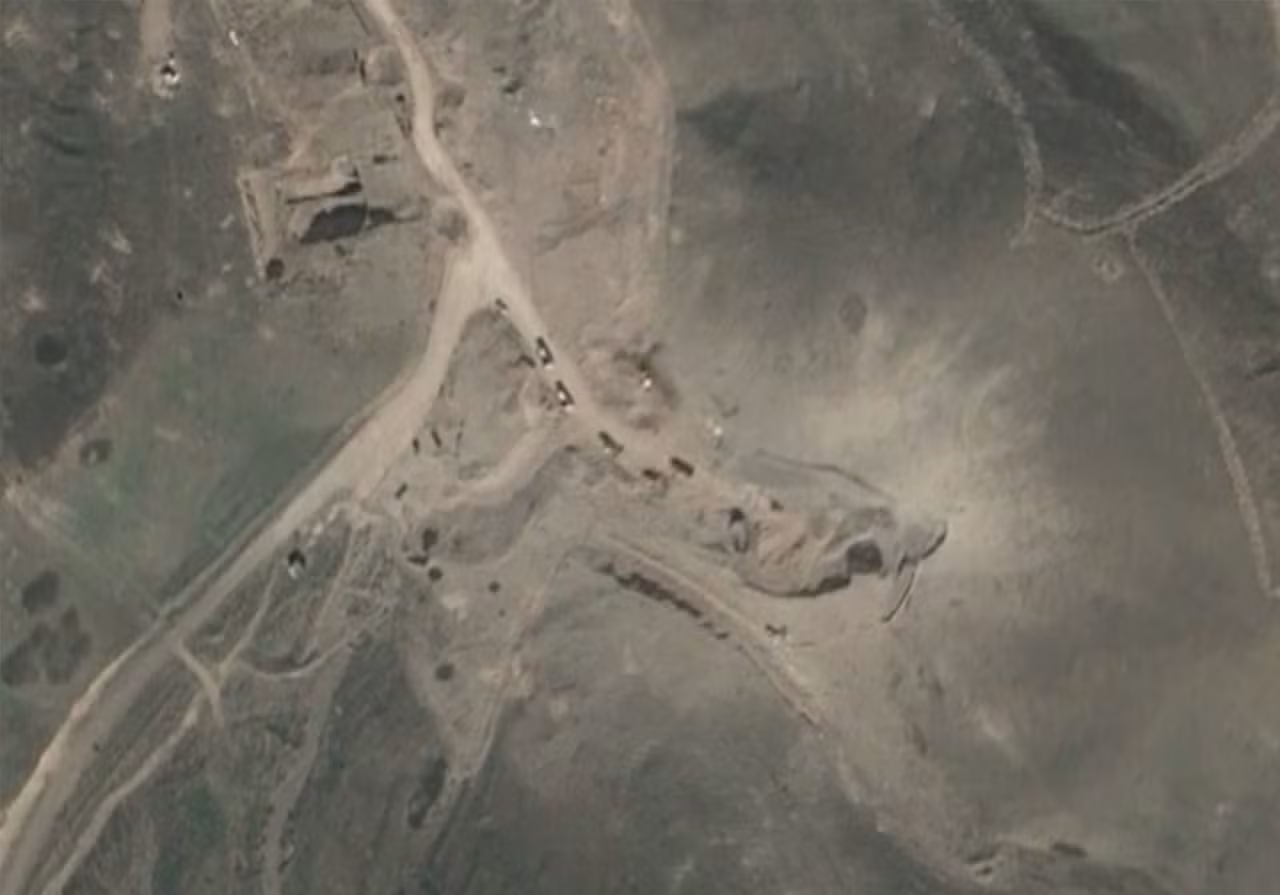
Sam Lair, a researcher at the James Martin Center for Nonproliferation Studies, believes Iran's rapid restoration of access to these bases is part of a carefully prepared operational doctrine. Tehran's strategy focuses on withstanding the initial attack, preserving its core forces, and being ready to retaliate as soon as conditions permit.
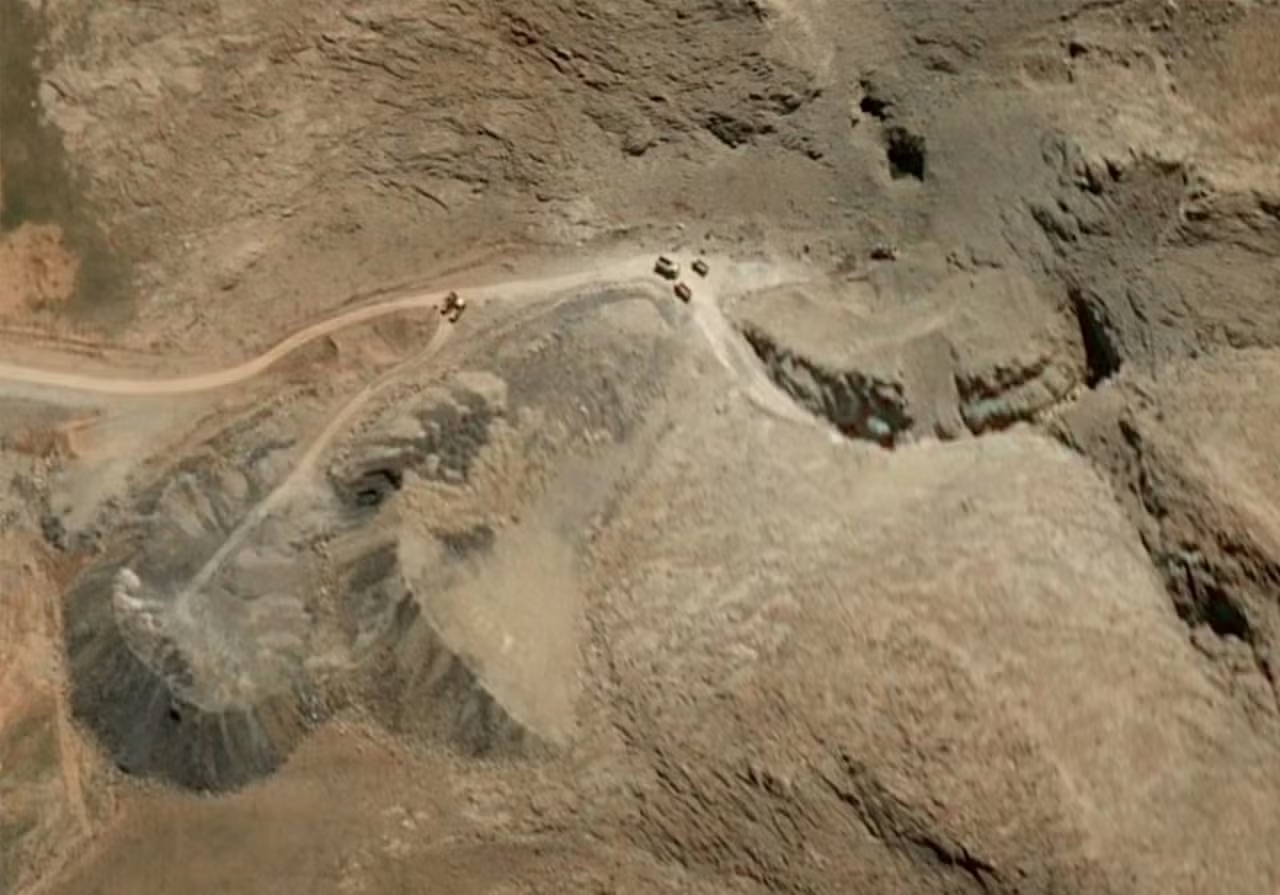
A fortified defense system beneath the granite mountains.
Intelligence reports cited by the New York Times indicate that Iran possesses a significant stockpile of ballistic missiles, stored in massive bunkers deep within granite mountain ranges. Granite is a natural material capable of withstanding immense pressure, far exceeding conventional construction standards, creating a natural shield against even the most powerful penetrating bombs, such as the U.S. military's GBU-57.
At some special bases, such as in Yazd, Iran is believed to have established an automated rail system inside the mountains. This system closely connects assembly areas, fuel depots, and secret escape points. In military documentary footage, missile launchers can move rapidly from their concealed positions to firing points and then retreat into the mountains in just minutes, minimizing the time it takes for enemy radar and satellites to detect them.
Deception tactics and maintaining deterrence.
Despite weeks of relentless airstrikes, Iran has maintained its frequency of missile launches and drone deployments targeting areas. A key factor preventing the U.S. from accurately assessing the extent of Iran's damage is the country's widespread use of decoys to deceive laser- and infrared-guided reconnaissance systems.
This network of "missile cities" is not merely a storage facility, but also a network of distributed command centers, helping to maintain deterrence in any full-scale conflict scenario. Iran's rapid repair of damaged sites sends a strong message about the resilience of its military at the geopolitical negotiating table.
Currently, Washington and its allies are closely monitoring the progress of reconstruction in key areas such as Tabriz and Khomeyn to reassess Tehran's actual counter-offensive capabilities in the next phase of the conflict.


