
Israel: Making diapers from jellyfish
Cine'al Limited (Israel) is developing a technology that allows jellyfish to be transformed into a "superabsorbent material" that can be used in diapers, sanitary pads, medical gauze, and even toilet paper.
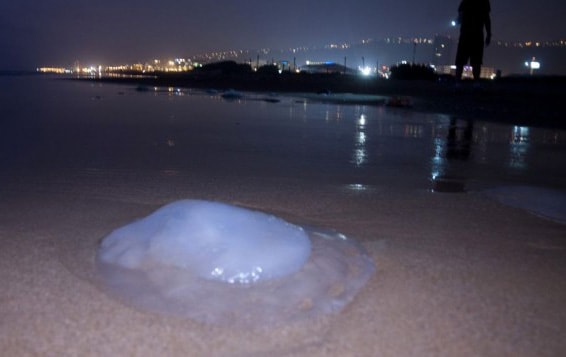
Jellyfish have been the cause of many problems for Israeli beaches in recent years. Warmer seawater is making coastal areas an ideal environment for jellyfish.
Throughout the spring and early summer, millions of jellyfish appear near beaches, injecting toxins into the water and making swimming impossible. Areas with a high concentration of jellyfish are deserted, with few swimmers.
Cine'al saw potential in this troublesome creature. Hydromash, a dry, flexible, and strong material that Cine'al is developing from jellyfish, is said to be many times more absorbent than a diaper advertised on TV.
"The type of paper currently in use, made from synthetic fibers, takes hundreds or thousands of years to decompose," said Ofer Du-Nour, Chairman of Cine'al and investment director of Capital Nano.
 |
“The technologies we’ve chosen (in the health and environmental fields) are proven. In the first few years of life, a newborn baby produces an average of 70kg of diapers a year, possibly even more,” said Du-Nour.
Nanomaterials, created by scientists from the process of converting jellyfish into hydromash, absorb large volumes of water and blood in just seconds. The scientists also added several nanoparticles that allow for the addition of antibacterial and skin-healing properties, color, scent, and more.
"The final product has the ability to absorb many times its own weight, biodegrades within 30 days, and is very competitively priced," said Mr. Du Nour.
It's safe and also offers the potential to eliminate landfills, clean up the seas teeming with jellyfish, which are now considered a valuable commodity rather than a pest. Mr. Du-Nour hopes his product is like killing two birds with one stone.
What Du Nour was thinking about was whether mothers would use "jellyfish diapers" for their babies? And whether they would use tissues made from jellyfish to wipe themselves?
“I’m not worried about this. Many products seem to be of unknown origin to consumers, especially those derived from animals and plants. Ultimately, the government will accept the use of this product instead of spending millions of dollars keeping jellyfish away from tourist areas and ports. There are too many jellyfish in the sea and too many Pampers diapers in landfills. Cine'al has the final answer to both of these issues,” said Mr. Du-Nour.
It remains unclear when jellyfish products will be available in supermarkets. According to Green Prophet, Cin'al is in discussions to build a production facility in South Korea and South Carolina (USA).
According to Labor


