
Sunscreen is only effective when used correctly.
In the scorching summer sun, the skin is most affected by dehydration and the impact of sunlight on the skin.
Many people buy sunscreen to protect their skin. However, sunscreen must be used correctly to be truly effective.
Ultraviolet rays and their harmful effects on the skin.
Ultraviolet rays in sunlight help convert vitamin D, thus preventing rickets. However, ultraviolet rays also have other negative effects such as causing sunburn, skin darkening, skin aging, and wrinkles. In some cases, prolonged exposure to ultraviolet rays can increase the risk of skin cancer.
Ultraviolet (UV) rays are divided into three types according to wavelength: UVA, UVB, and UVB. Of these, UVC rays are the most dangerous, but they are mostly absorbed by the ozone layer as they reach the Earth's surface. UVA and UVB rays have the greatest impact on the skin, causing sunburn, skin damage, tanning, and wrinkles.
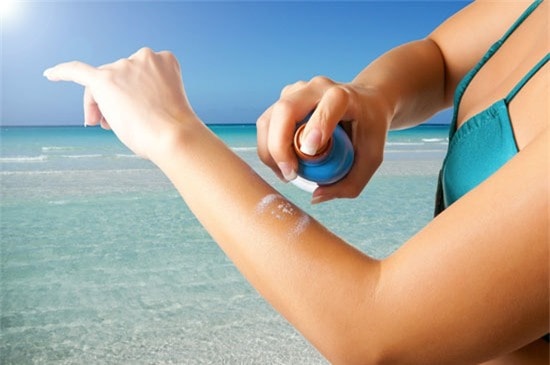 |
| To be effective, sunscreen needs to be used correctly. |
UVA rays are at their strongest around midday and penetrate all layers of the skin down to the dermis. When these rays come into contact with unprotected skin, they can cause mild burns, such as pale redness and a slight stinging sensation. Rays that penetrate deeper into the dermis and hypodermis cause gradual, prolonged tanning and can lead to partial degeneration of connective tissue, resulting in sun-induced wrinkles. UVA rays, in combination with UVB rays, can cause skin cancer in some cases.
UVB rays are high-energy and highly harmful. They penetrate the epidermis and dermis, affecting cells in the stratum corneum and superficial layers of the epidermis, causing more severe sunburn than UVA rays: redness, swelling, burning sensations, and even prolonged tanning. Furthermore, UVB rays stimulate pigment synthesis, leading to delayed and prolonged skin darkening, with the severity increasing over time compared to UVA rays.
What does the SPF rating mean?
Sunscreen reduces the harmful effects of sunlight on the skin when exposed to the sun, essentially reducing the effects of UVB and UVA rays. The purpose of using it is to prevent sunburn, tanning, and skin cancer. Sunscreen is measured by its SPF (sun protection factor) – an indicator of the duration of protection – and the PA+/++/+++ rating, which is printed on each product. So what do these ratings mean? How should we understand them correctly?
Different sunscreens have different SPF ratings. The lowest SPF rating in sunscreen is usually 15. Generally, an SPF of 30 filters out 95% of UV rays, and those above 50 filter out 97%. Therefore, we often make the mistake of thinking that a higher SPF will provide better protection, without realizing that using the wrong SPF rating can actually damage the skin.
In reality, a higher SPF rating means longer-lasting sun protection, not better protection than a lower SPF. Sunscreen with an SPF of 20-30 is recommended for light skin, and SPF below 20 for darker skin. Generally, SPF 30-50 is the most commonly used. Very high SPF ratings (60-100) should only be used on specific skin areas, such as those undergoing treatment for melasma or sun allergies.
Many people choose to use sunscreen with a very high SPF (some sunscreens on the market have SPF 81), meaning they provide longer protection from sun radiation. However, because the higher the SPF, the longer the cream stays on the skin, it will combine with skin secretions and sweat to create chemical reactions, generating free radicals that damage and discolor the skin. This can then lead to an increase in age spots and freckles.
According to international standards, 1 SPF provides protection against UV rays for approximately 10-15 minutes, depending on the intensity of UV exposure and individual skin characteristics. However, this effect is not consistent due to dirt, sweat, clothing, water, and the way sunscreen is applied.
Therefore, the actual UV protection time of sunscreens is only about 50-60% of the theoretical time. Thus, if using sunscreen with an SPF of 30, the skin is likely protected for about 200 minutes. Furthermore, for optimal effectiveness, sunscreen should be applied 30 minutes before sun exposure to allow it to take effect, or it can be used as a makeup base.
The PA rating, short for PFA (Protection Factor of UVA), indicates the sunscreen's ability to protect the skin from UVA rays. In reality, most sunscreens filter UVB rays; very few products can protect the skin from the harmful effects of UVA rays. Therefore, cosmetic manufacturers use PA ratings in corresponding levels:
- PA+: Provides effective protection against UVA rays (level 40-50%)
- PA++: Highly effective against UVA rays (60-70% protection)
- PA+++: Highest UVA protection effectiveness (90% or higher, maximum 98%).
According to Health and Life


