
The performance of newly transferred officials is a reliable 'number of votes'.
Cadres who are transferred or rotated may be elected with a high number of votes, but that "number of votes" only reflects "trust in the Central Committee's recommendation."
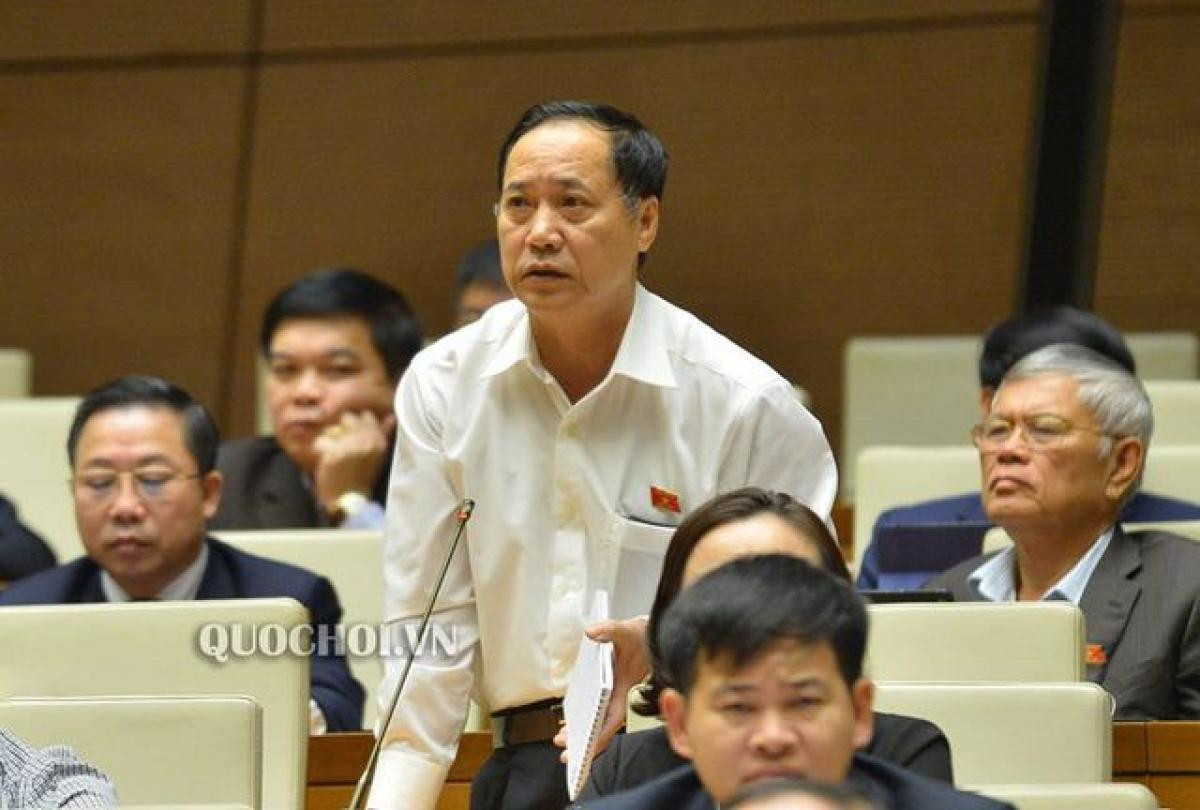 |
Mr. Nguyen Mai Bo during a discussion session at the National Assembly forum. Photo: quochoi.vn |
The rotation and reassignment of officials is a sound policy aimed at creating opportunities for officials to be trained and tested, while also limiting the phenomenon of "entire families holding official positions" or nepotism and cronyism.
Recently, a number of officials have been transferred or rotated to local areas and nominated for key positions. Most of these officials were elected by the People's Council with a relatively high number of votes, many receiving an absolute majority. However, according to many, what is most important is the official's work history in the locality, and only after a certain period of time will the actual number of votes cast for them be truly accurate.
In Hanoi, when nominated for the position of Chairman of the People's Committee, Mr. Nguyen Duc Chung and Mr. Chu Ngoc Anh were both elected with very high percentages of votes, especially Mr. Chu Ngoc Anh, who received 100% of the votes from the delegates present. Mr. Trinh Xuan Thanh, upon returning to Hau Giang, was elected Vice Chairman of the Provincial People's Committee with an overwhelming majority of votes;... However, these officials have been disciplined, prosecuted, and many of their wrongdoings occurred in the past.
Mr. Nguyen Mai Bo, former Standing Member of the National Assembly's Committee on National Defense and Security, believes that a high percentage of votes from grassroots levels regarding the reassignment and rotation of officials indicates only one thing: the unified and unanimous agreement of the grassroots level with the policies of the competent authorities in the reassignment of officials. The grassroots level only trusts the official based on their resume; many people are unaware of the official's actual character, ethics, and capabilities.
Sharing the same view, Mr. Le Nhu Tien, a member of the National Assembly in the 12th and 13th terms, and former Deputy Chairman of the National Assembly's Committee on Culture, Education, Youth, and Children, argued that the high number of votes received by transferred officials reflects the trust of officials and Party members in the Central Committee's recommendation, rather than the actual capabilities and qualities of those officials. Local authorities trust the Central Committee's recommendation, so they vote, demonstrating high consensus. In reality, local authorities have not had much contact with the newly arrived officials; conversely, the transferred officials have not had time to gain experience and demonstrate their abilities.
So, is it something to be happy about when officials are reassigned or rotated and elected with a high number of votes? The answer is definitely no, because reality has shown that, after a period of time, in some localities, the reassigned officials have failed to meet the expectations of local officials and people. Some, after being reassigned, instead of "continuing to strive, cultivate political acumen, improve moral character and lifestyle; actively study, improve professional qualifications, accumulate experience and leadership and management skills," have become lax, lost themselves, and fallen into corruption.
Therefore, the policy of deploying and rotating cadres can only be truly effective when we do not choose the wrong people.
"The policy of transferring and rotating cadres for development is not wrong, but the selection of cadres for transfer and rotation must be accurate, and the selected cadres must be truly worthy. Furthermore, during the rotation process, cadres must go through practical challenges," Mr. Le Nhu Tien stated.
To prevent "underperforming" individuals from slipping through the cracks, Mr. Nguyen Mai Bo, former Standing Member of the National Assembly's Committee on National Defense and Security, suggested that the monitoring channels from public opinion and the press should be effectively utilized. He believes this aspect has not been effectively promoted or exploited for a long time.
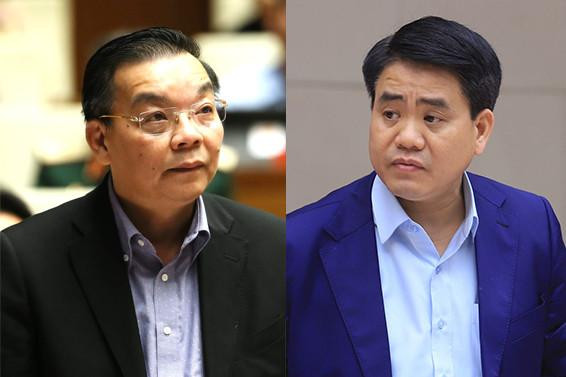 |
| When nominated for the position of Chairman of the Hanoi People's Committee, Nguyen Duc Chung and Chu Ngoc Anh were both elected with a very high percentage of votes. Photo: Vietnamnet.vn |
An official might perform well in their previous environment, but in a different locality, a different field, or a different environment, it may be difficult for them to fully utilize their abilities. Therefore, the competence and qualities of an official must be affirmed in practical work and real-world performance, not just through a resume or a list of impressive achievements, but through actions that transform the socio-economic activities of the locality. Only then can an official be considered competent and qualified.
According to the assessment of the Central Organizing Committee at a meeting in early August with Central Committee officials transferred and rotated under the management of the Politburo and the Secretariat, the quality of transferred and rotated Central Committee officials has improved. The majority of officials possess strong political acumen, qualities, capabilities, and prestige; many officials have shown significant growth after their transfer and rotation; only a few transferred and rotated officials still lack experience in Party building and state management.


