
Overcoming bureaucracy and alienation from the people.
(Baonghean) - Dialogue is one of the leadership, guidance, and management measures of Party committees and governments at all levels to create consensus for common tasks; at the same time, to learn from experience, overcome limitations in leadership, guidance, and management, and even prevent misconduct among cadres and civil servants.
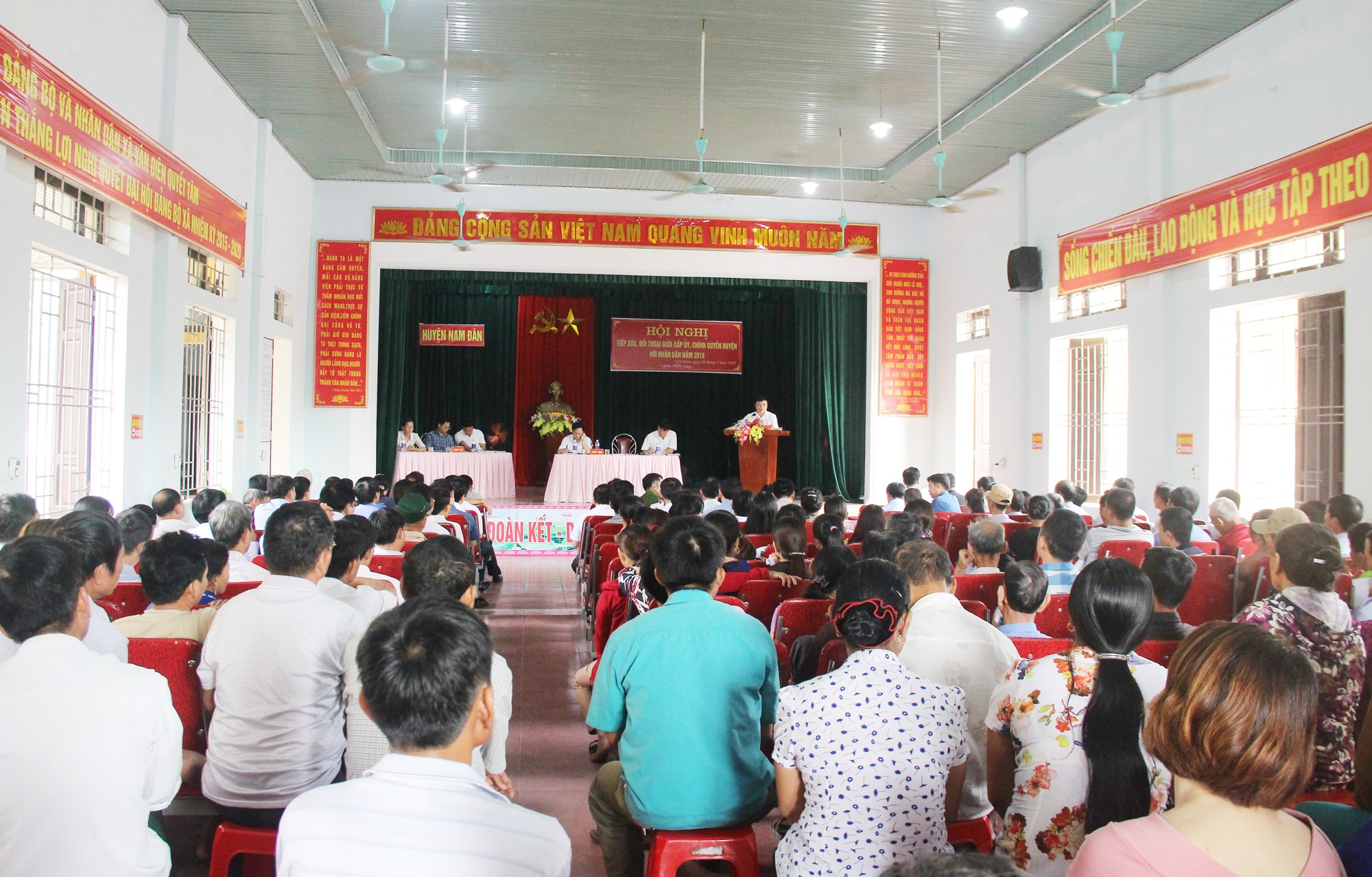 |
| A scene from the dialogue between the Party Committee and the government of Nam Dan district and the local people. Photo: Mai Hoa |
Overcoming bureaucracy
In recent years, dialogues between local government leaders (chairpersons of the People's Council and People's Committee at the commune level) and the people have been organized by the Fatherland Front Committees at all levels throughout the province, becoming an annual activity. In 2018 alone, the province held 826 such dialogues. Many issues related to the responsibilities of local governments in land management, such as illegal land sales, illegal construction on agricultural and forestry land, dike and traffic safety corridors, delays in issuing and renewing land use right certificates; responsibilities in managing and directing economic development as well as implementing political tasks at the local level; implementation of policies and regulations; and the ethical conduct of local officials and civil servants, were frankly raised by the people.
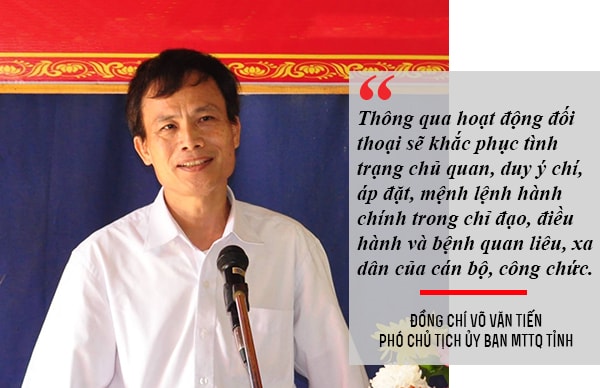
Importantly, according to Comrade Vo Van Tien, Vice Chairman of the Provincial Fatherland Front Committee, the issues raised by the people cannot be avoided by the government; instead, it must be addressed and resolved publicly under the supervision of the people. This will limit prolonged grievances and ensure that the people's aspirations and desires are met more promptly. In particular, the leadership, guidance, and management capacity of local governments will be enhanced; overcoming the subjective, willful, authoritarian, and bureaucratic tendencies in leadership and management, as well as the detachment from the people among officials and civil servants – two of the manifestations of degradation pointed out in Resolution 4 of the Central Committee (12th Congress).
 |
In addition to grassroots-level dialogue, many localities at the district level have also paid attention to dialogue to resolve specific issues and cases. For example, in Anh Son district, in 2018, the Standing Committee of the District Party Committee conducted two dialogues with key grassroots officials, including Party Secretaries, Chairmen of the People's Councils and People's Committees at the commune level, and Party branch secretaries, block leaders, and village heads throughout the district. Through these dialogues, many issues related to the Party and State's policies and guidelines, linked to the implementation of tasks at the grassroots level, were clarified and oriented by district leaders, providing direction and leadership focus for the grassroots.
This includes the implementation of Resolution No. 6 of the Central Committee (12th term), linked with personnel arrangement and policies; policies on economic development investment and rural construction; investment in socio-economic infrastructure construction; coordination between district-level departments in promoting crop restructuring and building new economic models; and delays in issuing land use right certificates and settling construction project accounts…
In addition to the broad-based dialogue, the leaders of Anh Son district also organized four more thematic dialogues in specific areas. The chosen theme for these dialogues was the issuance of land use rights certificates to households in the district – an issue of great concern and frustration among many voters. The remaining three dialogues were held in the three communes of Thach Son, Khai Son, and Hoi Son – areas with many issues requiring focused attention and resolution.
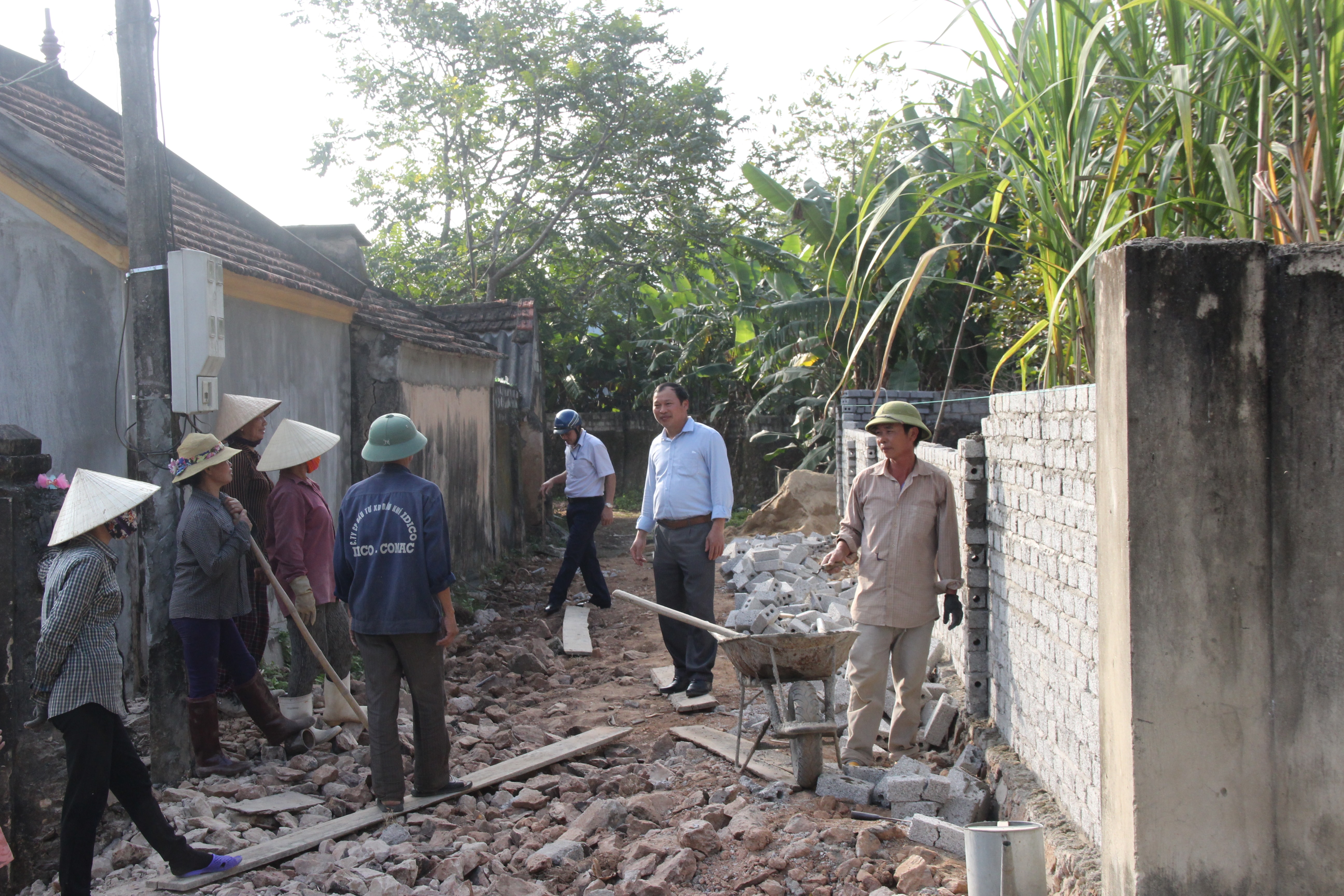 |
| Officials from Quynh Dien commune (Quynh Luu district) directly engage in dialogue with residents regarding the plan to open rural roads. Photo: Mai Hoa |
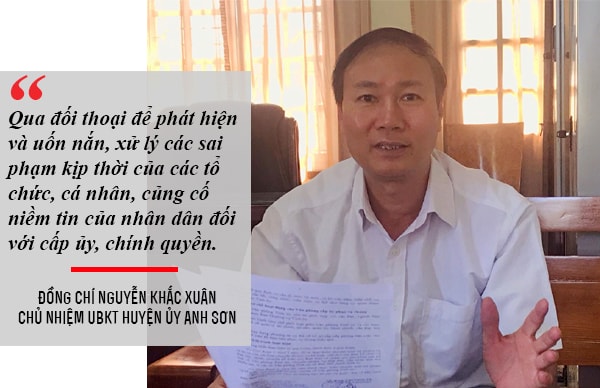
Comrade Nguyen Khac Xuan, Chairman of the Anh Son District Party Committee's Inspection Committee, stated: "In these dialogues, existing problems, limitations, and inadequacies are clearly identified, along with the specific responsibilities of each organization and individual, to facilitate their resolution after the dialogue. For example, after the dialogue on land allocation work (held at the beginning of 2018), the District Party Committee established working groups led by members of the Standing Committee to directly visit each grassroots unit with a low rate of land use right certificate issuance to guide and resolve difficulties and obstacles; especially to increase the responsibility of grassroots Party committees and authorities in this matter, avoiding the situation of delegating all responsibility to land administration officials or relying on consulting units. As a result, the results of issuing land use right certificates to households in the last six months of 2018 equaled the results of the previous two years combined."
Similarly, through dialogue in Hoi Son commune, many pressing issues of the people related to outstanding policies and regulations; land management, basic construction investment, and the implementation of personnel procedures that were not strictly enforced were clarified and resolved, thereby building trust among the people.”
Besides addressing pressing issues, according to the Head of the Anh Son District Party Committee's Inspection Committee, the dialogue also uncovered several violations, leading to the handling of responsibility for some related organizations and individuals. This contributed to preventing violations, raising awareness of responsibility among officials and civil servants at all levels, and strengthening the people's trust in the Party committee and government.
 |
Expanding dialogue activities
Dialogue is one of the measures in the leadership, guidance, and management process of Party committees and governments at all levels to enhance understanding, sharing, and consensus for common development goals, ensuring a harmonious balance of interests between the State and the people; at the same time, promoting positive aspects, adjusting, supplementing, and overcoming limitations and shortcomings in leadership, guidance, and management, and even preventing misconduct among cadres and civil servants.
Dialogue activities in the province have been concretized by the Provincial Party Standing Committee through Decision No. 2924/QD-TU, dated August 30, 2012, on the promulgation of the "Regulations on contact and dialogue with the people," along with many subsequent official documents, most recently Official Document No. 4063-CV/TU, dated January 7, 2019, on directing contact and dialogue with the people. Accordingly, this document requires district, city, and town Party committees under the Provincial Party Committee, in addition to continuing to direct the implementation of dialogue conferences between the heads of local governments and the people, to also organize dialogues between the heads of district-level Party committees and governments with the people.
We need to expand dialogue across sectors and industries to thoroughly address issues in an open manner.
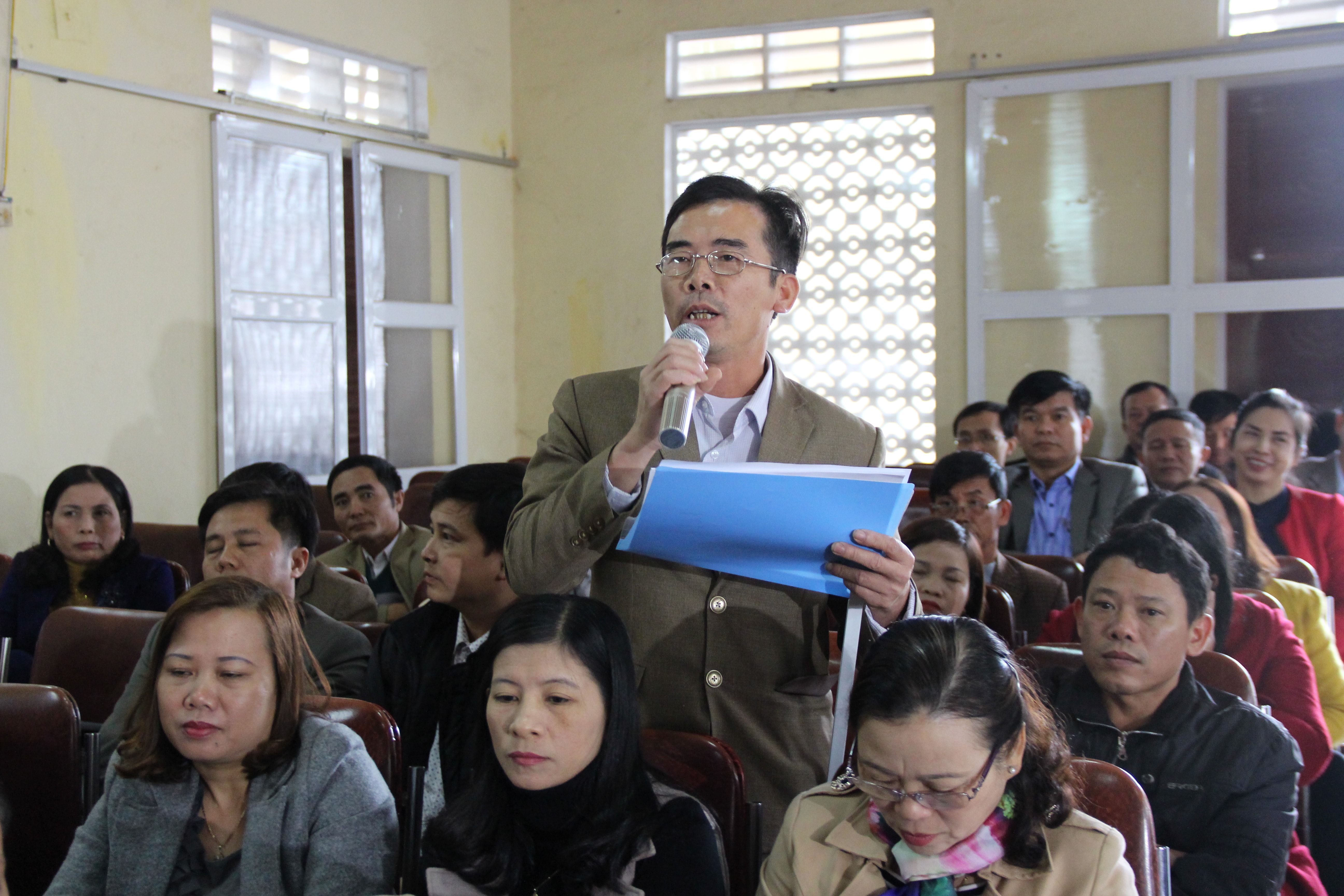 |
| A dialogue between the Standing Committee of the Do Luong District Party Committee and key grassroots officials. Photo: Mai Hoa |
Alongside expanding dialogue at the district level and through grassroots engagement, we have noted opinions suggesting that certain issues, grievances, and shortcomings at the sectoral level also require dialogue to thoroughly resolve these problems openly and comprehensively, avoiding a situation where one level blames another, with no one taking responsibility to address the issues.
For example, the Ministry of Industry and Trade needs to organize dialogues to find solutions to address issues related to the reimbursement of rural low-voltage power grids, or dialogues to resolve the coordination problem between the government and investors of hydropower projects, and between hydropower projects themselves, to ensure the safe operation and regulation of reservoirs during the rainy season and floods. Similarly, the Ministry of Natural Resources and Environment needs to organize dialogues between all parties to resolve difficulties and obstacles, and to expedite the issuance of land use rights certificates and house ownership certificates for apartment and urban development projects. These dialogues also aim to promote the completion of procedures for approved investment projects and accelerate the implementation of construction projects after the completion of these procedures…
All levels and sectors need to focus on improving the quality of dialogues and avoid formality in their organization.
Along with strengthening and expanding dialogue activities, according to Vice Chairman of the Provincial Fatherland Front Committee Vo Van Tien, all levels and sectors need to pay attention to the quality of dialogues, avoiding formality in organization. In particular, there must be a receptive spirit, seriously considering and decisively addressing issues raised at dialogues that fall within their authority and responsibility, "avoiding beating around the bush"; for issues exceeding their authority, they should propose solutions and work with higher levels to resolve them.
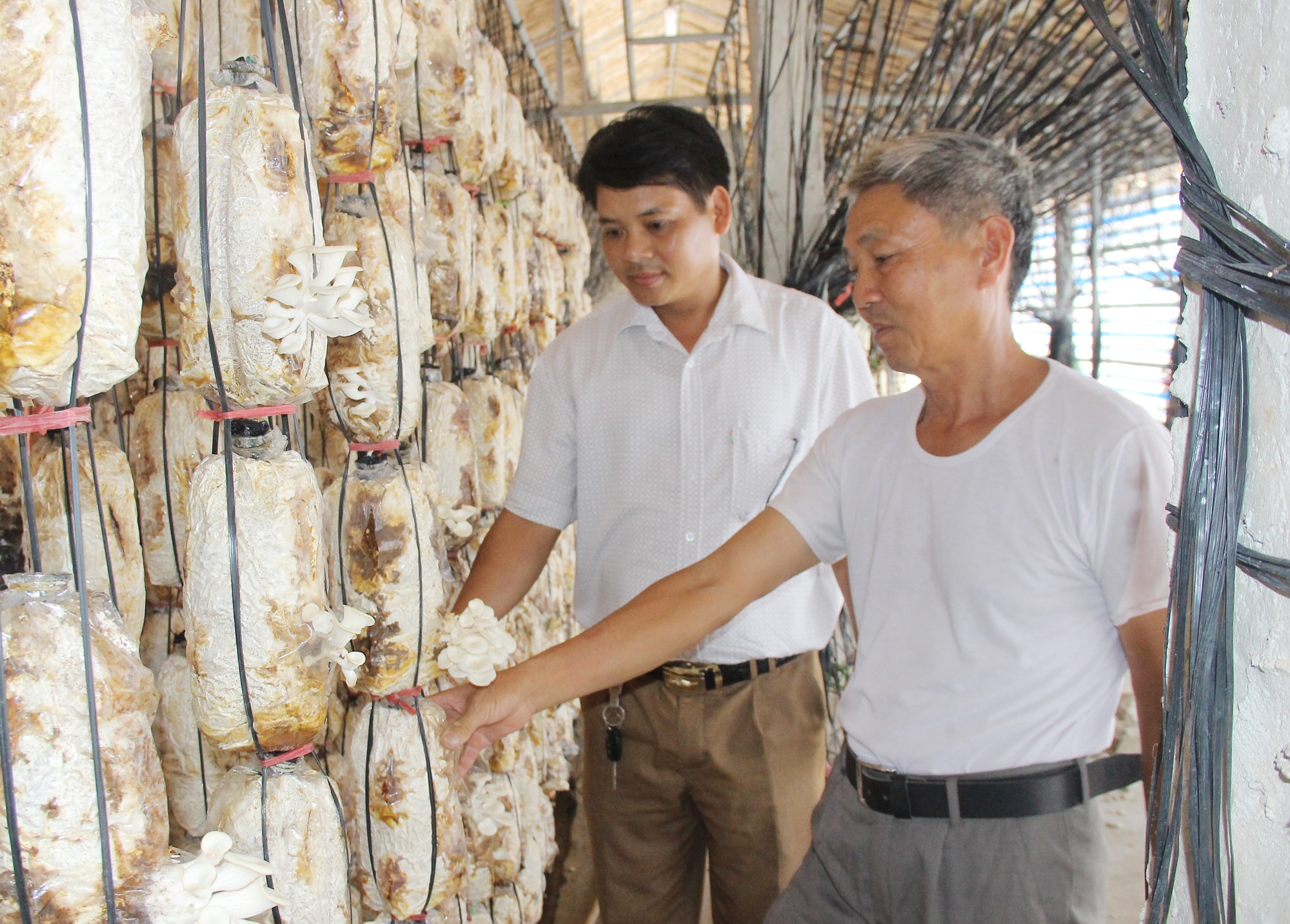 |
| Officials from Son Thanh commune, Yen Thanh district, investigate the difficulties faced by local people in production in order to promptly resolve them. Photo: Minh Chi |


