
Customers are struggling with biometric authentication for banking transactions.
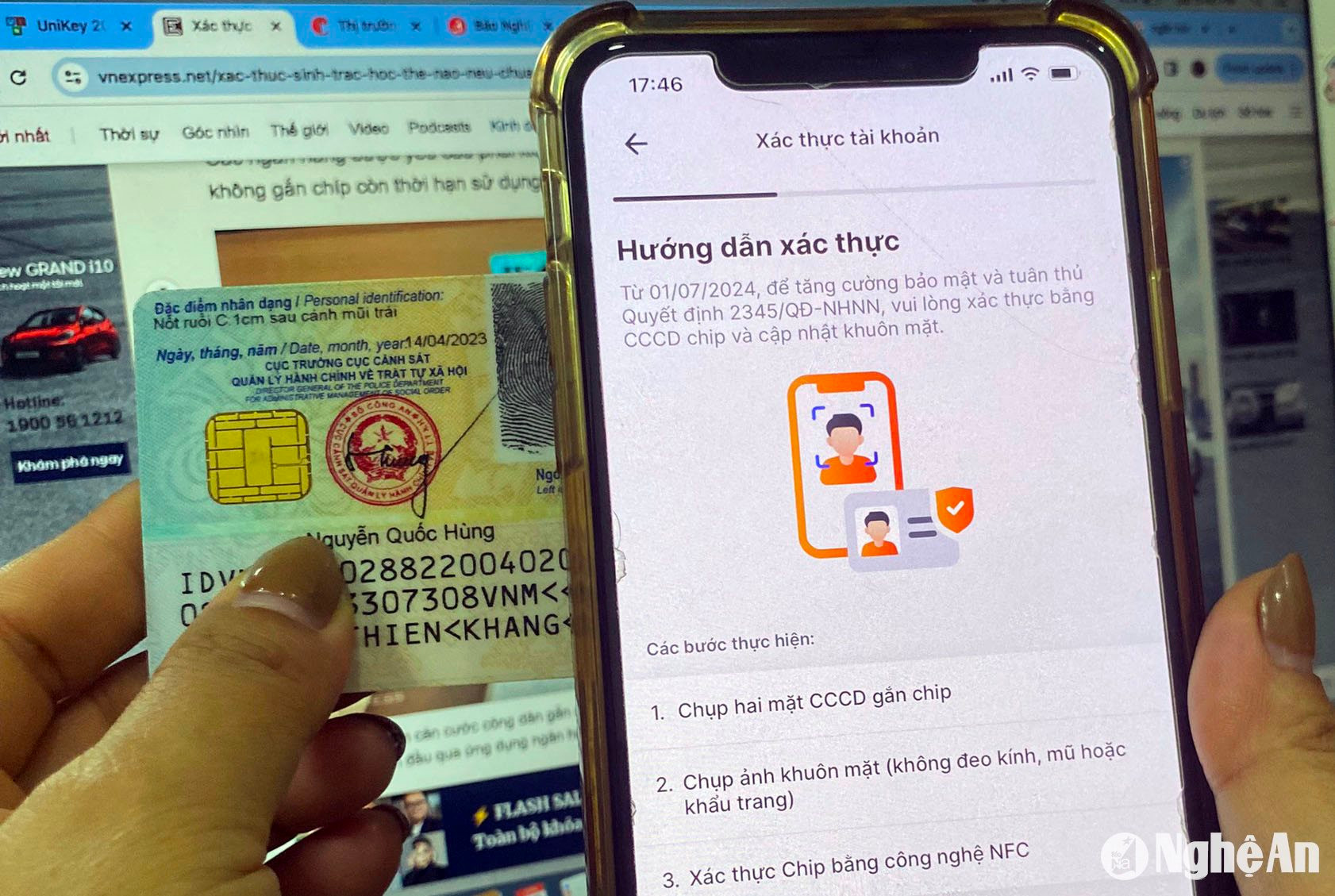
From July 1st, online banking transactions will apply biometric authentication in accordance with Decision 2345 of the State Bank of Vietnam.
The bank took the initiative.
Therefore, customers who want to transfer money of 10 million VND or more per transaction and 20 million VND or more per day; customers who top up their e-wallets with more than 10 million VND or conduct interbank transactions abroad... must all undergo biometric authentication.
Earlier in June, many banks began piloting biometric authentication and urgently assisting customers in completing the process. To date, many banks have implemented it early and quickly, with a large percentage of customers having registered for biometric identification, such as VietinBank, Vietcombank, BIDV, Agribank, VIB, etc.
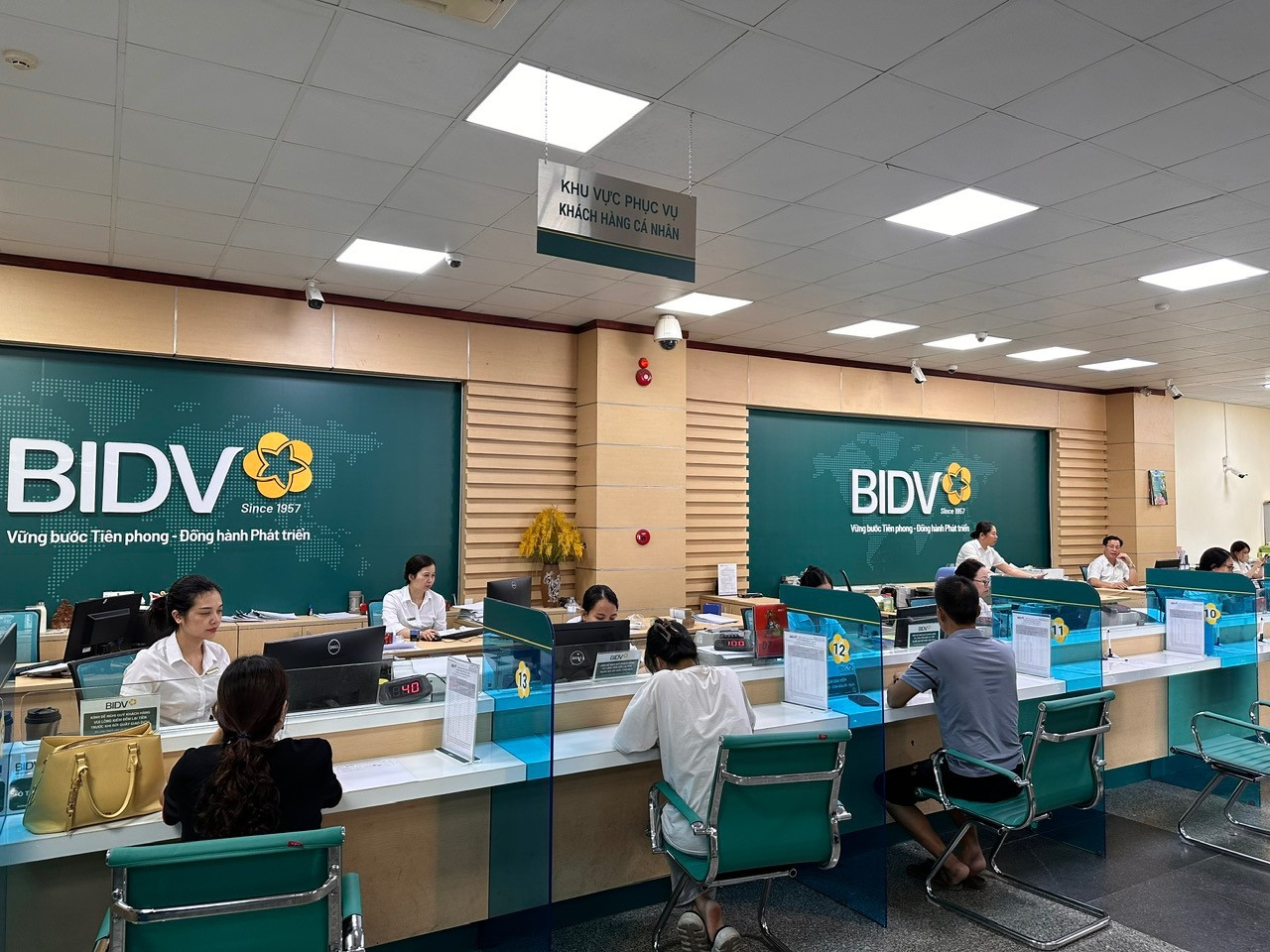
Ms. Le Thi Mong Ly, Deputy Director of BIDV Bank's Nghe An branch, said that BIDV has proactively guided customers on how to do this for many months now. In particular, during the last days of June, the branch increased its working hours and worked overtime to serve customers.
"In recent days, the number of customers visiting the branch has increased significantly because many people haven't been able to do it themselves and are coming to the bank for guidance. The instructions are clear and easy to follow. However, today's high traffic has caused occasional network congestion, so customers may need to wait a few more days."
Ms. Le Thi Mong Ly - Deputy Director of BIDV Bank, Nghe An Branch
Currently, some banks have added devices to read and verify chip-embedded citizen identification cards; at the same time, they are urgently collecting biometric data from customers to implement biometric authentication for some transactions starting from July 1st.
The implementation process shows that banks are racing to update their applications, enhancing customer facial recognition features and updating information to match the population database. Meanwhile, many customers are struggling with the update process; some manage it immediately, while others take a long time to complete.
At a joint-stock bank in Vinh City, a customer said: "Because I conduct many transactions involving large sums of money, I immediately implemented this policy when I heard about it. I followed all the bank's instructions correctly, but I couldn't get the ID card scanning step to work, so I had to go to the bank for assistance. However, the bank staff couldn't do it either."
A representative from the State Bank of Vietnam's Nghe An branch stated: This is a mandatory requirement when transferring more than 10 million VND per transaction or more than 20 million VND per day, or for goods and services transactions exceeding 100 million VND. Using biometrics adds an extra layer of security, preventing risks for customers. To allow time and a clear implementation roadmap, banks have been gradually adopting this measure. The industry's perspective is to ensure customer safety without making transactions difficult for customers, in line with the spirit and objectives of the cashless payment scheme that banks and agencies have been successfully implementing for a long time.
"The implementation started on July 1st, but not all banks can apply it; it depends on each bank's technology," a representative from the State Bank of Vietnam's Nghe An branch shared.
According to Decision 2345, the two lowest authentication levels, A and B, do not require biometric authentication. For example, for type A transactions, customers only need to log in using their username, password, or PIN, and authentication is not required at the transaction stage if they have logged in previously. This method applies to transactions such as information lookup; money transfers within the same bank or account holder; or payments under 5 million VND.
Type B authentication uses methods such as OTP (One-Time Password), biometric identification linked to a handheld device, or electronic signatures to transfer money to others, and deposit and withdraw funds from e-wallets. However, the transaction size is limited to under 10 million VND per transaction and under 20 million VND per day.
According to the State Bank of Vietnam, biometric identification of customers for transactions of categories C and D (the two highest levels) is done by matching the biometric data stored in the customer biometric database that has been collected and verified. In cases where individuals do not have a chip-embedded ID card, they must visit a bank branch to update and verify their data.
According to the State Bank of Vietnam's decision, biometric authentication is based on comparing the user's biometric characteristics with information registered in the national population database provided by the Ministry of Public Security or via VNeID - which is currently on a pilot program. Therefore, users need to distinguish between device-based biometrics and biometrics based on the national population database.
Without biometric verification matching the data on the chip-embedded citizen ID card or the customer biometric database, citizens are only allowed to conduct transactions of less than 10 million VND per transaction, or less than 20 million VND per day.
Even without a chip-embedded ID card, biometric authentication can still be performed.
One of the most important steps in creating biometric data for banking apps is taking photos of both sides of the chip-embedded citizen identity card. So what should customers do if they are still using their old identity card or do not yet have a chip-embedded citizen identity card?
To resolve the arising difficulties, on June 25, the Governor of the State Bank of Vietnam issued Document No. 5262/NHNN-CNTT providing guidance on some aspects of implementing Decision 2345/QD-NHNN.
According to the State Bank of Vietnam's guidelines, in cases where customers do not have a national identity card or a chip-embedded citizen identification card, but only a citizen identification card or a non-chip-embedded citizen identification card (which must still be valid according to the law), if they need to conduct online transactions exceeding 10 million VND or total daily transactions exceeding 20 million VND, they must register their biometric information directly at the transaction counter. Credit institutions need to assist customers in the authentication process by matching the biometric data stored in the customer biometric database that has been collected and verified.
For customers with chip-embedded citizen identification cards but using phones that do not support NFC (Near-Field Communication wireless connection standard), biometric authentication for transactions of types C and D as stipulated in Article 1 of Decision 2345 is implemented as follows: Through the verification of the customer's electronic identity account created by the electronic identification and authentication system (units need to integrate Internet Banking and Mobile Banking applications with the electronic identification and authentication system to provide this service).
The second measure is to match the biometric data stored in the collected and verified customer biometric database. This verification is carried out as follows: Matching the customer's biometric identification data with the biometric data on the chip of the customer's Citizen Identification Card (CCCD) issued by the Public Security agency, performed at the transaction counter using the unit's chip-based CCCD reader/phone; or matching the customer's biometric identification data through the customer's electronic identity account verification created by the electronic identification and authentication system.
To prepare for the implementation of Decision 2345 from July 1, 2024, the State Bank of Vietnam (SBV) requires banks to strengthen communication and guidance to all customers on the implementation of transaction authentication measures corresponding to the prescribed transaction limits. Credit institutions should prepare plans, hotlines, and assign staff to be on duty 24/7 to promptly guide and support customers in registering and using biometric authentication information. They should proactively coordinate with the National Population Data Center - Department of Administrative Management of Social Order - Ministry of Public Security and other relevant organizations to prepare plans to handle difficulties and obstacles in the process of registering and using biometric authentication services. Credit institutions implement technical solutions to ensure the security and safety of customer information and data, complying with the law on personal data protection and the law on ensuring the security and safety of information systems.
To prevent transaction congestion and provide timely customer support, the State Bank of Vietnam encourages units to complete the deployment and promptly provide services to customers. The bank advises customers not to update biometric data through any other websites or applications to avoid the risk of fraud.


