Opening and upgrading border gates in Nghe An province not only aligns with the regional development orientation and connectivity but also provides border localities with more opportunities to enhance socio-economic development and international cooperation.
Opportunities for economic developmentfor local areas
H
Thanh Chuong district, located in the midland and mountainous region, has a fairly large area of 1,127 square kilometers.2With a population of over 250,000 people, Thanh Chuong district possesses many favorable conditions for socio-economic development, with several important driving forces that can create breakthroughs in socio-economic development, such as: diverse and abundant natural conditions that can generate many products from the development of agriculture, processing industries and supporting industries, tourism, and services in a modern direction to develop a circular economy, quickly and sustainably in the context of deep economic integration.
According to the leaders of Thanh Chuong District People's Committee, the district is currently implementing a crop restructuring program linked to processing and product consumption to increase the value per unit of cultivated land. They are also developing models for product consumption linkages and high-tech livestock farming with specific geographical indications for clean and safe agricultural products. The entire district has 20 OCOP products recognized by the Provincial People's Committee as achieving 3 stars or higher.
Regarding industry and handicrafts, the total value of retail goods circulation and service revenue annually reached over 4.3 trillion VND… As for attracting investment, many projects have been and are being implemented to serve the potential for inter-provincial and inter-regional trade, such as the Do Cung Bridge across the Lam River connecting Cat Ngan area with Do Luong district; the road connecting National Highway 46 to Ngoc Son commune with Nam Hung commune, Nam Dan district; and the construction of roads connecting from the Ho Chi Minh Trail to the tea and orange growing areas in Thanh Duc and Thanh Tien communes…
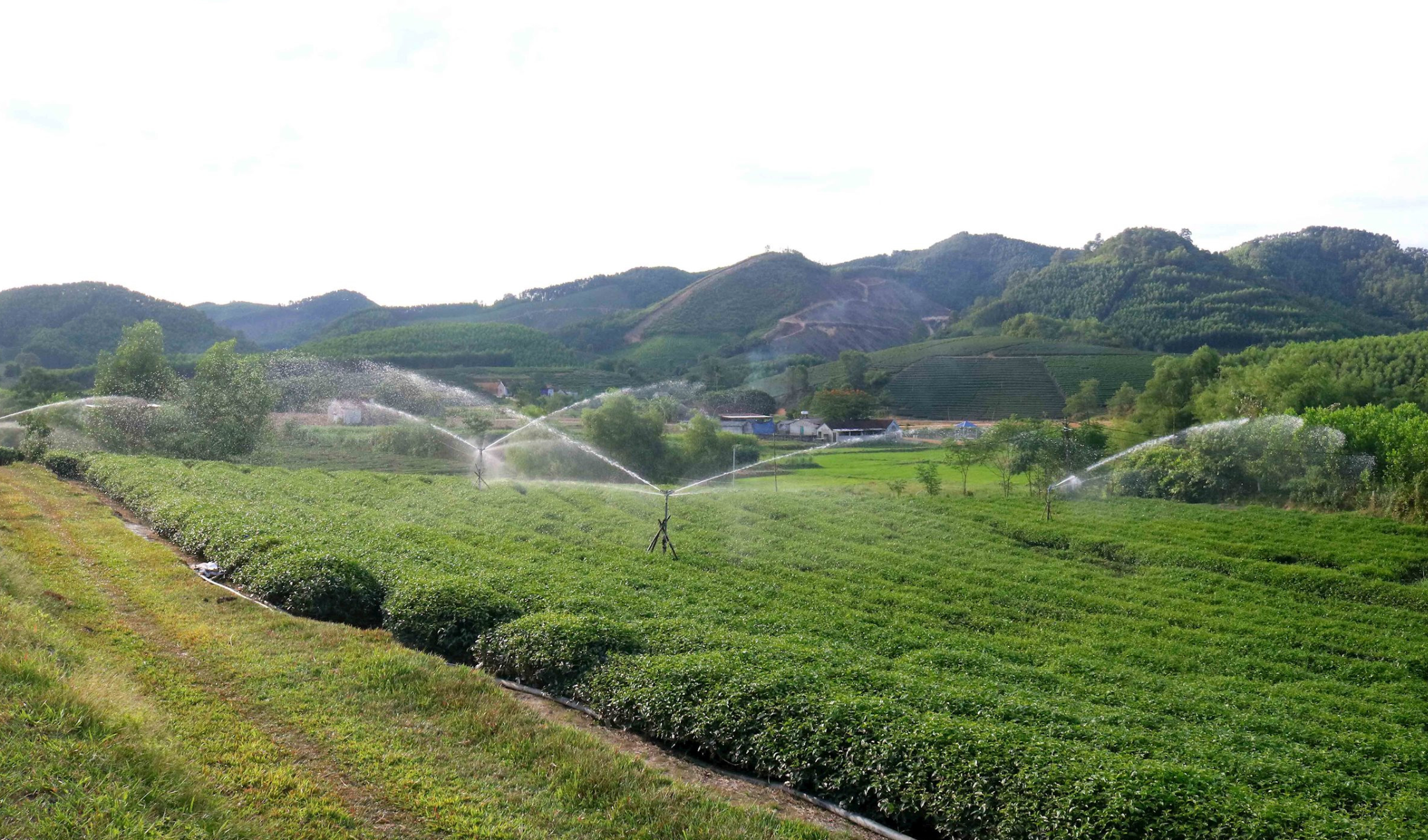
Thanh Chuong has a strong potential for developing organic and VietGAP-certified tea. (Photo courtesy of PV)
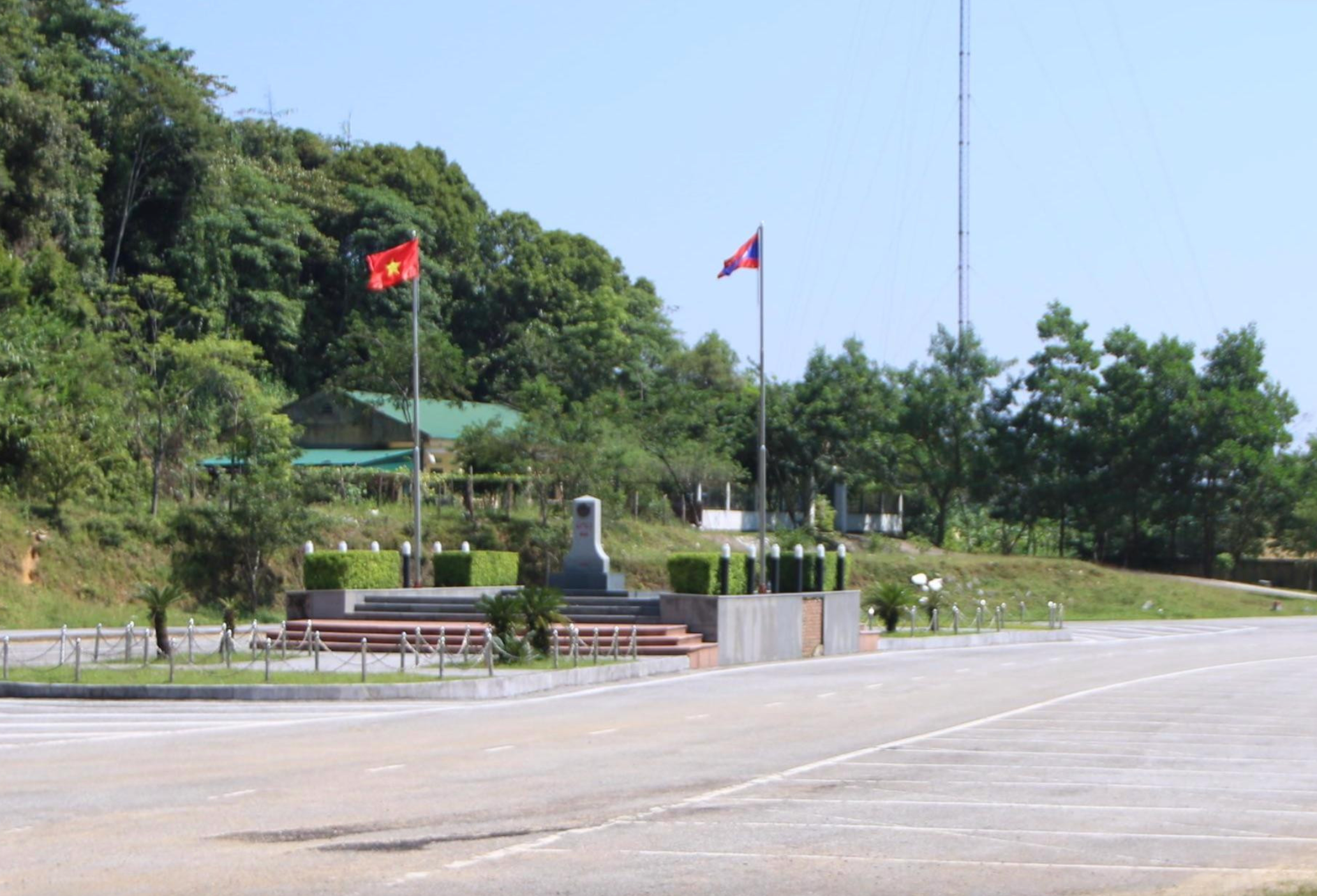
Border security in Thanh Thuy is always ensured. (Photo courtesy of PV)
Tourist destinations in Thanh Chuong district. Photo: CSCC
Thanh Chuong has a fairly complete inter-regional transportation network with 4 national highways running through it (46, 46B, 46C, Ho Chi Minh Highway), the Hanoi - Vientiane expressway passing through Thanh Thuy border gate to the west, connecting with the North-South road and railway lines to Cua Lo seaport and Vinh airport, which are included in the provincial planning approved by the Government.
The opening and upgrading of Thanh Thuy Border Gate will help Thanh Chuong district maximize the potential of investment projects from sources outside the state budget that have been attracted, such as: the biomass pellet fuel plant in Thanh Huong commune, the Matsuoka garment factory in Thanh Lien, the Thanh Phong garment factory (whose planning has been approved), and the Thanh Chuong 2 wood factory (producing wood pellets and wood products) in Thanh Tung commune (whose investment policy has been approved by the province)...
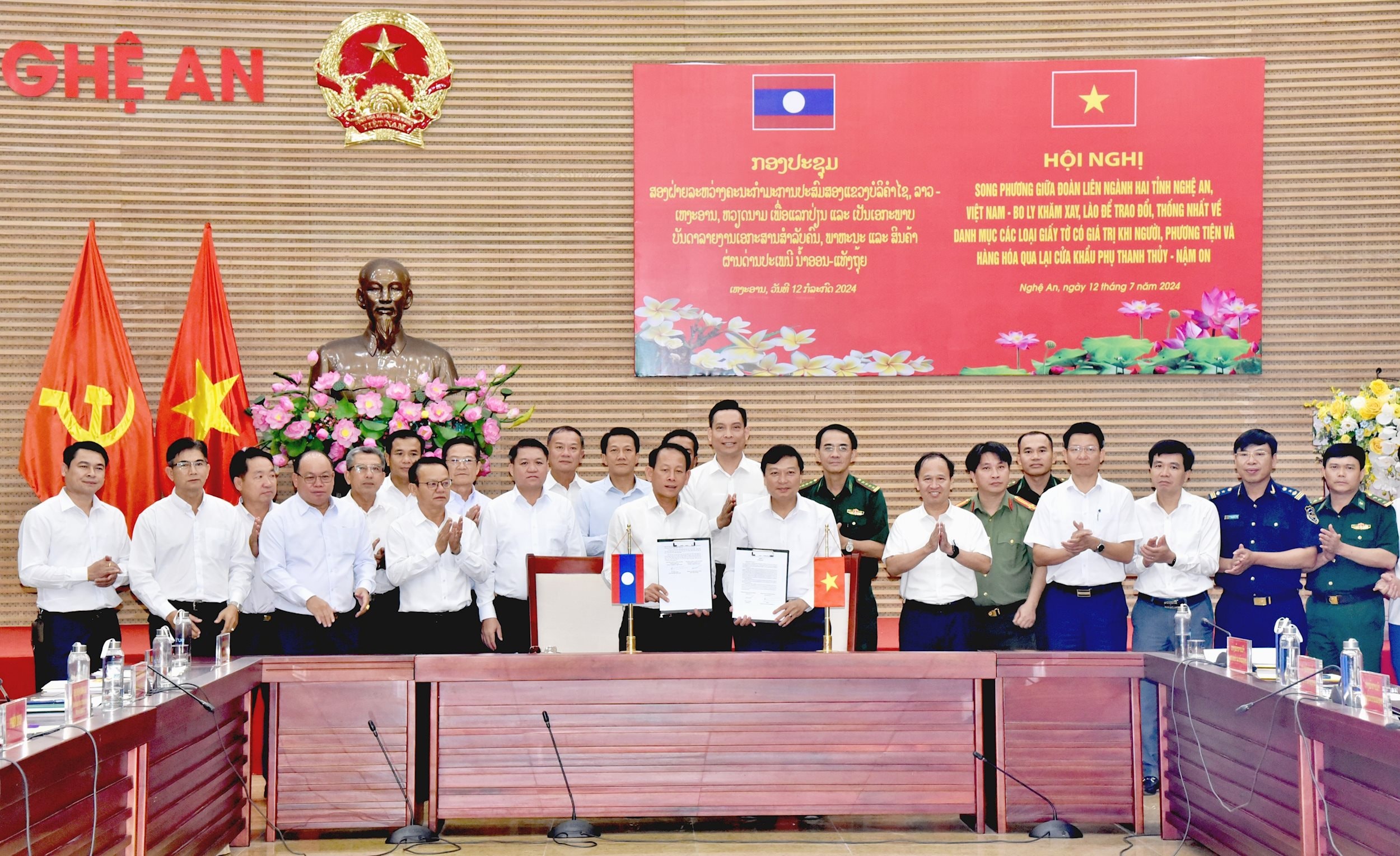
Recognizing this potential, the Provincial People's Committee is currently taking steps to upgrade the Thanh Thuy sub-border gate into a main border gate, with a vision to upgrade it to an international border gate by 2045. Most recently, the People's Committee of Nghe An province and Thanh Chuong district coordinated with a delegation from Bolikhamsai province (Laos) to hold a bilateral inter-agency conference to exchange and agree on a list of valid documents for people, vehicles, and goods crossing the Thanh Thuy - Nam On sub-border gate. This is an important cooperation, which will help to open up and realize the policy of upgrading border gates along the border in Thanh Chuong district in particular and Nghe An province in general with the provinces of Laos.
Emphasizing the significance of international friendly cooperation through the opening of Thanh Thuy Border Gate, and moving towards upgrading it to a higher level, the Standing Vice Chairman of the Provincial People's Committee, Le Hong Vinh, affirmed that this is an important activity to create favorable conditions for people of the two provinces to travel and trade goods, while also promoting the potential advantages in economics, tourism, and visiting relatives and traveling between the two provinces and two countries through Thanh Thuy Border Gate.
Mr. Le Hong Vinh also emphasized that Nghe An province has a population of over 3.4 million people, and if goods from Bolykhamxay and neighboring districts and provinces of Laos are traded through the border gate, they will have access to the potentially lucrative market in Nghe An. At the same time, Bolykhamxay's vast land resources offer great potential for economic exchange and development in agriculture, services, and tourism.
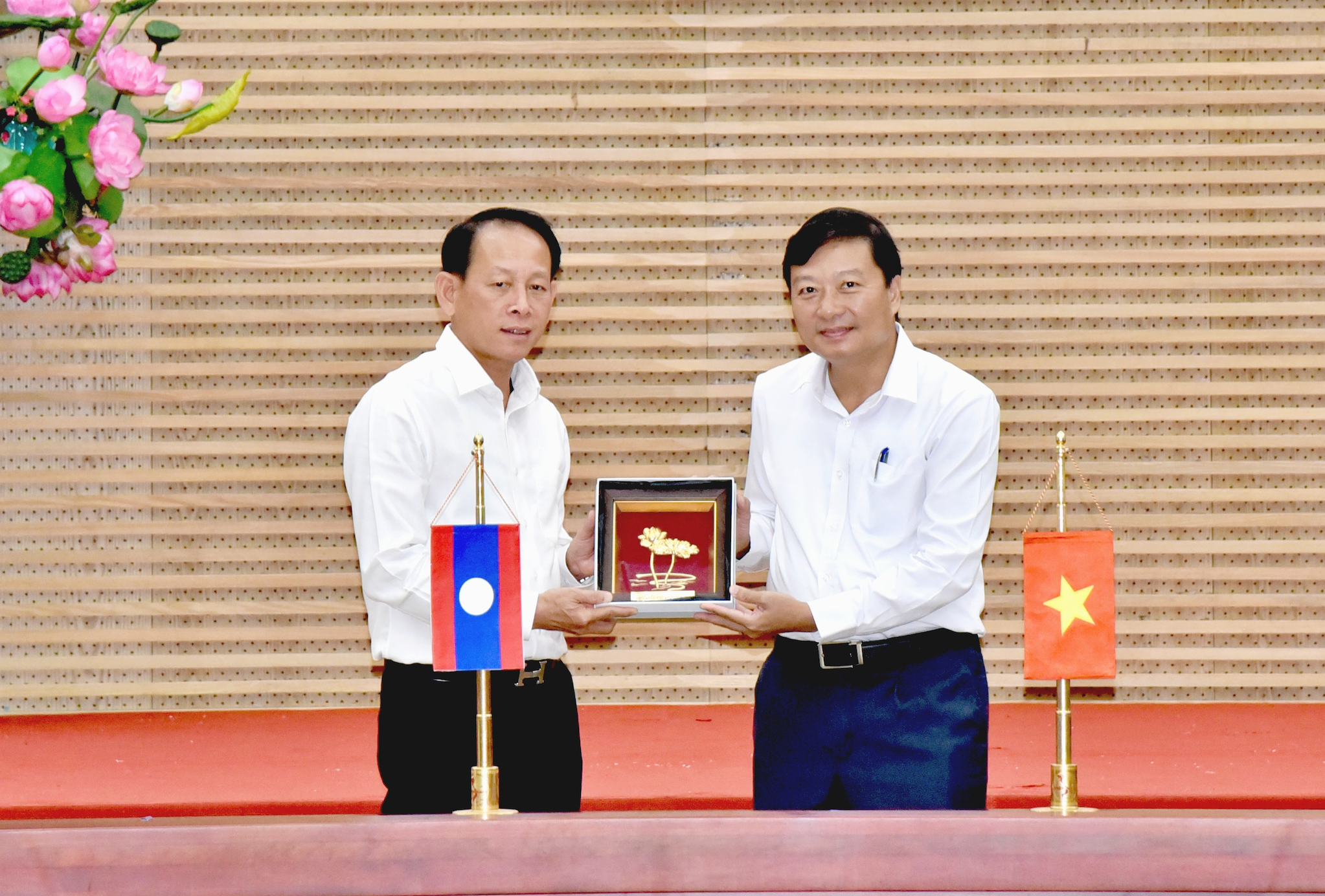
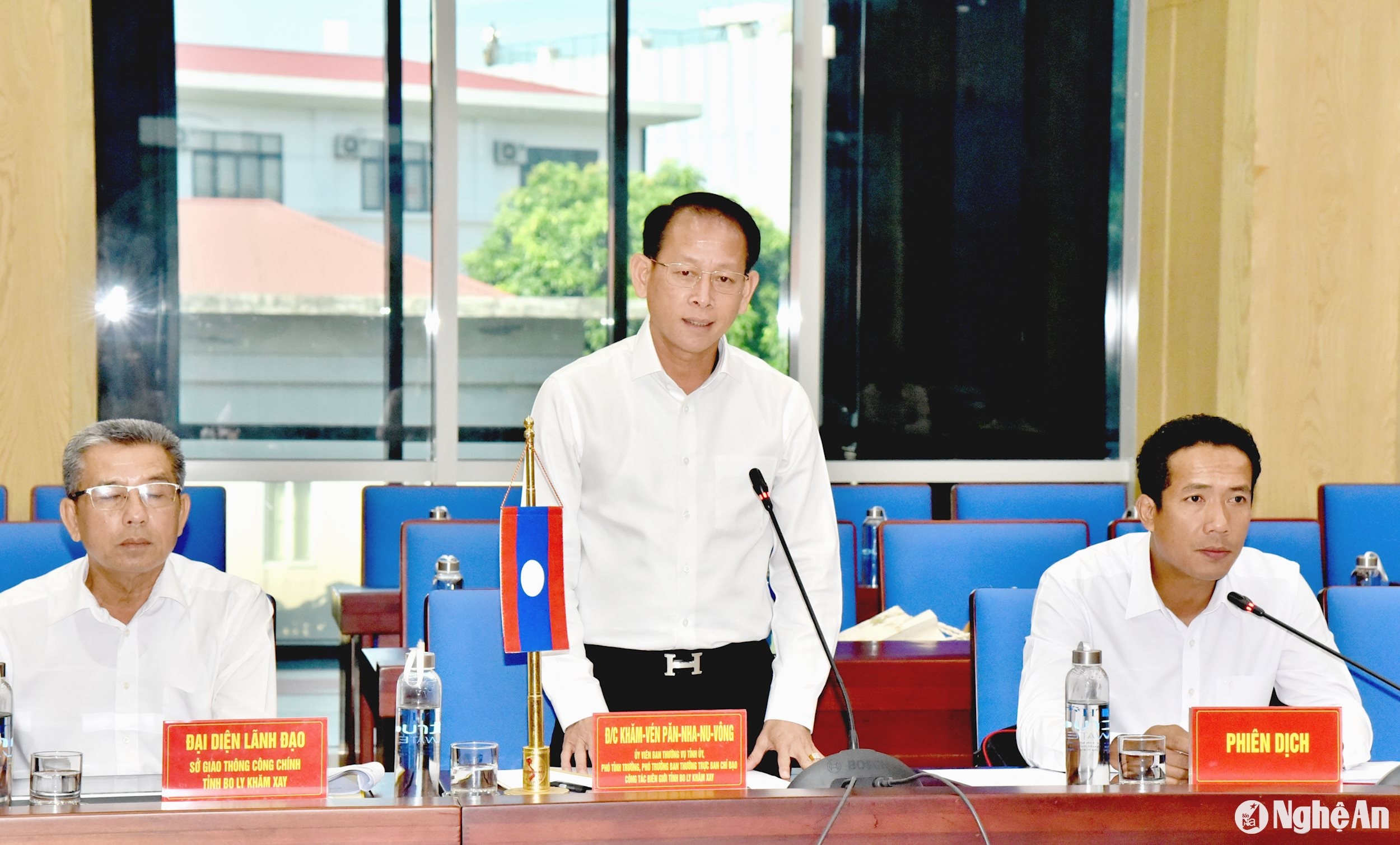
Leaders of Nghe An and Bolikhamsai provinces exchange commemorative gifts on the occasion of the bilateral conference to finalize the contents for opening the Thanh Thuy - Nam On border gate. Photo: HTComrade Khamven Panh Nuvong - Member of the Standing Committee of the Provincial Party Committee, Deputy Governor, and Deputy Head of the Standing Committee of the Border Affairs Steering Committee of Bolikhamsai Province - expressed his agreement with the opening and upgrading of the Thanh Thuy - Nam On Border Gate. Photo: HTNghe An Province and Bolikhamsai Province exchanged signed agreements on the list of valid documents for people, vehicles, and goods crossing the Thanh Thuy - Nam On sub-border gate. Photo: HT
Agreeing with that assessment, Comrade Kham-ven Panhanuvong - Member of the Standing Committee of the Provincial Party Committee, Deputy Governor, and Deputy Head of the Standing Committee of the Border Affairs Steering Committee of Bolykhamxay Province - also stated that the opening and upgrading of the Thanh Thuy border gate will facilitate trade between Thanh Thuy and Nam On, making it more convenient and faster. Bolykhamxay Province is located in central Laos, with a strategically important geographical location within the East-West economic corridor of Laos, bordering Nghe An and Ha Tinh provinces of Vietnam. In its strategic vision, the Lao government plans to develop Bolykhamxay into a logistics center for the entire country and the region. Currently, Laos is implementing a project to build a bridge connecting Laos and Thailand, and constructing the Hanoi-Vientiane expressway, creating more favorable conditions for economic trade and many other activities between the two provinces and the two countries.
Implementation of opening and upgrading 6 border gates between Vietnam and Laos.
Regarding the economic potential of border gates in Nghe An, a representative from the Department of Industry and Trade stated that Nghe An has many significant advantages. Specifically, the province has a natural area of 16,493 km².2Vietnam, the largest border region in the country, has 468,281 km of land border crossings, traversing 6 districts and 27 border communes, adjacent to 21 villages and 6 districts in 3 provinces of Laos: Hua Phan, Xieng Khouang, and Bolikhamsai. Currently, the land border includes one international border gate (Nam Can) and 6 sub-border gates, and 4 border crossings. If these border gates are opened and upgraded, it will create additional potential and advantages for the development of agriculture, forestry, hydropower, mineral exploitation, tourism, and border gate-based economic activities.
Currently, the border region and border districts maintain positive economic growth; industrial clusters have gradually formed and are attracting businesses to invest; and diverse handicraft products are increasingly attracting the attention of domestic and international partners. Annually, import and export turnover between Nghe An and Laos exceeds 70 million USD.
Thong Thu sub-border gate.Due to the narrow road, traffic at the Nam Can International Border Gate (Ky Son) is sometimes congested, causing delays in trade. (Photo: Archival image)A working group from the two border districts of Kỳ Sơn and Hủa Phăn surveyed the area and sought solutions to avoid traffic congestion at the Nậm Cắn International Border Gate. (Photo: Archival image)A desolate scene at Thanh Thuy Border Gate (Thanh Chuong). (Archival photo)
However, overall, the socio-economic development of border areas and border gates is still lagging behind the province's overall level. The economic structure of this region is slow to shift, still primarily relying on agriculture. Attracting industrial and commercial investment to border areas and border gates remains extremely difficult, especially FDI projects. There are not many large-scale industrial production projects that could create a breakthrough in the region's economic development.
Cross-border import and export turnover accounts for a modest proportion (approximately 3-4%) of the province's total import and export turnover. The links between production and distribution, and between wholesale and retail, are not yet firmly established and lack stability. Specialty and characteristic products of the border area and border gates are diverse but still fragmented.
Developing border gate economies is one of the economic development orientations of Nghe An province, as clearly outlined by the Politburo in Resolution No. 39/NQ-TW. Nghe An province has also issued an action program, specifying the implementation of the tasks outlined in Resolution 39.
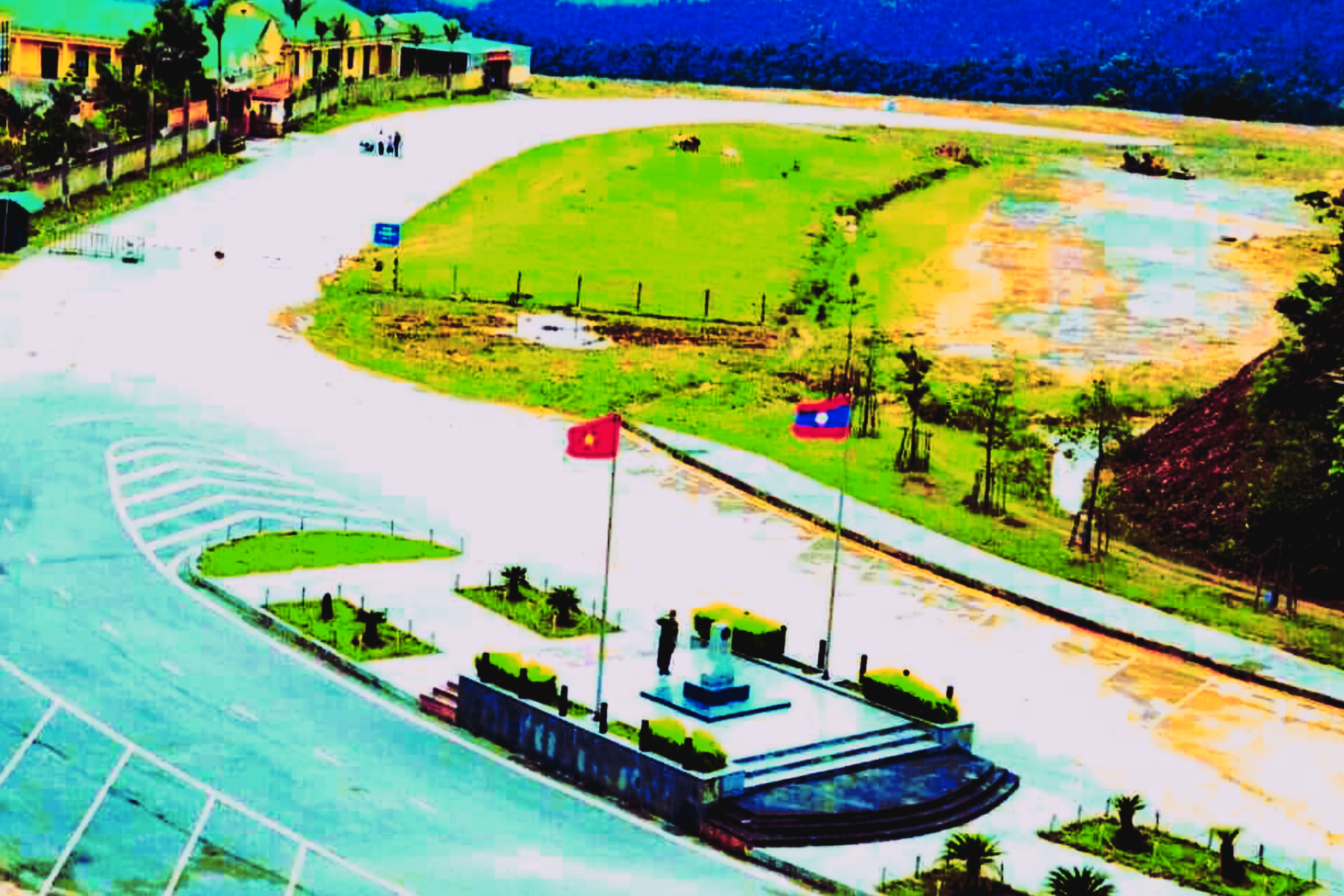
A view of Thanh Thuy Border Gate.
"
Regarding the development of border gate economy, in addition to maintaining the Nam Can International Border Gate, on July 9, 2024, the Provincial People's Committee issued Plan No. 547/KH-UBND to implement the land border gate planning for the period 2021-2030, with a vision to 2050, opening and upgrading six more border gates. This aims to address difficulties and limitations while gradually opening up and enhancing socio-economic activities through these border gates.
Detailed planning for land border checkpoints for the period 2021-2030, with a vision to 2050.
1
Upgrading Thanh Thuy Main Border Gate (2024 - 2026)
1. Conduct surveys and planning to include in the medium-term public investment plan for the period 2025-2030.
2. Invest in the construction of the Hanoi – Vientiane expressway, the section from Thanh Thuy border gate connecting to Cua Lo (2021-2030).
3. We propose that the Lao Government officially designate Nam On Border Gate as a main border crossing, in order to correspond with Thanh Thuy Border Gate, and proceed with the opening of the Thanh Thuy - Nam On main border crossing pair and complete the procedures to upgrade Thanh Thuy - Nam On main border gate to an international border gate, reporting to the Governments of both countries for decision (2025).
4. Infrastructure Development Investment by 2030
2
Upgrading the Thong Thu sub-border gate (2024 - 2027)
1. Issue a Decision allowing road motor vehicles from the two provinces to transport people and goods through the Thong Thu - Nam Tay sub-border gate. Issue a Decision announcing the list of Thong Thu - Nam Tay sub-border gates permitted for the buying, selling, and exchange of goods (2024).
2. Invest in the construction, upgrading, and expansion of National Highway 48 from Quy Hop to Thong Thu Border Gate, Que Phong (2021-2030) using provincial and central government budgets.
3. Review the planning and include it in the medium-term investment plan for the period 2025-2030. Invest in infrastructure and implement the construction of facilities and offices for functional forces at border gates (2024).
4. Complete the procedures for upgrading the Thong Thu sub-border gate to a main border gate, and report to the governments of both countries for decision. Invest in infrastructure construction (2027).
3
Opening of the Huoi Khe - Loong Ho sub-border gate (2026 - 2030)
People of Muong Ai (Ky Son district) and Border Guard forces maintain border security. Photo: HT
1. Conduct surveys, carry out procedures to seek opinions from ministries, agencies, and the Government; advise the Provincial People's Committee to issue a Decision to open the Huồi Khe sub-border gate (Mường Ải, Kỳ Sơn). Expected in 2026.
2. Investment in infrastructure construction as prescribed (2030).
4
Upgrading the Tam Hop sub-border gate (2021-2047)
A view of Tam Hop border commune (Tuong Duong district). Photo: HT
1. Invest in the construction, upgrading, and expansion of the DT.541B route (planned as National Highway 7E leading to Tam Hop Border Gate, Tuong Duong from 2021 - 2030).
2. Invest in infrastructure to meet the requirements for upgrading the Tam Hop - Thoong Mi Xay sub-border gate into a main border gate (2035-2040).
3. Complete the procedures for upgrading the Tam Hop sub-border gate to a main border gate, and report to the Governments of both countries for decision (2040).
4. Investment in infrastructure development as per regulations (2045-2047).
5
Upgrading the Cao Vều sub-border gate (2035-2040)
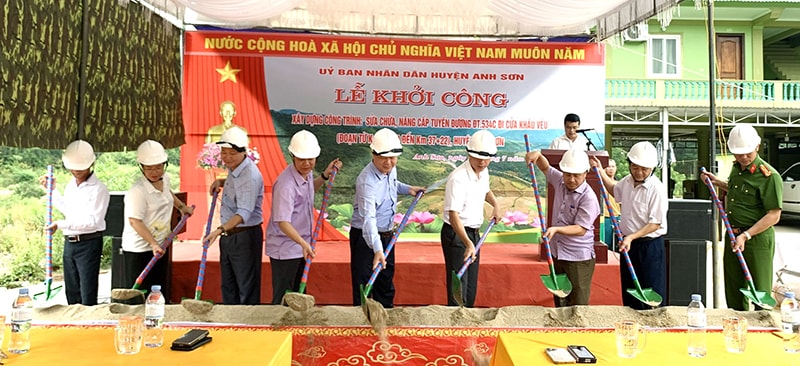
Construction begins on the repair and upgrade project of provincial road DT 534C leading to Cao Veu border gate. (Photo: Archival image)
1. Invest in infrastructure to meet the requirements for upgrading the Cao Vều (Anh Sơn) - Thong Phị La (Bolykhamxay) sub-border gate into a main border gate (2035-2040).
2. Complete the procedures for upgrading the Cao Vều sub-border gate to a main border gate, and report to the Governments of both countries for decision (2040).
3. Investment in infrastructure development as per regulations (2045-2047).
6
Opening the Huoi Moi-Den Din sub-border gate (2032-2040)
A view of Huoi Moi Tri Le border village (Que Phong).
1. Invest in infrastructure to meet the requirements for opening the Huoi Moi - Den Din sub-border gate. Complete the procedures for upgrading the sub-border gate, coordinate with the authorities of Hua Phan province (Laos), and report to the governments of both countries. After obtaining the approval of the governments, the People's Committee of Nghe An province will issue a decision to open the Huoi Moi sub-border gate (2032-2035).
2. Invest in infrastructure development in accordance with regulations (by 2040).
Your comment has been submitted and will be displayed after being reviewed by the editorial team. The editorial board reserves the right to edit comments to comply with the newspaper's content guidelines.



.png)