
Antibiotics and banned substances: The "enemies" of the livestock industry.
Discussing the development of the livestock industry, Minister of Agriculture and Rural Development Cao Duc Phat once expressed concern that the excessive use of antibiotics and banned substances in livestock farming would disrupt the industry in the future.
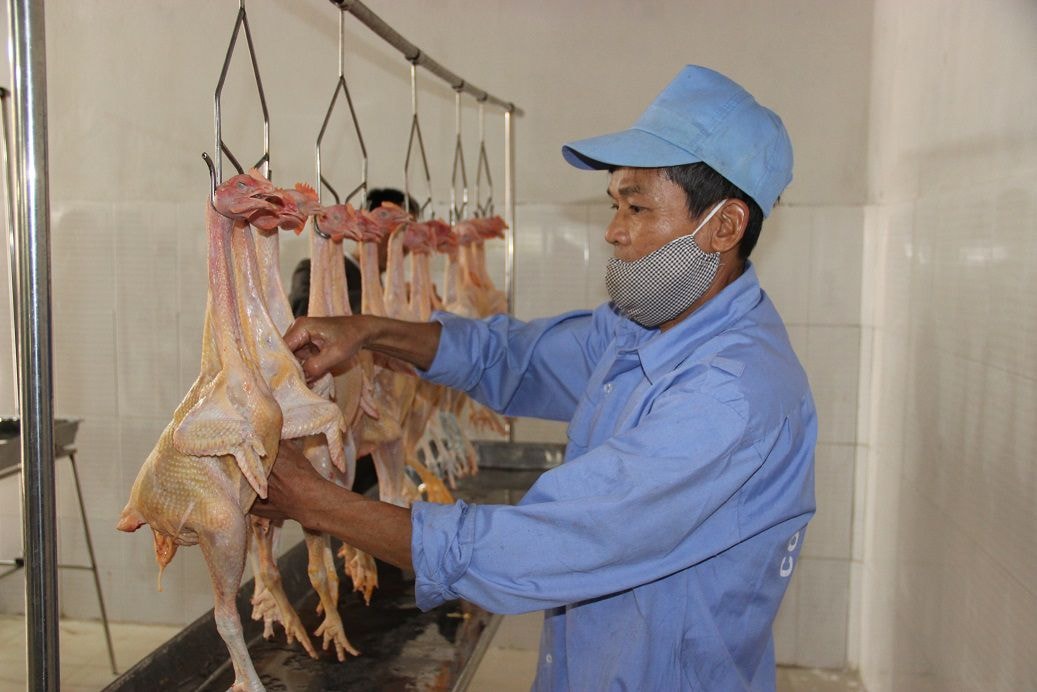 |
| Illustrative image |
"Banning" has a roadmap.
Concerned that the use of antibiotics and banned substances in livestock and aquaculture would affect food safety and consumer health, Minister Cao Duc Phat instructed relevant units to quickly develop a legal framework to prevent and control their use in a safe manner.
Regarding the use of antibiotics in livestock farming, Mr. Nguyen Xuan Duong, Deputy Director of the Department of Livestock (Ministry of Agriculture and Rural Development), stated that Circular 81/2009/TT-BNNPTNT lists 28 types of antibiotics permitted for use in animal feed. Other countries also allow the use of antibiotics, such as China with 24 types and the United States with 49 types. However, in practice, they are often misused, using higher doses. Furthermore, while we list 28 permitted antibiotics, other antibiotics that are not banned are also considered permitted for use.
According to Mr. Duong, the practice of livestock farmers adding antibiotics to animal feed for disease prevention poses a very high risk to food safety. However, phasing out antibiotic use requires an appropriate roadmap, as even developed countries like the US are planning to do so by 2018, while China has yet to announce a roadmap.
"Currently, only 11 countries in the world do not use antibiotics to stimulate growth. Vietnam cannot be faster than developed countries because our livestock farming conditions in terms of housing and hygiene do not yet meet the requirements of Europe. Therefore, if we stop using them now, many diseases will occur," Mr. Duong affirmed.
At a recent meeting reviewing the first six months of the year on the management of agricultural supplies quality and food safety in agriculture, forestry, and fisheries, Mr. Duong raised the difficulties in managing this specialized sector. However, Minister Cao Duc Phat directly posed the question, "Are we prioritizing fewer pig diseases or the health of the people?"
According to Minister Cao Duc Phat, if it is not yet possible to ban the use of all types of antibiotics, then it is necessary to gradually ban them in groups, especially the group of antibiotics intended for humans that are currently being used in livestock farming.
Take strong action against violating establishments.
To prevent the use of banned substances in livestock farming, Mr. Nguyen Xuan Duong suggested that it is necessary to intensify the sampling of meat and urine at slaughterhouses for testing and monitoring, and to prevent the sale of these substances on the market if the use of banned substances is detected. Such decisive action is the only way to gradually prevent the use of banned substances in livestock farming.
In the field of fisheries, Mr. Nguyen Huy Dien, Deputy Director General of the General Department of Fisheries, proposed: “We must organize surprise inspections; with prior notice, we cannot find signs of violations during inspections. Regarding the use of antibiotics in aquaculture, while inspections of distributors show no evidence, inspections of individual farmers still reveal the practice of directly adding antibiotics to ponds. We need to manage it from the source, prohibiting the import of banned substances and antibiotics not on the approved list, or imposing penalties upon detection.”
In light of the aforementioned shortcomings, Minister Cao Duc Phat stated that, in the remaining months of the year, the units under the Ministry should urgently finalize legal documents to improve the quality of state management in the field of food safety and hygiene and agricultural supplies.
This includes focusing on addressing establishments classified as Category C after re-inspection, and strictly penalizing establishments using banned substances and antibiotics in livestock and aquaculture. At the same time, it involves strengthening public awareness campaigns to encourage people's participation in identifying high-risk agricultural products.
“We must make the industry’s efforts effective, specifically by creating practical changes in ensuring food safety and hygiene in agriculture, forestry, and fisheries, as well as the quality of agricultural inputs. The focus should be on enforcing legal regulations, especially regarding the use of banned substances and antibiotics in livestock and aquaculture. We must continue to promote and implement major policies to guide producers and consumers in following the correct procedures to ensure agricultural product safety,” Minister Cao Duc Phat emphasized.
According to Chinhphu.vn


