
Aspirations along the Hieu River
(Baonghean) - The Hieu River tirelessly carries heavy loads of silt, diligently flowing through countless villages in the western part of Nghe An province. Only the lands along that river remain unchanged by time. From the small village by the old riverbank, the land and people of Thai Hoa are brimming with vitality like a young woman from the fertile highlands. That beauty is nurtured by the depth of culture, history, and the aspirations of today...
(Baonghean) - The Hieu River tirelessly carries heavy loads of silt, diligently flowing through countless villages in the western part of Nghe An province. Only the lands along that river remain unchanged by time. From the small village by the old riverbank, the land and people of Thai Hoa are brimming with vitality like a young woman from the fertile highlands. That beauty is nurtured by the depth of culture, history, and the aspirations of today...
The Legend of Lady Y La
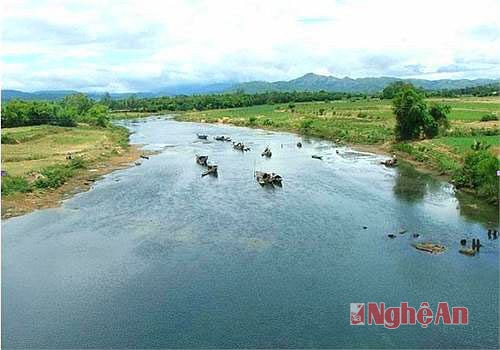
Originating from the remote highlands of Que Phong, the Hieu River meanders through mountains and hills before reaching Thai Hoa and then, heading southwest, joining the Lam Giang River. As Mr. To Thanh Son, Head of the Culture and Information Department of Thai Hoa Town, says, although it flows through many places and villages, perhaps only in Thai Hoa do the Hieu River and the village of Vac go hand in hand, connected to the legend of the beautiful and filial Y La. The story goes that the land now known as the village of Vac was a fertile and prosperous area. The village chief was the elder Xieng Lam, who had a daughter named Y La, whose beauty surpassed even the moon and flowers.
One day, invaders suddenly appeared and devastated the village like a raging flood. The enemy was overwhelming, and the fate of the entire village hung in the balance. Y La pretended to be the wife of an enemy general, promising that they would withdraw and not destroy the village. While the enemy soldiers were busy celebrating their victory, she seized the opportunity to kill the general with a knife. With their leader gone, the villagers routed the invaders.
But they killed her in revenge. Her blood stained the land red. That night, she appeared in a dream to her father, instructing him to melt down the enemy's swords and spears into cauldrons to cook rice for the villagers to celebrate the victory... Although it is a legend, the related traces still exist. The ancient river was named the Hieu River to commemorate the heroic spirit of the girl named Y La; the village of old Xieng Lam was named the Cauldron Village, and her blood has stained the land of Phu Quy, making it fertile and prosperous.
 |
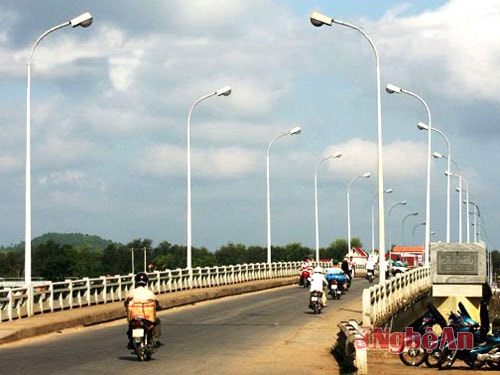 |
| Hieu River Bridge. |
Legendary stories led me to Vac Village today. Comprising two hamlets, Dinh and Lang, this village is a renowned archaeological site. Here, archaeologists have unearthed over 1,000 bronze artifacts, including bronze drums, bracelets, and daggers. In addition, excavations have uncovered 347 burial sites – the resting places of the Dong Son people of Vac Village. Characterized by its residential and burial sites, the documentation provides a comprehensive understanding of the lives of the ancient Vietnamese people during the Son Vi and Dong Son cultures – the inhabitants of this land.
Bearing these values, the Vạc village relic affirms its rare value in the flow of Vietnamese history. Throughout history, the ethnic communities in Thái Hòa town have always been aware of the connection between ancient culture and the town's development today. In Vạc village, a temple has been built, an exhibition hall displaying archaeological artifacts has been established, and the annual Vạc Village Festival is held on the 7th, 8th, and 9th of the 2nd lunar month, attracting locals and tourists from all over. This year marks the 15th edition of the festival.
Leading me on a tour of the exhibition hall, Mr. Le Van Thai, a resident of Vac village, enthusiastically guided me through the precious artifacts, some dating back thousands of years, discovered in his hometown. Mr. Thai is of the Tho ethnic group and is 73 years old. For nearly 10 years, he has been the caretaker at the Vac village temple within the historical site. Years have passed, his beard and hair have turned gray, and his steps have slowed, but he remains diligent in his work every day. For him, this job is a source of happiness, even though it is somewhat quiet compared to the bustling life outside. “During the Vac Village Festival, the atmosphere is incredibly lively, with a constant stream of people participating. But throughout the year, especially on the full moon days, many people come to light incense and offer prayers. This is truly a spiritual destination for people from near and far…,” Mr. Thai said.
After saying goodbye to Mr. Thải, I went to Làng hamlet. The bustling atmosphere of the upcoming festival season was evident in every small alley. For the past few days, the Nghĩa Hòa commune government and the people of the hamlet have been working diligently to build a road leading to the festival grounds. Amidst the noisy excavators, Mr. Võ Văn Hạnh (52 years old) excitedly shared: “In a few days, when you come to attend the festival, there will be a new, wide, and spacious concrete road built to the standards of the New Rural Development program. We are rural residents, and our lives aren't exactly affluent, but we readily contribute whatever we can to help build and elevate the Làng Vạc Festival.” Mr. Hạnh and four other households unhesitatingly donated a total of nearly 200 square meters of land to build the road in time for the festival. “Living in a land rich in cultural and historical heritage, the people of Nghia Hoa have shown a much improved attitude towards historical sites. Everyone, whether native or immigrant, deeply understands the traditional values of this land. This is also the foundation for the local area's development,” shared Mr. Vu Van Thi, Vice Chairman of the Nghia Hoa Commune People's Committee. Perhaps it is because of this mindset that every year, during the spring festival, the people of the commune actively practice songs, dances, and games to participate in the festival with other groups. Many elderly people, such as Mr. Vu Cong Hoi, who is over 80, still enthusiastically participate with their children and grandchildren. In the cool weather, another festival season arrives in the joyful atmosphere of the people of Vac village today...
Urban power supply
In any land, the past and present always go hand in hand, shaping and enriching the culture of each region. The land and people of Thai Hoa today are fortunate to possess unique and distinctive historical values and favorable natural conditions that are not found everywhere. This is the foundation and source that allows Thai Hoa to soar high and far in the endless flow of time. More than 100 years ago, the French fell in love with this land when they first set foot here.
It wasn't Dak Lak or Gia Lai, but rather the ancient Phu Quy region, with Thai Hoa as its center, that was the first place in Vietnam to develop large-scale industrial coffee plantations. The French began planting coffee in Phu Quy in 1913, while coffee cultivation in the Central Highlands only started between 1920 and 1925. The "Arabica du Tonkin" coffee brand originating from Phu Quy is highly regarded for its quality and is primarily exported to France. Perhaps this is why, since ancient times, people have exclaimed, "Southern Dak Lak - Northern Phu Quy," to praise the fertility of this land.
Along with the rapid development of the coffee industry, the demand for labor increased, so during that period, this land received waves of migrant workers from all over. They came to work as plantation laborers, traders, craftsmen, etc. All of this created a bustling town along the Hieu River. I had the opportunity to meet Mr. Le Hong Thang, former Chairman of the Fatherland Front Committee of Thai Hoa Town. He is the son of people who migrated to Thai Hoa to settle in the early 20th century. Mr. Thang's father was from Vinh, working as a tailor in Thai Hoa from 1919, and his mother was from Hung Yen, working as a laborer here. Mr. Thang was born in 1953.
Gradually, through his memories, the old Thai Hoa, as told by his father and grandfather, still exists in every word of his son. He recounted: “On the west bank of the Hieu River, there are still rows of tamarind trees (Tay Ho 1 block, Quang Tien ward), where the French colonialists built the headquarters of the colonial government; while on the east bank of the Hieu River, Hieu Street was formed, including Hieu Market, built to serve trade. I heard that on the day of the inauguration of Hieu Market, also known as Dong Ho Temple, King Bao Dai attended and cut the ribbon.”
Although urban life is still on a modest scale, the trading scene is very vibrant. Ethnic minorities from Que Phong, Quy Chau, and Quy Hop bring bamboo shoots and brocade fabrics to sell, exchanging them for rice and salt; people from the lowlands bring fish, fish sauce, and salt to sell. Some well-off families have even bought passenger buses to run the Pho Hieu - Yen Ly - Vinh route. There are even people from Nhu Xuan (Thanh Hoa) who come to shop.
Thus, urban life did not begin in Thai Hoa at the end of the 20th century, when it was recognized as a town. Nearly 100 years prior, a central urban area of northwestern Nghe An province had already begun to develop. For someone who has spent his entire life and career in this land, Thai Hoa now evokes many emotions in Mr. Thang. In the vibrant sounds of a new day, the small Pho Hieu of his childhood memories, the town of Thai Hoa, once a fiercely attacked target of the American forces, is no longer confined to the area of what is now Hoa Hieu ward, but has become much larger, more beautiful, and more imposing.
Streets and houses intertwine, creating the image of a vibrant, modern city reflected in the Hieu River. “The urban character of Thai Hoa is becoming increasingly evident, not only in its planning and architecture but also in the lifestyle of its people. Thai Hoa has truly changed a great deal and very quickly,” Mr. Thang shared. Anyone visiting Thai Hoa today will surely feel the bustling atmosphere, brimming with hope, present in every street, every house, and in the voices and smiles of its residents.
During numerous meetings and discussions with Mr. Le Phuc An, Chairman of the People's Committee of Thai Hoa Town, we sensed the determination, concerns, and aspirations of the town's leaders to develop Thai Hoa into a city worthy of its status as the "nucleus" of the entire Northwest Nghe An region – a center of high-tech agriculture. Walking through the heart of the town today, standing on the bridge and gazing out over both banks of the Hieu River, I can envision a beautiful, expanding urban area in the near future.
That beauty might not be painted from the "cold" colors of towering, gray concrete buildings, but rather from a city that harmoniously develops with green spaces, modern planning, and traditional architecture closely linked to the lives of the ethnic minorities in Northwest Nghe An. Discussions with town leaders reveal that this aspiration is not far off, as the Hieu 2 bridge will soon be built, adding another span connecting the East and West banks of the town, linking the vibrant urban area on the East bank with the Happy Land urban area, which will also be started soon in Tay Hieu and Nghia Tien communes.
If someone has likened Thai Hoa to the "heart" of the Phu Quy region, then the Hieu River is the ever-flowing lifeblood, nourishing that heart and keeping it healthy and vibrant throughout history. In this process, Thai Hoa seems to have been destined to be a center of economic, cultural, and social exchange from many regions. Today, legend, history, and the present blend harmoniously, creating a unique charm for this land. And I believe that, with a spirit of respect for the past and a rich historical tradition, the residents of Thai Hoa today, with their own hands and minds, will continue to write the next chapters of development, ensuring this young city continues to make strong and remarkable breakthroughs in our Ho Chi Minh era. Because, as someone once said, when people are young, they often have many aspirations.
Thanh Duy


