
As our parents grow old, and we grow old too...
(Baonghean.vn) - My grandmother is 97 years old this year. My father, her only son, is 72 years old and has many underlying health conditions. My mother, her daughter-in-law, is 70 years old. My aunts, who live in many distant provinces and districts within the province, are all over 75 years old, some are nearly 70. That's just the "general context." As for the "individual context," each family and each person has their own situation.
My grandparents originally lived in the countryside. It was a poor rural area on the banks of the Lam River, where year-round, the people were constantly burdened by worry – the worry of flooding: flooding their fields, flooding their houses, flooding their lives... My parents brought them from the countryside to the city 30 years ago, to live in our old family home, a former communal apartment that was later subsidized by the government. My grandparents lived together, taking care of each other, with their children and grandchildren constantly coming and going. Seven years ago, my grandfather passed away, leaving my grandmother alone. She is at an age where she needs the care of her children and grandchildren. My parents' health is declining, and they also need care and support. Sometimes, at the same time, my grandmother is hospitalized, my father is hospitalized, my aunts and uncles are running around, and my mother is struggling... This situation is not unique to my family, but is becoming increasingly common in society today...
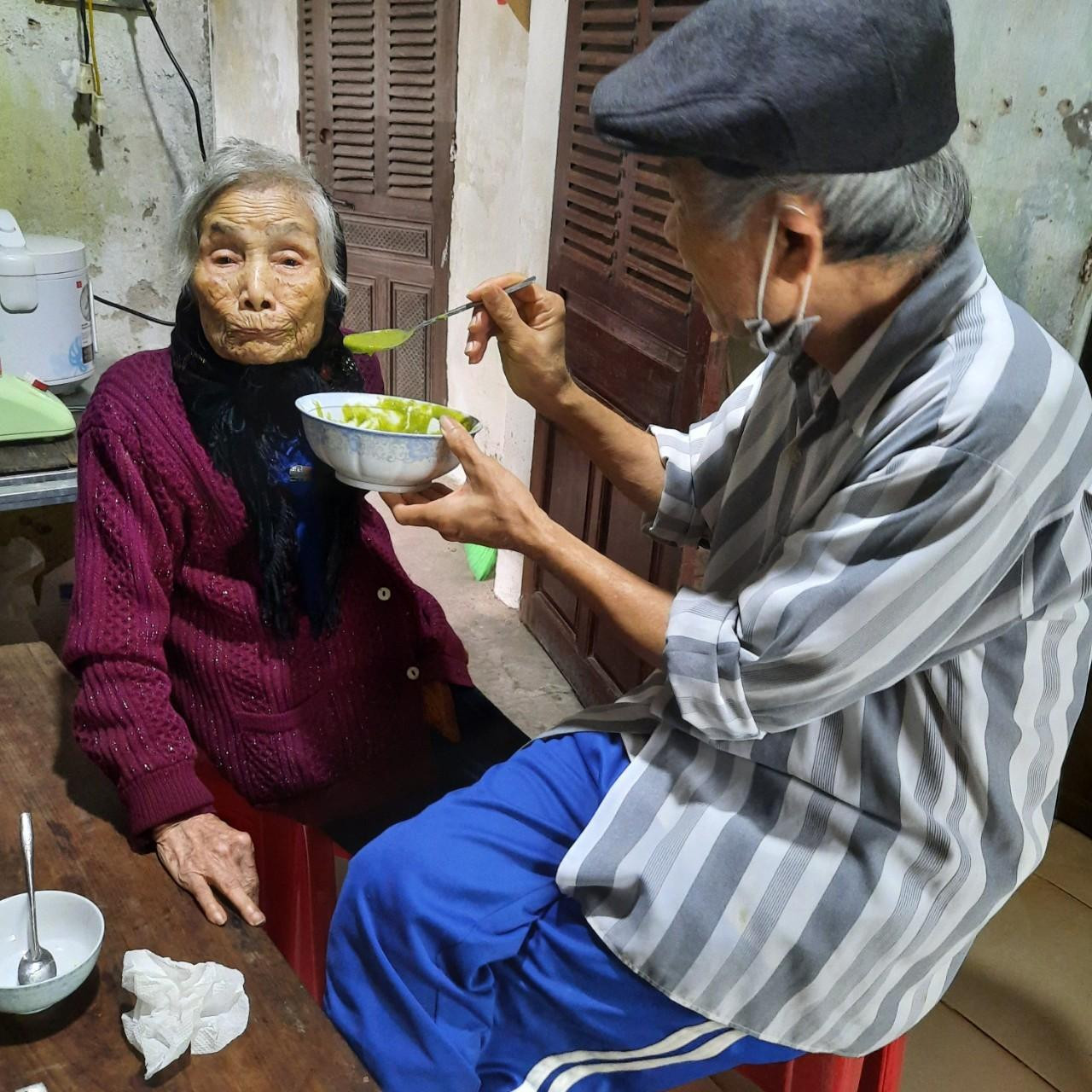 |
A 72-year-old son takes care of his 97-year-old mother. |
According to statistics, Vietnam is one of the countries with the fastest aging population in the world. The proportion of the population aged 60 and over is increasing rapidly. Specifically, according to the latest population forecast from the General Statistics Office, the proportion of the population aged 60 and over will increase to 16.53% in 2029; 20.67% in 2039; 24.88% in 2049; 27.01% in 2059 and up to 27.11% in 2069. According to this forecast, after the "aging" phase, Vietnam's population will enter the "old" phase around the end of 2037 or the beginning of 2038 (according to the document "2019 Population and Housing Census - Population Aging and the Elderly in Vietnam"). Thus, the transition period from the "aging" stage to the "aging" stage in our country, approximately 23 years, is too short compared to the pace in many countries around the world.
From a macroeconomic perspective, population aging clearly has many impacts on social life. There is a shortage of labor. The demand for social security is increasing, while the actual needs are not being met. Caring for and supporting the elderly is becoming increasingly difficult, especially in urban areas. There have even been cases of elderly abuse. Caring for the material and spiritual well-being of the elderly is not only a long-standing moral tradition of the Vietnamese people, but is also consistently reflected in the policies of the Party and the State.
In every family, the organization and arrangement of life must ensure balance, both adequately meeting the needs of the elderly and providing maximum opportunities for other members to study, work, and earn a living. Elderly people in both rural and urban areas face unique challenges. In rural areas, the younger generation mostly works far from home, leaving the elderly with few support systems. Many elderly people live precariously, struggling to make ends meet.
In the city, living space is cramped, prices are high, and there are many expenses. Work pressure also hinders children from paying close attention to their grandparents and parents. Hiring helpers to assist the elderly is not easy for various reasons. Therefore, everyone needs to be conscious and responsible in caring for, assisting, and promoting the role of the elderly. Empathy and sharing with the elderly must first stem from the love of family members. No one wants to become a burden to their loved ones or to society. Each person's efforts to improve their daily lives are the foundation for overcoming difficulties, both immediate and long-term.
One of the current desires of many people is for more models of elderly care that adapt to the reality of an aging population. Besides public social welfare facilities, it is necessary to promote social mobilization so that organizations and individuals can work together to build quality elderly care centers and nursing homes, and to replicate effective models in the future.


