
When the Thai language and writing system were widely adopted
The Thai language and script have been recognized as a National Intangible Cultural Heritage and are being actively preserved in areas with large Thai populations. Classes and performances of Thai folk songs are being enthusiastically practiced and performed by the people. This demonstrates that when heritage is elevated, it will gain a firm place in community life in general.
Many ways to teach the Thai script.
The epic poem "Khun Chuong" depicts the scene of Khun Chuong returning from battle, and the enthusiastic performances and rehearsals by the Thai people of Hoa Tien village, Chau Tien commune, have attracted many tourists who eagerly join in. The rehearsal atmosphere was livestreamed on social media by artist Sam Thi Xanh, allowing the Thai people to learn and perform along. The cheerful melodies and the lively improvisations in the Thai dialect made the scene incredibly vibrant.
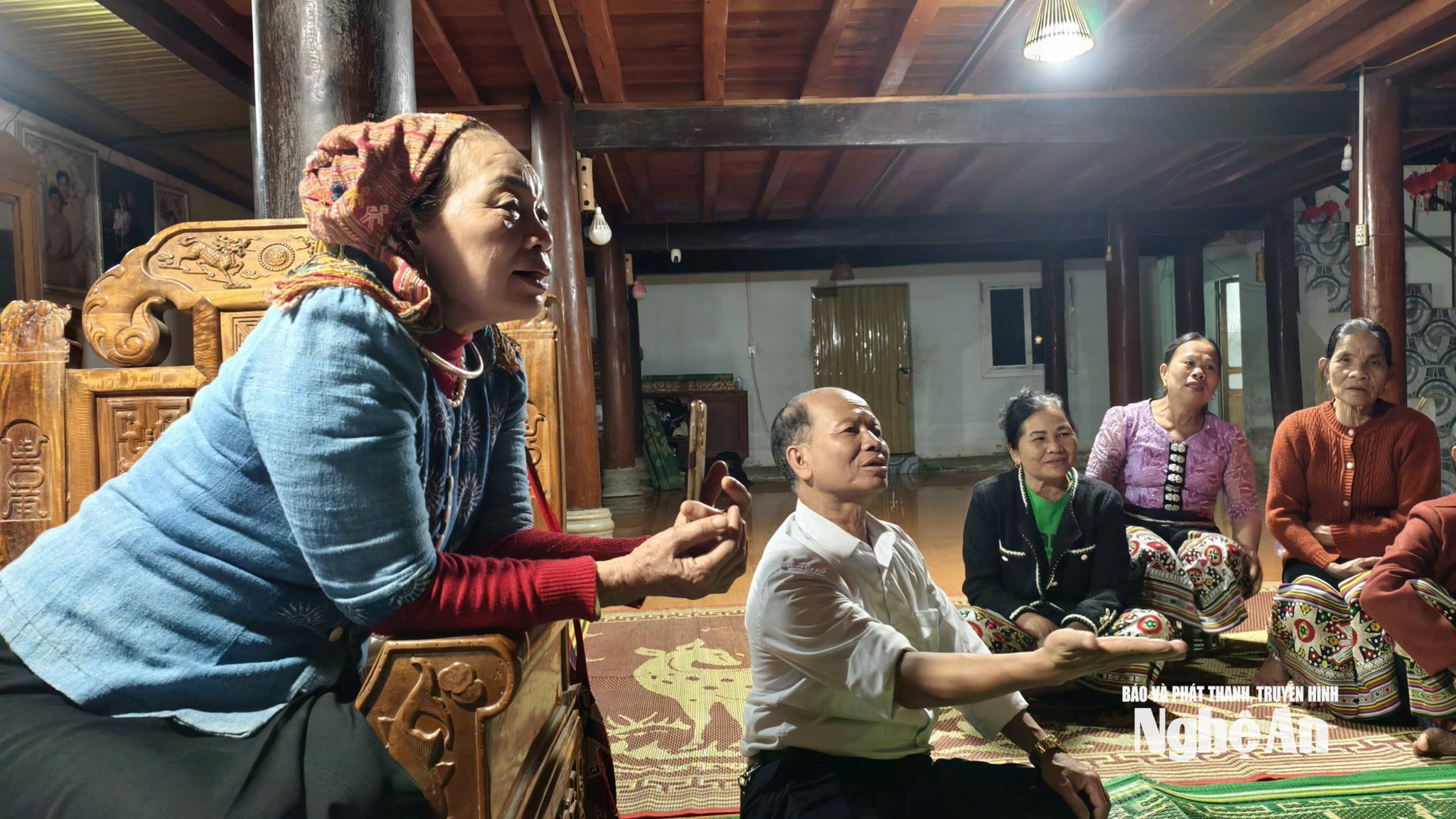
Meritorious Artist Sam Thi Xanh said: "Every week we have one practice or performance like this. The people are very enthusiastic; some know the lyrics and respond quickly, while others forget them, but they quickly join in when the drums, gongs, and rhythmic sounds of the cymbals resound. Therefore, for us, regularly practicing to perform flawlessly is how we keep the epic alive and spreading within the community. Now, not only do the Thai people cherish the Khun Chuong epic and learn excerpts from the performances we directly post, but even people from the lowlands who have come to live here know many of them."
Ms. Xanh also believes that the reason the Khun Chuong epic poem has such a long and enduring place in the hearts of the Thai ethnic people is because it was written in the Thai language and has been preserved for generations.
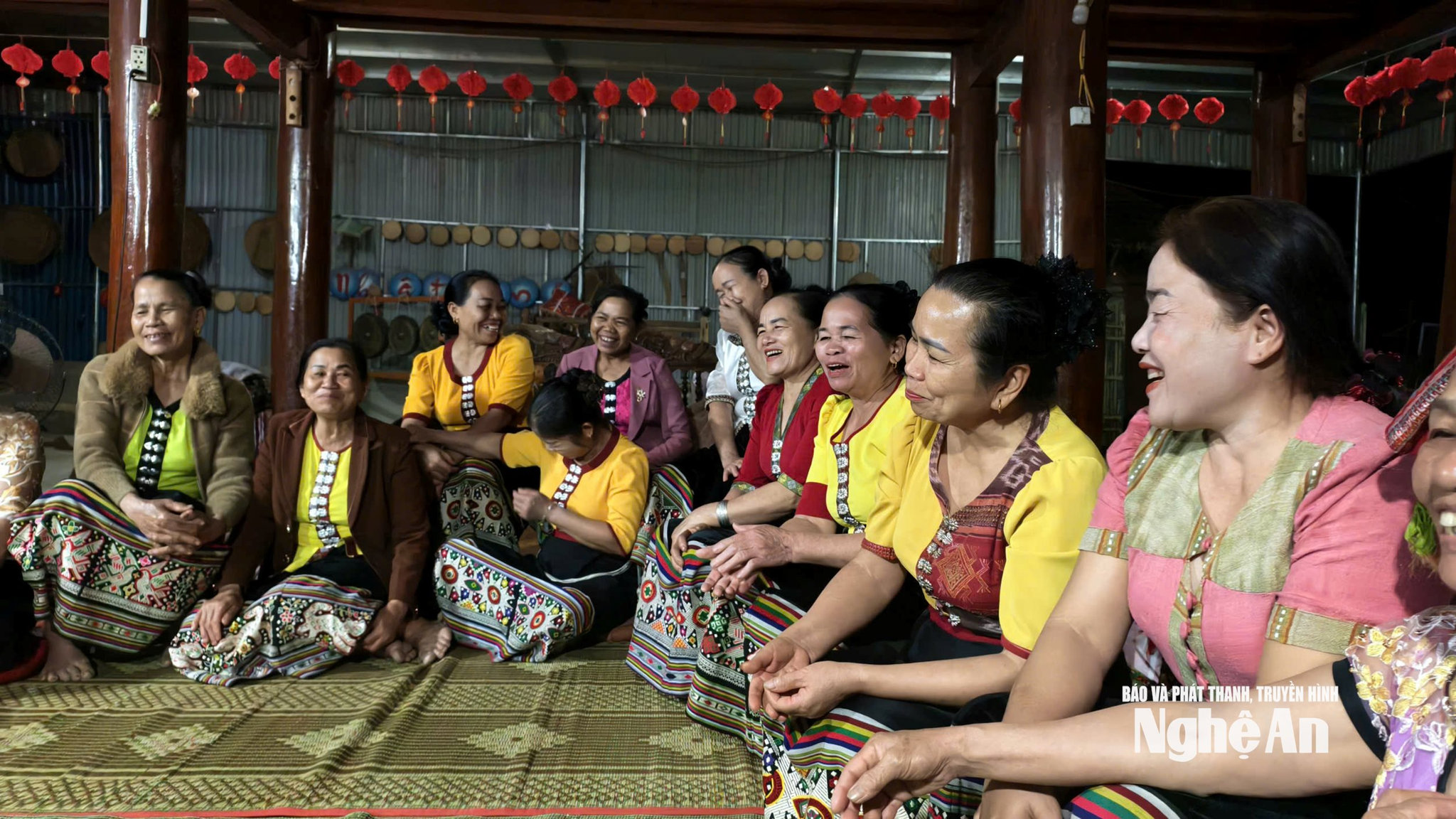
However, to obtain excerpts from the Khun Chuong epic, many Thai artisans have painstakingly compiled books to preserve the intangible cultural heritage of the Thai people. Only with complete Thai script versions can these artisans compile the excerpts into folk songs.
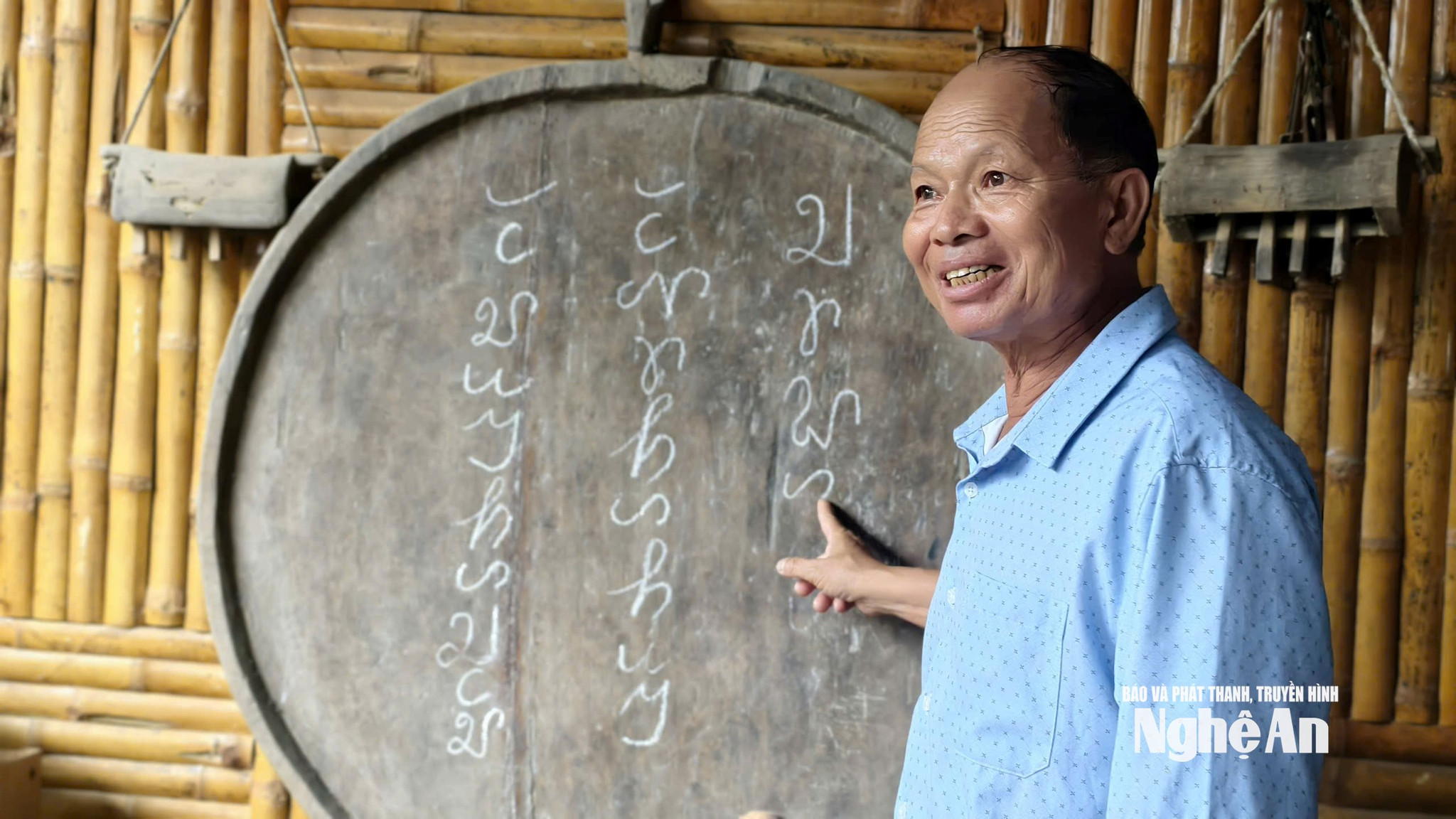
Mr. Lo Duc Mau, an Outstanding Artisan from Hoa Tien village, Chau Tien commune, said: "Not only the Khun Chuong epic but most of the Thai people's oral traditions have been compiled and passed down through generations of Thai artisans to preserve them for posterity. Without a written script, it would be very difficult to maintain some customs. Therefore, teaching the Thai script is very important. As long as the Thai script exists, Thai culture will exist." Mr. Mau stated.
Therefore, for several decades now, Mr. Mau and many other outstanding artisans have diligently taught the Thai script in the Chau Tien community. Mr. Mau has opened dozens of classes each year for village elders, community leaders, people with social standing in the commune, and teachers in the areas of Anh Son, Quy Chau, and Que Phong (formerly).
He recounted: “My father taught me to write from a young age. By the time I reached secondary school, I could teach my peers how to write in my language. Later, when I joined the army, I taught the Thai script to people of my ethnic group and even to high-ranking officials who wanted to learn the Thai Lai Tay language. After leaving the army and returning to my village, I continued my role of teaching the Thai script to generations of artisans and children in the village. My students include the distinguished artisans Sam Thi Xanh and Sam Thi Bich… Later, these artisans passed on their knowledge to other generations, and they became teachers of the Thai script for the younger generation…”
There were times when the number of students was so high that classes had to be held continuously with students of various ages. Artisan Lo Duc Mau even had to repurpose the space and tables and chairs that his son used for renting out wedding tents to teach many students who were passionate about Thai script.
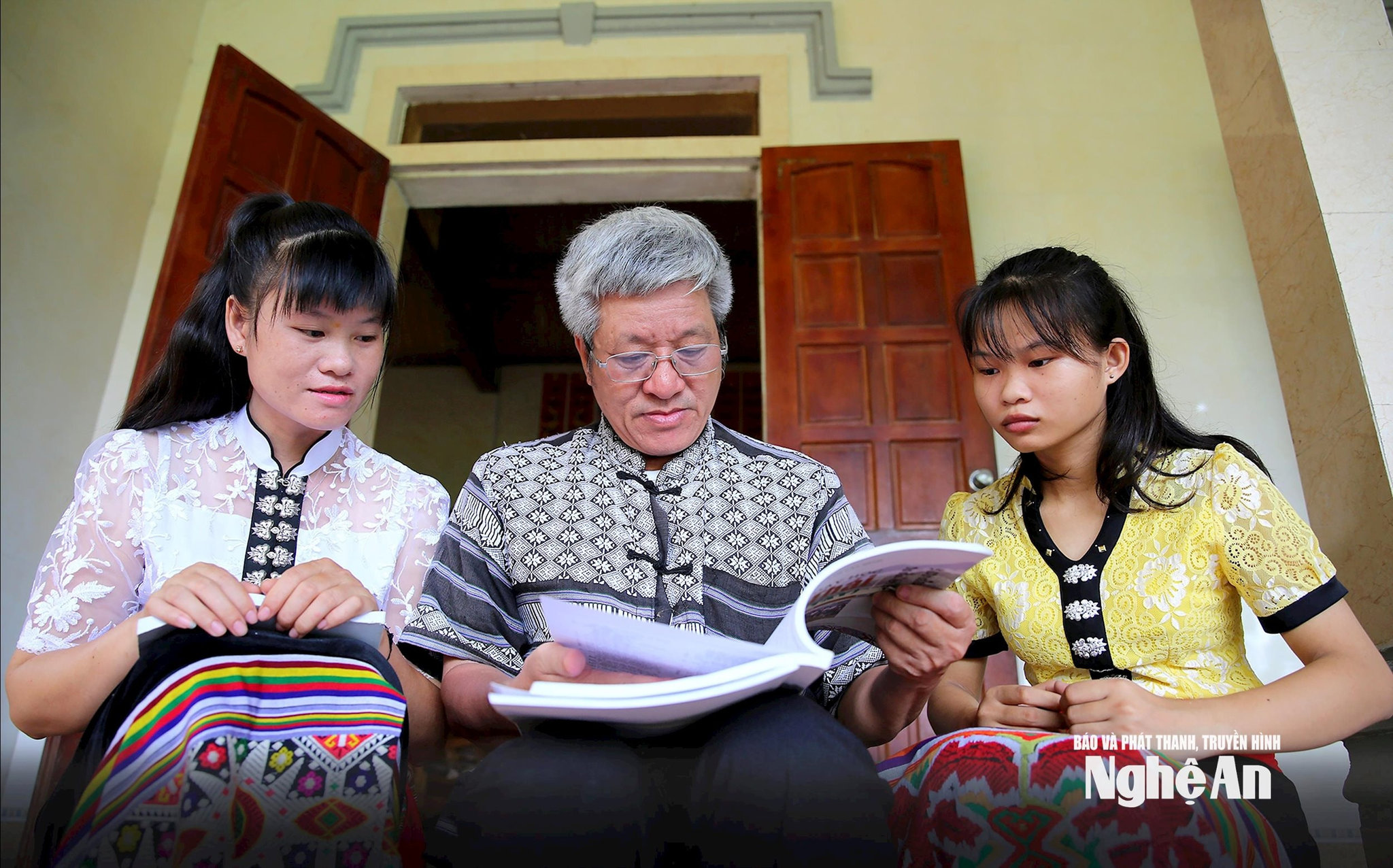
In the teaching of the Thai script, many artisans have diligently spread and promoted this language, which has a large population in the western areas of Nghe An province. However, the most impressive is the linguist Sam Van Binh, from Yen Luom village, Quy Hop commune. He is a name very familiar to many people in his capacity as a teacher of the Thai script.
For nearly 30 years, Mr. Binh's footsteps have left their mark throughout the villages and hamlets, collecting and researching the Thai language, writing system, customs, and cultural identity. After many years of diligent research, he has mastered reading and writing and collected approximately 90% of the ancient Thai language. After many years of dedication, Mr. Binh compiled a five-volume set of books teaching the Lai Tay Thai script, organized by topic, published a Thai-Vietnamese dictionary (14,000 words), and published twelve volumes of "Eulogy of the Shaman." Mr. Sam Van Binh's works are not only linguistic achievements but also a vibrant cultural archive, contributing to the dissemination of ethnic identity.
.jpg)
Another person who has spent many years researching and compiling teaching materials for the Lai Pao Thai language is Mr. Vi Kham Mun (80 years old) from Xieng Lip village, Yen Hoa commune, Nghe An province. He travels throughout the villages collecting and translating proverbs, idioms, and folk tales of the Thai ethnic group to serve the teaching of the Thai language.
From 2010 to the present, Mr. Mun has taught many classes, averaging about 6 classes per year, with a total of hundreds of students. To facilitate his teaching, Mr. Mun has painstakingly compiled a curriculum for teaching the Lai Pao Thai script. Mr. Mun says that teaching the Thai script is not simply about teaching writing and reading, but also about passing on the treasure trove of valuable traditional cultural values of the ethnic group to the younger generation.
To ensure the Thai ethnic language is truly preserved and promoted.
On June 27, 2025, the Minister of Culture, Sports and Tourism signed decisions announcing the list of national intangible cultural heritage. Nghe An province added three more intangible cultural heritages to the list. Accordingly, the three intangible cultural heritages of Nghe An are: “The Art of Drum Ritual in Yen Thanh District” (Decision No. 2190/QD-BVHTTDL), “Thai Script in Nghe An” (Decision No. 2191/QD-BVHTTDL), and “The Ceremony of Welcoming the Thunder Sound of the O Du People” (Decision No. 2192/QD-BVHTTDL).
The Thai people make up over 50% of the ethnic minority population in Nghe An province. Previously, the Thai script faced the risk of extinction, but it is now gradually being restored. The Thai script has several different systems, the most commonly used today being the Lai Tay and Lai Pao scripts. Recognizing it as a national intangible cultural heritage contributes to the protection and promotion of traditional cultural values associated with the daily life of the Thai people in the province.
The Thai Lai Tay script (or Tay Yo script) is an ancient writing system of the Thai people in the Quy Chau region (Nghe An province), belonging to the Khmer writing system. It has been used for a long time to record culture, history, and customs. This script is being revived through community classes.
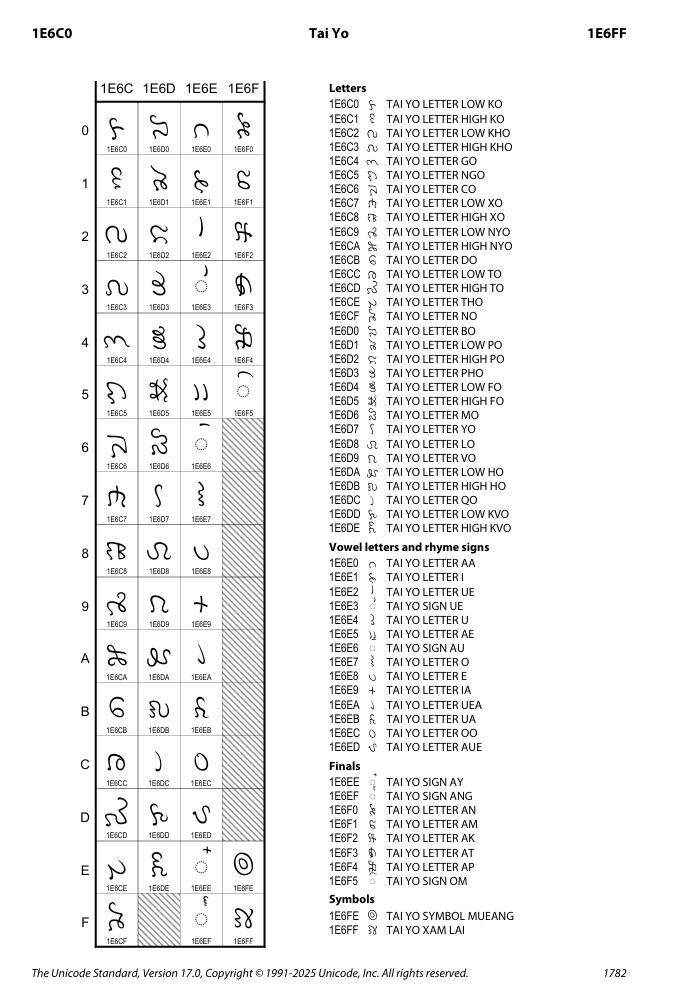
Recently, Master Sam Cong Danh, a native of Quy Chau commune, and Master of Information Technology Nguyen Viet Khoi collaborated to realize their dream of bringing the Thai script to the digital space. In 2022, they connected with Master of Linguistics Frank van de Kasteelen, a Dutchman with experience working with Unicode. In September 2025, the Lai Tay Thai script appeared in the digital space with the U1E6C0 to U1E6FF code blocks and was officially incorporated into the Unicode 17.0 standard (September 2025).
This marks a turning point, bringing the written heritage of the Thai people of Nghe An beyond local boundaries, creating favorable conditions for its presence in the global digital world. In particular, the 55 Thai Lai Tay characters will be displayed uniformly across all digital platforms, opening up a new trend of unlimited accessibility and eliminating the fear of being forgotten as before. The crucial next step is integrating this script into daily life.
Today, besides teaching the Thai script using pen and chalk, we also require proficiency in using mobile phones. We also have the ambition to translate the Thai script into an international language. If we achieve that, the Lai Tay Thai script will transcend the boundaries of a written script and become a cultural heartbeat for a broader community.
Artisan Sam Thi Xanh from Hoa Tien village, Chau Tien commune.


