
Nghi Loc chewy sweet potatoes
(Baonghean) - I returned to the potato-growing region of Nghi Loc district. The old Nghi Truong white sandy road has now been paved with concrete, and houses with bright red tiled roofs are interspersed with flat roofs.
Mrs. Tran Thi Toan (63 years old), from Hamlet 11, Nghi Truong, is sitting and arranging sprouting sweet potatoes. "Hello, ma'am, I heard people in this village mention you once volunteered to provide dried sweet potatoes to poor families. I came here hoping to hear more stories about the dried sweet potatoes from our hometown..." Mrs. Toan smiled kindly: "That's a story from the past. Back then, sweet potatoes were a lifesaver for so many poor families. After harvesting, the good ones were given to relatives, and the rest were boiled and dried, or fresh sweet potatoes were washed, sliced, and dried to store as food during times of scarcity. In Nghi Truong commune, every household had a jar of dried sweet potatoes to eat gradually."
Back then, Mrs. Toan's family owned the most land in the region. During the winter sweet potato harvest, the space under the bed in their house was piled high with sweet potatoes. The white, yellow-fleshed sweet potatoes cracked open when boiled, making them easy to choke on if not handled carefully. Therefore, every time the family ate sweet potatoes, they would have a pot of green tea to accompany them. People also boiled the sweet potatoes and then dried them for later use. Mrs. Toan's mother explained that dried sweet potatoes were a staple food that could be eaten gradually when hungry, without needing to be cooked again. On moonlit nights, the whole village would gather in the yard to cut the sweet potatoes. There were two ways to cut them: diagonally long and round. Her mother said that cutting the sweet potatoes also required skill, ensuring the pieces were even; otherwise, some would be dry while others were wet, and they would spoil easily when stored in jars.
Making those jars of chewy sweet potatoes is quite laborious. The sweet potatoes are grown in sandy soil, so each tuber is very starchy. During the long, rainy winter days, Mrs. Toan and her daughter would search for large bamboo stalks, split them into planks, and weave them into mats. They would then spread the sweet potatoes on the mats and dry them over a wood-burning stove. The wood was soaking wet, and the smoke blurred their eyes. Drying a few batches of sweet potatoes took the whole night. To make one jar of sweet potatoes required staying up for several nights in a row, and the smoky aroma permeated every piece of sweet potato.
Mrs. Toan recounted the story, her gaze drifting into the distance, evoking memories of a bygone era. When our soldiers marched through the village, her mother would be waiting by the roadside, holding a bag of mashed sweet potatoes and a bag of chewy sweet potato snacks as gifts for them. A young soldier from the North, experiencing the sweet, chewy, and fragrant chewy sweet potato for the first time, was delighted, saying happily, "Mom, your chewy sweet potatoes are so delicious! After the war, I'd like to become your son-in-law so I can learn how to make them, wouldn't that be great, Mom?"
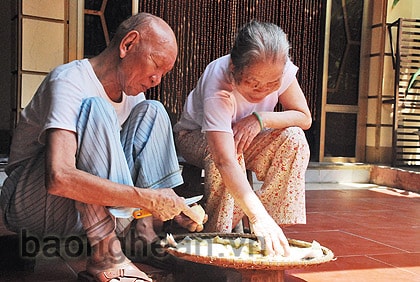
Mrs. Toan and her husband are cutting sweet potatoes, preparing them for drying. Photo: TH
In the village, back then, the Ngo family was the poorest in the commune. They didn't even have potatoes to eat. Every day, Mrs. Toan would secretly take potatoes to Mrs. Ngo's house without her mother's knowledge. When her mother found out, she expected a scolding, but instead, her mother praised her, saying, "You are a kind and compassionate person who cares for the poor." I remember one time when a storm came, after a night of heavy rain, the fields and village lanes were flooded. Sticky potatoes were incredibly precious at that time. People rolled up their trousers above their knees, calling out, "Is there anything you need over there? Do you still have any sticky potatoes?", with bags of sticky potatoes in their hands. That's how sincere and simple the people of Nghi Loc are!
In her youth, Mrs. Toan walked barefoot on the white sandy road, carrying baskets of sweet potatoes to the district market (Quan Hanh market) to sell and earn money to buy rice. Back then, many villagers brought sweet potatoes to the market to sell. A long stretch along the small canal was lined with stalls selling sweet potatoes; people even jokingly called it "the sweet potato market." In those days, Mrs. Toan would wake up at dawn every morning, check her bicycle tires, put the sweet potatoes in baskets, and carefully cover them with plastic to prevent rainwater from getting in and spoiling any unsold potatoes. At noon, hungry, she would happily eat a handful of sweet potatoes, then lean against a tree trunk and take a nap while waiting to sell them at the afternoon market. Now, sweet potatoes are becoming scarce. The countryside of those days has grown and prospered. People always remember those old memories, a time of poverty but filled with the warmth of community spirit.
In Nghi Truong, this isn't the potato season, but many families still have several tens of kilograms of fresh potatoes stored under their beds. Potatoes have been a part of the people's lives since their impoverished beginnings, so even with improved living conditions, they haven't abandoned them. Mrs. Toan plants one potato crop a year during the winter-spring season. After harvesting the rice (in November), they plant potatoes. The straw not only keeps the buffaloes and cows warm during the cold days but also becomes a valuable source of manure for the potato plants, resulting in lush green rows. Pointing to the sprouting potatoes under her bed, Mrs. Toan said, "These potatoes aren't for sale; they're for seeds for the next season. We don't plant as much as before; we plant less but focus on quality. Each potato is big, round, with yellow flesh, sweet, and flavorful – they sell very easily."
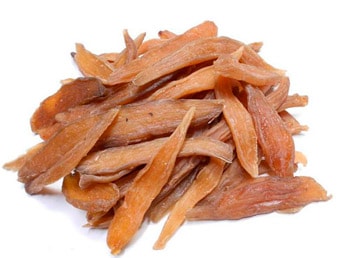
Chewy sweet potato (Photo: PV)
While rambling on about the sweet potatoes of Nghi Truong, my thoughts broadened to include the sweet potatoes of Nghe An province, immortalized in the song "Yellow sweet potatoes of Nghe An, the more you chew, the richer the flavor" (Poem by Huy Can). This simple, rustic sweet potato is deeply connected to the people of my homeland, a land of hot winds and white sand, helping them overcome years of poverty. Besides chewy sweet potatoes, Nghe An people have many other special dishes featuring sweet potatoes: mashed sweet potatoes, sweet potato sweet soup, sweet potato cakes, sweet potatoes mixed with rice... It's impossible not to remember my childhood years, going to the fields with my friends to glean sweet potatoes, regardless of the scorching sun or the drizzling rain. Gleaning sweet potatoes was so much fun; the potatoes were never whole, yet everyone was so happy.
In my hometown, half the villagers are fishermen, while the rest are farmers, so they only grow one crop of winter sweet potatoes a year. My mother also planted a plot of sweet potatoes along the salty salt fields. Every sweet potato season, my grandmother would wash each sweet potato until it piled up into a large mound (about a hundred kilograms), then boil them thoroughly to make chewy sweet potatoes.
Every morning when I woke up, I would see my grandmother's aged hands turning the dried sweet potatoes over, ensuring they were evenly sun-dried. My sisters and I, returning from school with rumbling stomachs, would rush into the house where the jar of dried sweet potatoes was kept, grab a handful, and eat them with relish.
On chilly days, I feel a pang of nostalgia for my mother's hometown, with its chewy sweet potato, a favorite snack for the whole family to enjoy even on rainy days... That's why, no matter where or what people from Nghe An do, they can never forget the taste of home!
Thu Huong


