
Is it possible to obtain a car driving license without a motorcycle license?
According to regulations, those learning to drive a car must meet requirements regarding age, health, and qualifications.
Currently, there is no law stating that not having a motorcycle license prevents one from obtaining a car license. Therefore, people without a motorcycle license can still register for and obtain a car license as usual.
Specifically, Article 7 of Circular 12/2017/TT-BGTVT on training, examination, and issuance of driver's licenses for road motor vehicles, supplemented by Clause 5, Article 1 of Circular 38/2019/TT-BGTVT, stipulates the following regulations for those learning to drive a car:
As a Vietnamese citizen, a foreigner is permitted to reside or is working or studying in Vietnam.
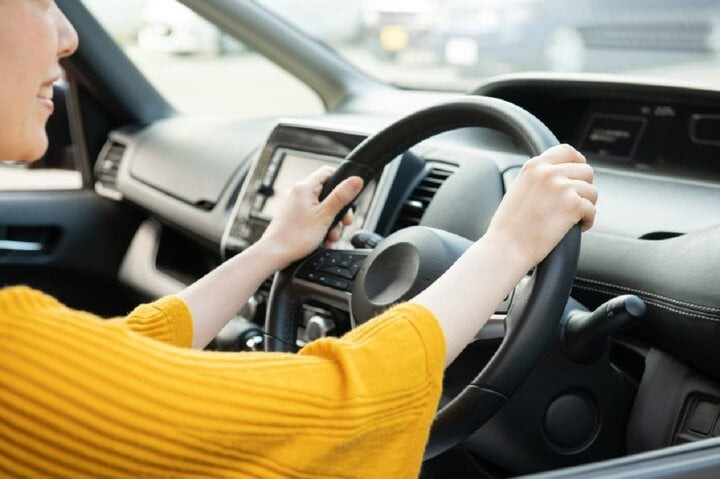
People without a motorcycle license can still learn and obtain a car driving license. (Illustrative image)
Must be of the required age (as of the driving test date), health, and educational qualifications; prior training is permitted, but the test can only be taken when the required age is met.
To upgrade their driver's license, learners must have sufficient driving experience or professional driving time and safe driving mileage as follows: From B2 to D, and from C to E: at least 5 years of professional driving experience and at least 100,000 safe driving kilometers.
Those applying to upgrade their driver's license to categories D and E must have a junior high school diploma or equivalent or higher.
What is a driver's license?
Driving licenses (also known as driver's permits) are a type of license/certificate issued to drivers by competent state authorities. Having a driving license means you are permitted to operate various types of vehicles: cars, trucks, buses, etc., on public roads.
After obtaining a driver's license, if a driver is asked by traffic police to present their license and they do not have it, they will be subject to various penalties, mostly administrative fines. If other violations are also present, the driver's license may be temporarily revoked or the vehicle impounded.
Current types of driver's licenses
Class B1 driver's license: Issued to individuals aged 18 and over, allowing them to operate the following vehicles: passenger cars with fewer than 9 seats, trucks, specialized trucks with a payload of ≤3.5T, and tractors with one trailer <3.5T.
Class B2 driver's license: Currently the most common driver's license. Drivers with a Class B2 license must be at least 18 years old and are permitted to operate the following vehicles: cars with fewer than 9 seats, trucks, and tractors with one trailer weighing less than 3.5 tons, including vehicles that a Class B1 license allows you to operate.
Class C driver's license: Issued to individuals aged 21 and over, allowing them to operate the following vehicles: Passenger cars with fewer than 9 seats, trucks, specialized trucks with a load capacity exceeding 3.5 tons, tractors, trailers under 3.5 tons, and all types of vehicles covered by Class B1, B2, etc. driver's licenses.
Class D driver's license: Requires being over 24 years old, having a junior high school diploma (9/12), and being able to drive vehicles with 10 to 30 seats, as well as vehicles specified in B1, B2, and C licenses.
Class E four-wheel vehicle driving license: Issued to individuals over 27 years of age and allows them to operate the following vehicles: vehicles with more than 30 seats, and vehicles specified in B1, B2, C, and D licenses.
Driving license class F, FC: Issued to individuals who already hold a driving license class B2, C, D, E, allowing them to drive the following types of vehicles: Vehicles specified in license classes B2, C, D, E are permitted to tow semi-trailers weighing ≥ 750 kg.
Category FC: similar to category F, plus container truck drivers.


