
Without decentralization and delegation of authority, if everything has to be submitted to a higher authority, nothing can be done!
Deputy Speaker of the National Assembly Nguyen Khac Dinh emphasized the principle that "the State does not directly interfere in the production, business, and management activities of enterprises"; having to ask for permission for everything will cause enterprises to lose business opportunities.
On the morning of October 7th, the Standing Committee of the National Assembly gave its opinion on the draft Law on Management and Investment of State Capital in Enterprises.
Presenting the Government's report, Deputy Minister of Finance Cao Anh Tuan stated that one of the major contents stipulated in the draft Law is the investment activities of enterprises, regulated from Article 25 to Article 32.
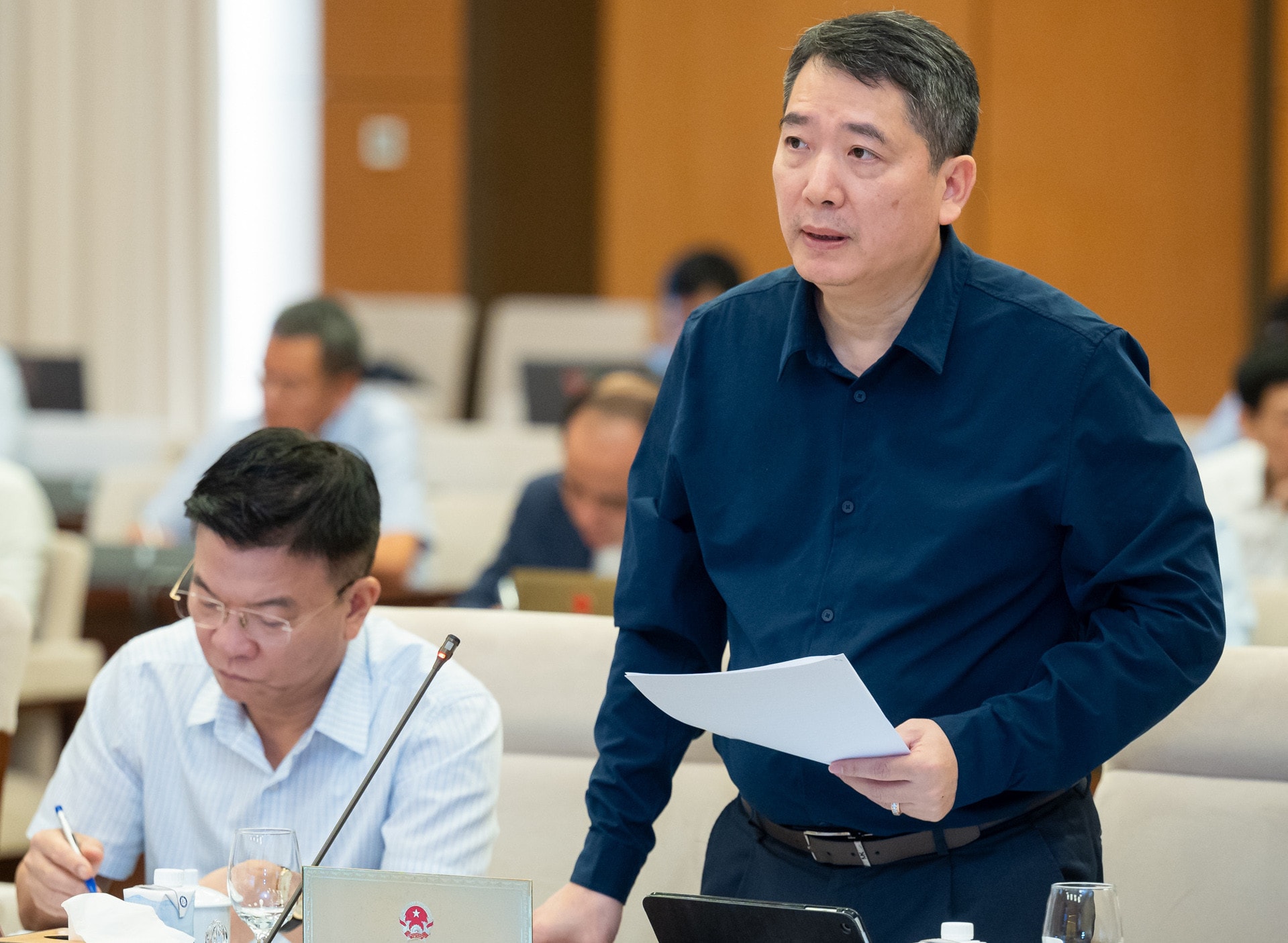
Specifically, Article 25 of the draft Law stipulates that investment projects of enterprises must be approved by competent authorities in accordance with the investment law or have their investment policy decided in accordance with the public investment law.
Business projects that require investment policy approval but do not fall under the provisions of the Investment Law or the Public Investment Law may have their investment policy approved according to the provisions of these laws.
After the investment policy is approved by the competent authority, the enterprise implements the investment project in accordance with the provisions of investment law, construction law, and other relevant laws.
It is not truly in line with the spirit of decentralization and delegation of power.
Reviewing this matter, the Chairman of the Finance and Budget Committee, Le Quang Manh, stated that the majority of opinions from the Standing Committee believe that this regulation "is not truly in line with the spirit of decentralization and delegation of power to enterprises, and still involves administrative interference in the management of enterprises."
Some regulations on business investment activities stipulated in the draft Law are also inconsistent with related legal provisions such as the Investment Law and the Enterprise Law.
Therefore, the reviewing agency recommended reviewing the regulations to avoid overlapping in the investment activities of businesses.
In cases where investment projects for ordinary production and business are made using the company's own capital, consideration should be given to delegating the decision-making authority and responsibility to the board of members. The specific procedures could be left to the Government to regulate in detail.
In cases where investment projects for production and business are funded by the state budget, the enterprise shall be assigned as the investor in accordance with the law on public investment.
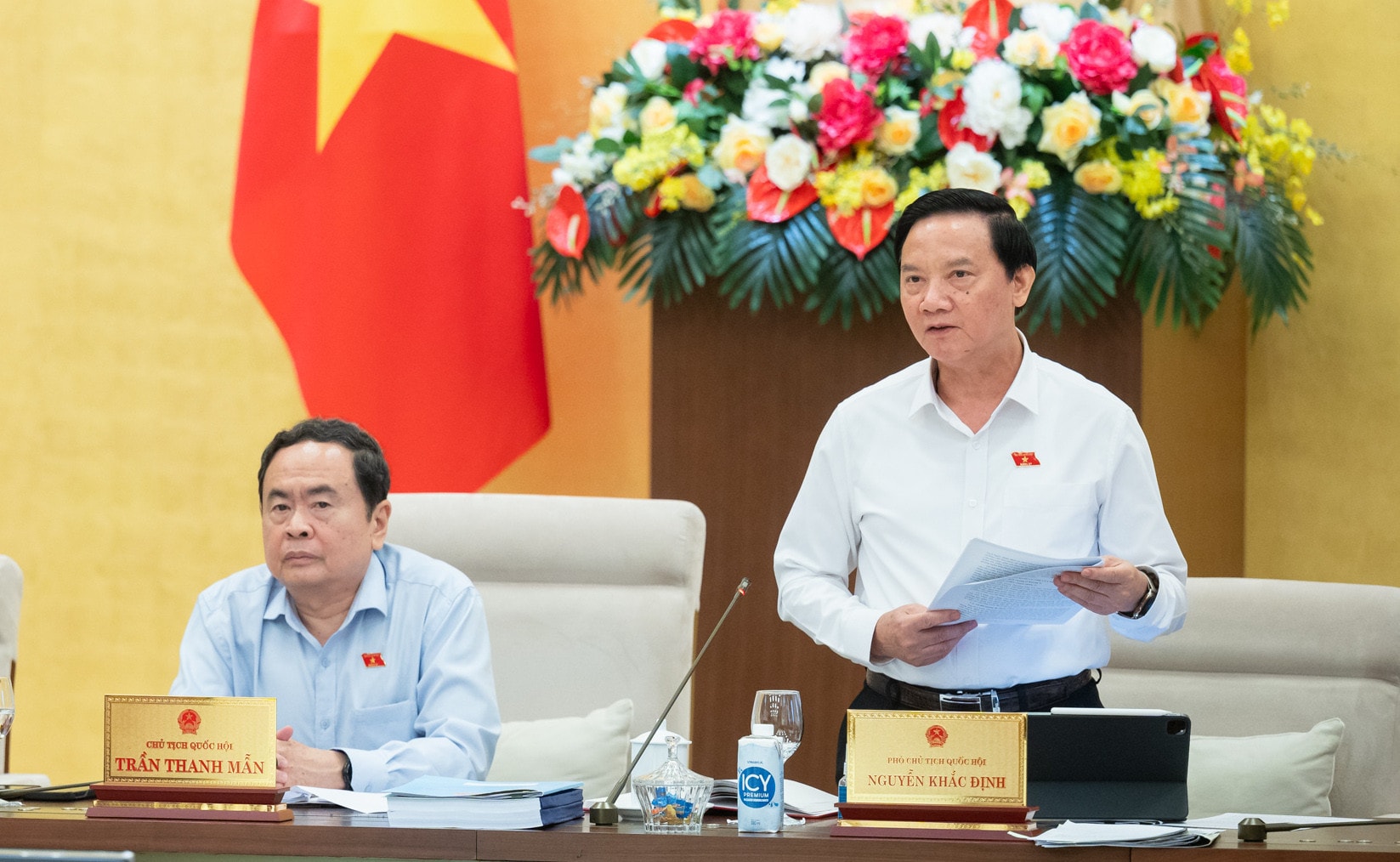
Deputy Speaker of the National Assembly Nguyen Khac Dinh proposed a thorough review of the entire draft Law to ensure consistency with the ideology of Resolution 12 of the 12th Central Committee of the Communist Party of Vietnam on continuing to restructure, innovate, and improve the efficiency of state-owned enterprises.
The consistent principle within this framework is that "the State does not directly interfere in the production, business, and management activities of enterprises."
"State capital, after being invested in enterprises, is defined as the assets and capital of the enterprise. Yet, everything has to be requested, and enterprises have to go through procedures, which leads to missed opportunities and lost business prospects," the Vice Chairman of the National Assembly noted.
Mr. Dinh argued that with regulations like Article 25 of the draft Law, businesses are unable to do anything. Meanwhile, private businesses operate efficiently because they save time, simplify procedures, and reduce the costs of applying to various places.
According to the Deputy Speaker of the National Assembly, the draft Law has not yet significantly reduced procedures or decentralized power. Therefore, it needs to be revised to minimize and simplify administrative procedures, limit the "request-and-grant" mechanism, and strengthen decentralization and delegation of power.
Without decentralization and delegation of authority, everything must be submitted to higher levels, and nothing can be accomplished. According to Article 25, businesses have to submit and request approval for many things, from strategies and directions to plans.
"There are many issues that need to be submitted and approved, yet businesses are held fully responsible. If everything has to be approved, how can they be fully responsible? Businesses also have to meet objectives and requirements, ensure efficient use of capital, and ensure alignment with business strategies and plans," Mr. Dinh analyzed.
Is it not allowed to invest capital in real estate business?
Another issue that delegates were interested in discussing was the provision in Clause 2, Article 27 of the draft Law, which stipulates that enterprises are not allowed to invest capital to establish enterprises, contribute capital, purchase shares, or purchase capital contributions in the real estate business sector.
State-owned enterprises are also prohibited from investing capital to establish businesses, contribute capital, or purchase shares in banks, insurance companies, securities companies, venture capital funds, securities investment funds, securities investment companies, and securities investment fund management companies, except for enterprises with the function of investing and trading state capital, and operating in the banking, insurance, and securities sectors.
Chairman of the Legal Committee Hoang Thanh Tung agreed that state-owned enterprises should be prohibited from investing or injecting capital into risky sectors such as real estate.
However, the Chairman of the Economic Committee, Vu Hong Thanh, argued that such a regulation is not in line with reality. This is because there are many cases where state-owned enterprises, after restructuring and reorganization, have surplus offices and headquarters but are not allowed to rent them out.
They want to lease out surplus office space and headquarters, but this must be included in the investment project and approved by the competent authority. This leads to waste and therefore needs to be reviewed.
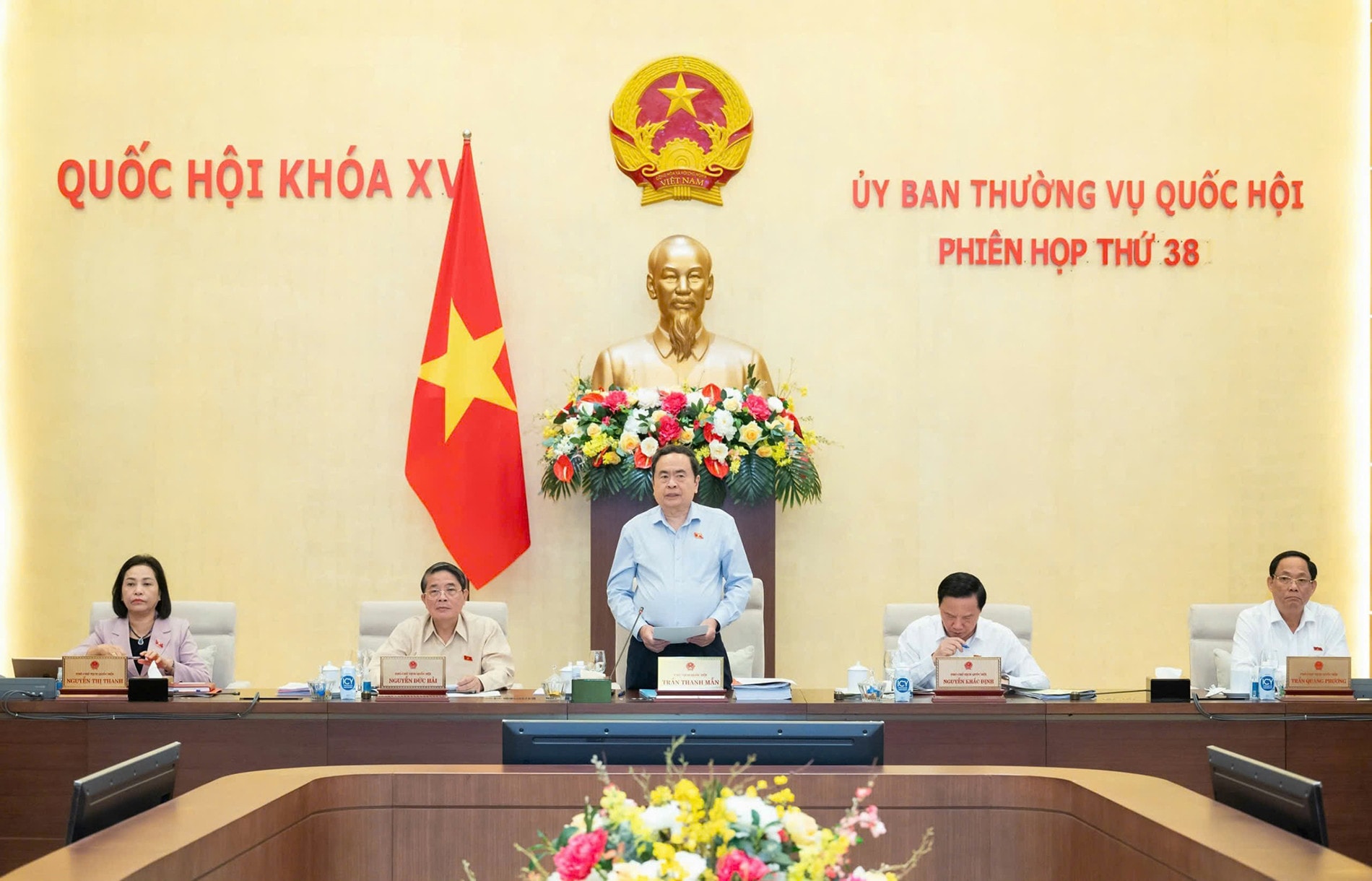
National Assembly Chairman Tran Thanh Man raised the issue of whether the regulations in the draft Law need to be reviewed to ensure consistency with other laws (Investment Law, Construction Law), and whether they definitively address the practical difficulties faced by state-owned enterprises.
According to the Speaker of the National Assembly, this amendment to the law needs to clearly separate the functions of ministries and agencies managing state-owned enterprises, avoiding the situation where "one agency thinks another is in charge," which creates difficulties for the operation of enterprises.
The draft Law on Management and Investment of State Capital in Enterprises has 8 chapters and 62 articles, and is expected to be submitted to the National Assembly for initial consideration at the upcoming 8th session.


