
The Russian economy is sinking deeper into crisis.
Yesterday, the Central Bank of Russia (CBR) lowered its key interest rate and its growth forecast for this year, reflecting concerns about a recession in the country.
The key interest rate in Russia was lowered by 1% to 14%. Growth forecasts were also downgraded to -3.5 to -4%, compared to -3% in January.
Russia is facing numerous problems as low oil prices and Western sanctions wreak havoc on its economy. The ruble has depreciated by 40% against the dollar in just six months. Inflation peaked at 16.7% in February, with food prices rising by as much as 23% year-on-year.
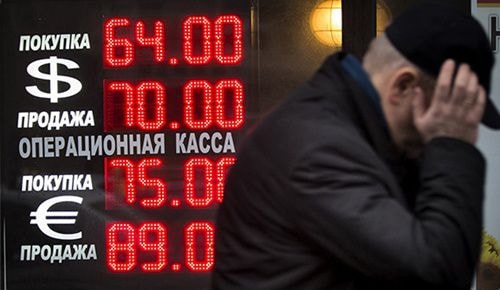 |
| An electronic display shows the ruble's exchange rate against the USD and euro for December last year. Photo: Economist |
The ruble's depreciation has sparked a wave of blame directed at the central bank, which is accused of failing to stem the currency's decline despite selling tens of billions of dollars in foreign exchange reserves.
CNN notes that the CBR (Central Bank of Russia) is facing a dilemma. Lowering interest rates could lead to higher prices, but keeping them at their current level would only worsen and prolong the crisis. Industrial activity and consumer demand in Russia are also slowing down, according to the World Bank.
In recent months, the Russian Central Bank has repeatedly surprised the market. Last December, they unexpectedly raised interest rates from 11.5% to 17%, aiming to protect the ruble. Then in January, they lowered it back to 15%, stating that inflation was stabilizing.
Meanwhile, in the Telegraph, Anna Stupnytska, an economist at Fidelity Worldwide Investment, commented: "This move is the result of political and economic pressure. It may provide some relief to the economy, but it cannot pull Russia out of this year's deep crisis." She believes that only when oil prices rise and the crisis in Ukraine subsides will the Russian economic outlook improve, and "neither of these is likely to happen." She also predicted that as the Russian government runs out of policy options this year, a wave of corporate defaults will occur, further increasing pressure on the banking system.
Nevertheless, this strategy has had some effect. The ruble has stabilized since the beginning of the year, giving the central bank more room to cut interest rates. Yesterday, the currency even rose slightly to 61 rubles per USD. However, the Russian Central Bank's warning about growth also means the crisis there is far from over.
According to VNE


