
Part 1: Schools 'without' English teachers
Despite being a compulsory subject, many schools in the mountainous districts of Nghe An province still lack a single English teacher. The shortage of English teachers is a common problem, posing significant challenges to the popularization, teaching, and learning of English in these areas for many years.
.png)

My Ha - Tien Hung• April 12, 2025
Over the years, the quality of English teaching and learning in mountainous districts has gradually improved. However, compared to the general standard, English remains a "low-level area" due to inadequate teaching conditions and a persistent shortage of teachers. Meanwhile, many English teachers continue to request transfers to lowland areas each year, and mountainous districts are still struggling to recruit teachers.

In October 2024, just nearly a month after the start of the new school year, Tri Le 2 Ethnic Boarding Primary School (Que Phong) received news that Ms. Le Huyen, the school's only English teacher, requested a transfer to a more remote area. Although this was an undesirable situation, the school's management understood it to be justified at the time. The teacher had spent many years teaching in remote, rural areas, while her husband and young child were living in the lowlands. The transfer stemmed from the essential needs of her family.
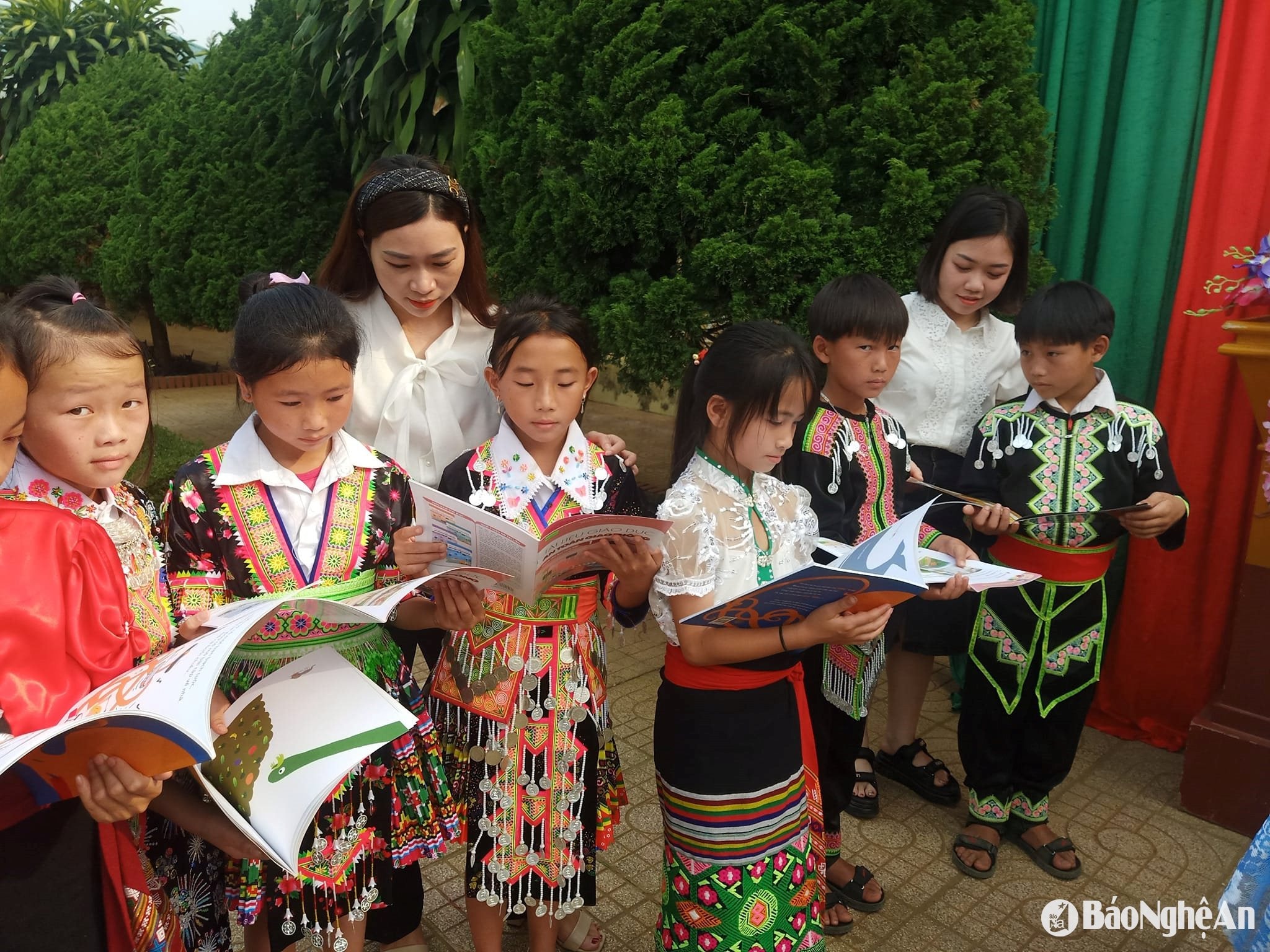
Tri Le 2 Primary School is currently one of four primary schools in Que Phong district without an English teacher. To alleviate the school's difficulties, since the beginning of this year, the District Education and Training Department has assigned four English teachers from secondary schools to teach English to students in grades 3-5. Although students' learning is not temporarily interrupted, the situation of having to rely on these additional teachers has created many difficulties in organizing teaching and learning. Sharing about this, Mr. Le Viet Minh - the school principal - said: "We are having difficulty arranging the timetable. According to regulations, students should have four lessons per week, evenly distributed throughout the school day. But because we are still dependent on the English timetable at secondary schools and to make it easier for teachers to travel, we have to concentrate English lessons on the last two days of the week, Thursday and Friday, and students have to study English continuously for four lessons." Therefore, it will clearly affect the quality and learning of students, especially those in primary school.
Due to a shortage of English teachers, while all other schools in Que Phong district have implemented the enhanced English program under the provincial support policy, Tri Le 2 Ethnic Boarding Primary School has yet to do so. Previously, according to a summary from Que Phong district, the entire district is lacking 12 English teachers at both primary and secondary levels, and the shortage is occurring in many schools. Therefore, the district has requested the addition of more teachers or support from teachers in other schools to teach English online, and encouraged foreign language centers to participate in enhanced teaching.
In Tuong Duong district, Mr. Nguyen Van Hien, Deputy Head of the District Education and Training Department, said that every year the department has to simultaneously implement many solutions such as rotation, secondment, inter-school and inter-level assignments to teach English in schools due to the persistent shortage of English teachers for many years.
Current statistics show that the entire district is lacking more than 20 English teachers at both primary and secondary levels. Recruiting English teachers is proving very difficult due to a shortage of applicants, despite having more vacancies than available positions. In 2025, Tuong Duong district had 8 English teacher recruitment positions but only 3 applications. Given this situation, even after careful consideration, the district can only allocate one English teacher per school. Furthermore, two schools currently have no English teachers at all: Tam Quang 1 Primary School and Luu Kien Ethnic Boarding Primary School.
.jpg)
Currently, Tam Quang 1 Primary School is also the most "struggling" school in Tuong Duong district, as it has three teachers from three different schools in the area who are also assigned to teach English to grades 3, 4, and 5. Two of these teachers are from the primary school and one is from the secondary school.
The schedules and class times of the four schools are different, so we have to carefully consider everything before arranging the timetables for teachers and students. The school itself also hopes to have local teachers who will stay long-term and know each student's abilities in order to create appropriate teaching plans.”
Teacher Nguyen Huu Hoan - Principal of Tam Quang 1 Primary School

For many years, English has been one of the three official subjects chosen by Nghe An province for the 10th grade entrance exam. While the quality of Literature and Mathematics is fairly consistent across the province, the quality of English in the mountainous districts varies considerably and is very low.
Specifically, according to the Department of Education and Training's summary, from the 2020-2021 school year to the 2022-2023 school year, the average English scores of schools in mountainous and disadvantaged areas of Nghe An province were 3.06, 2.7, and 3.36 respectively. Among these, the entrance exam scores for some schools were very low, such as Tuong Duong 1 High School in the 2021-2022 and 2022-2023 school years, with scores of 2.67 and 2.93; and Tuong Duong 2 High School, with scores of 2.67 and 2.93. Meanwhile, the average entrance exam score for Que Phong High School was 1.88 - 1.55.
In this year's 10th grade entrance exam, while the average foreign language score for the entire province was 4.75 points, the foreign language scores in the mountainous districts of Nghe An province ranged only from 2.92 to 3.64 points.
According to the Department of Education and Training's assessment, one of the reasons why foreign language scores are lower than those of Literature and Mathematics, and lower than the provincial average, is that in previous years, English language learning in many mountainous districts was not implemented consistently and was interrupted due to a shortage of English teachers.
In many schools, because English was previously an elective subject in primary school, students haven't had the opportunity to learn and become familiar with it. This knowledge gap in primary school causes many difficulties for students entering secondary school and affects their learning process and entrance exams for grade 10.
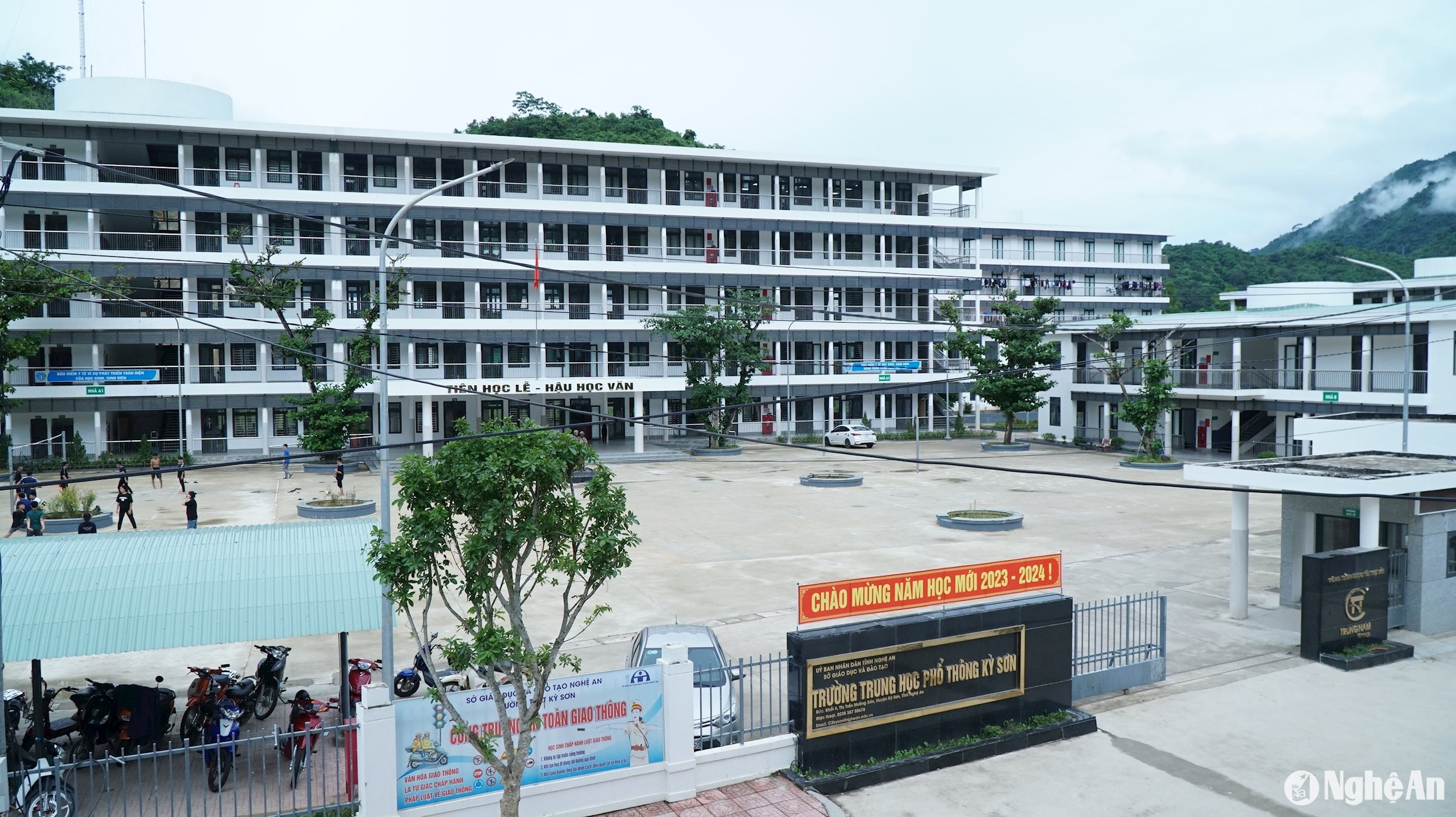
Adding further to this, Ms. Truong Thi Lan, an English teacher at Ky Son High School, shared: "After each new enrollment season, I don't know how to describe or complain about the quality of English among the students; their test scores are very low. Even if the exam wasn't in multiple-choice format, with a bit of luck, many students could score '0'."
This situation is very likely to occur because for many years, students outside of town schools have received fairly comprehensive English education. However, the majority of students in remote areas, whose schools lack teachers or have only a few teachers, do not receive adequate English instruction.
According to Ms. Truong Thi Lan, due to the very low quality of incoming students, after they enter 10th grade, English teachers have to "start from scratch," beginning with the alphabet, even though theoretically the students have studied English for 7 or 10 years.
A regrettable recent reality is that due to low English proficiency, after the Ministry of Education and Training made English an elective subject instead of a compulsory one in the high school graduation exam, the percentage of 12th-grade students registering to take the English exam was very low. For example, at Ky Son High School this year, only 13 students registered. A survey of 10th-grade students who just entered the school year also showed that only 5 students registered to take the English exam.
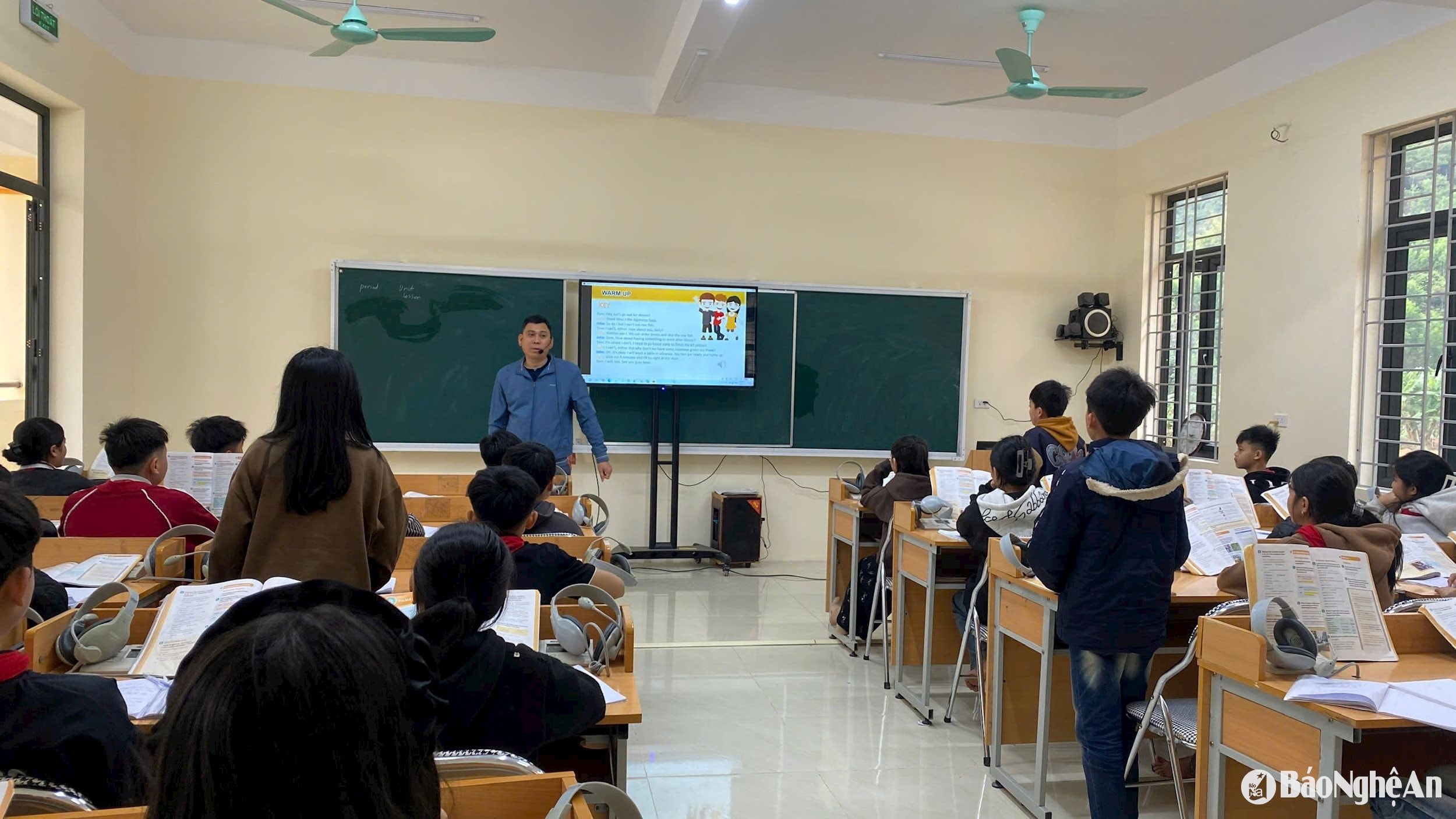
At Que Phong High School, a survey conducted by the school revealed that out of 550 12th-grade students this academic year, less than 4% registered to take the elective subject of a foreign language. Meanwhile, nearly 50% registered for subjects such as History, Geography, and Economic and Legal Education.
For students in mountainous areas, English is always a difficult subject and not as easy to get good grades in compared to other subjects. Therefore, choosing alternative subjects is a safe solution and helps reduce pressure during the review process.”
Teacher Pham Hong Tu - Vice Principal of Que Phong High School
With many shortcomings, this school year, for the first time, the Nghe An Department of Education organized a conference for all principals of junior high schools throughout the province. During the conference, the achievements, difficulties, and shortcomings of junior high school education were thoroughly analyzed, with particular emphasis on the limitations and weaknesses in English language teaching in schools.
.jpg)
Mr. Nguyen Tien Dung, Head of the Secondary Education Department of the Department of Education and Training, said: "We have analyzed various data to use different channels to analyze the quality of education in each locality and each school, such as entrance exam scores for grade 10, academic performance rankings, conduct rankings, and the conditions ensuring teaching and learning in schools."
In reality, compared to many lowland districts and more favorable areas, teaching and learning in mountainous districts still face many difficulties and shortcomings, especially the shortage of teachers, teachers teaching multiple subjects or taking on multiple roles, and the lack of facilities and teaching equipment.
This has also affected the quality of teaching and learning in schools. This is also a concern for the education sector and requires comprehensive solutions to improve the quality of English in schools, starting from preschool and primary school levels.
(To be continued)


