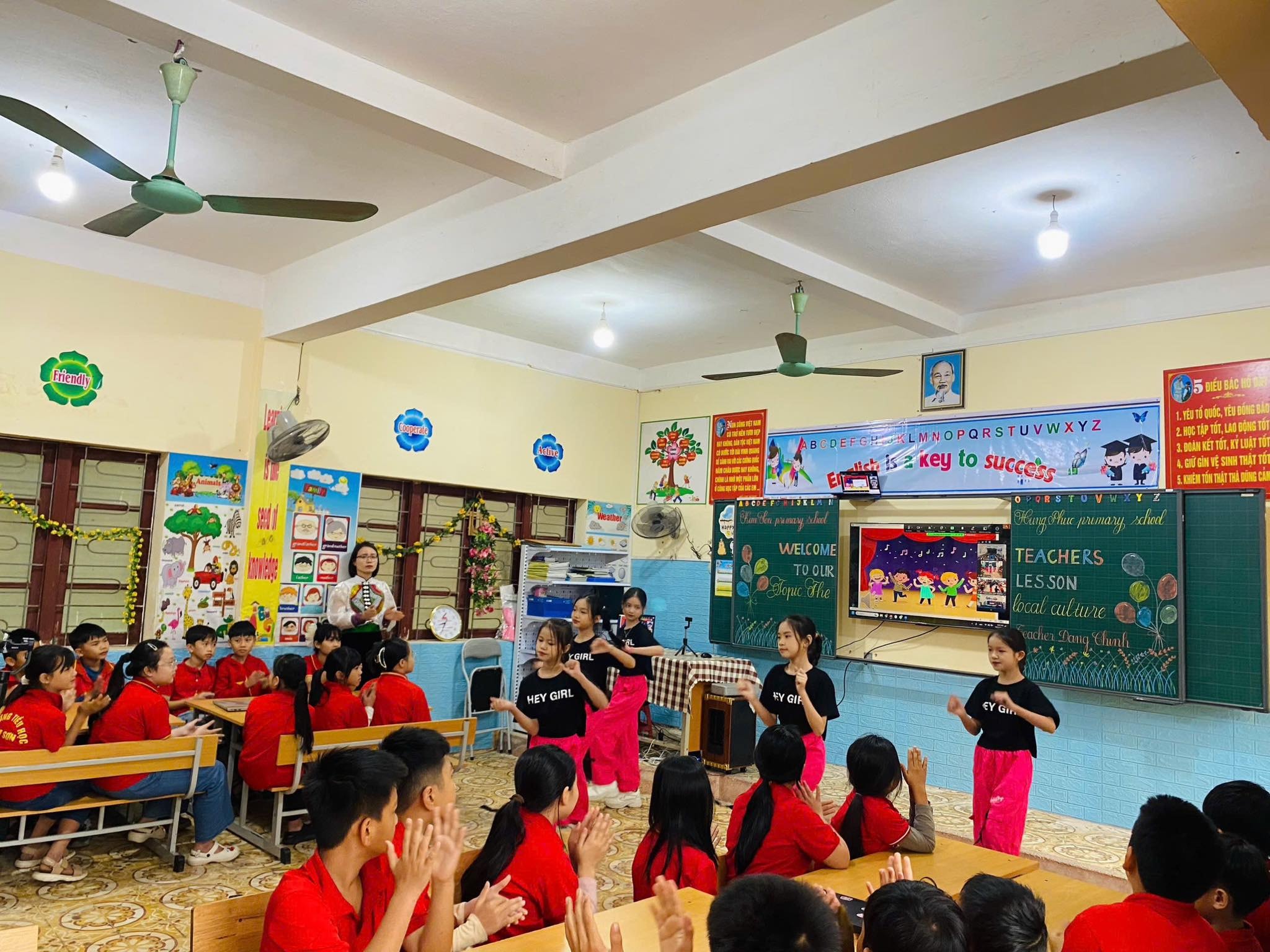
Final installment: Determined to overcome difficulties for the sake of the students!
A shortage of teachers and insufficient classroom staff is a common problem in English language teaching in the mountainous districts of Nghe An province.
.png)

My Ha - Tien HungApril 12, 2025
A shortage of teachers and insufficient classroom staff is a common problem in English language teaching in the mountainous districts of Nghe An province. In this context, the Education sector is implementing various solutions to improve English learning in schools, ensuring that all students receive instruction according to the 2018 General Education Program. These are also the first steps towards realizing the aspiration of making English a second language in schools, particularly in the mountainous districts.

Teacher Nguyen Thi Mai Phuong's familiar commute route stretches from Huu Kiem Ethnic Boarding Primary School to Pha Danh Ethnic Boarding Primary School, a distance of nearly 20 km. At almost 50 years old, constantly traveling between two different schools is not easy for her.
However, this is the best solution implemented by the Ky Son District Department of Education and Training in the context of a severe shortage of English teachers throughout the district.
Ms. Phuong also stated that, in addition to teaching at two schools, her teaching schedule is overloaded because she currently has to teach nearly 20 classes across grades 3, 4, and 5, with 34 teaching hours per week (exceeding the regulations by 11 hours).
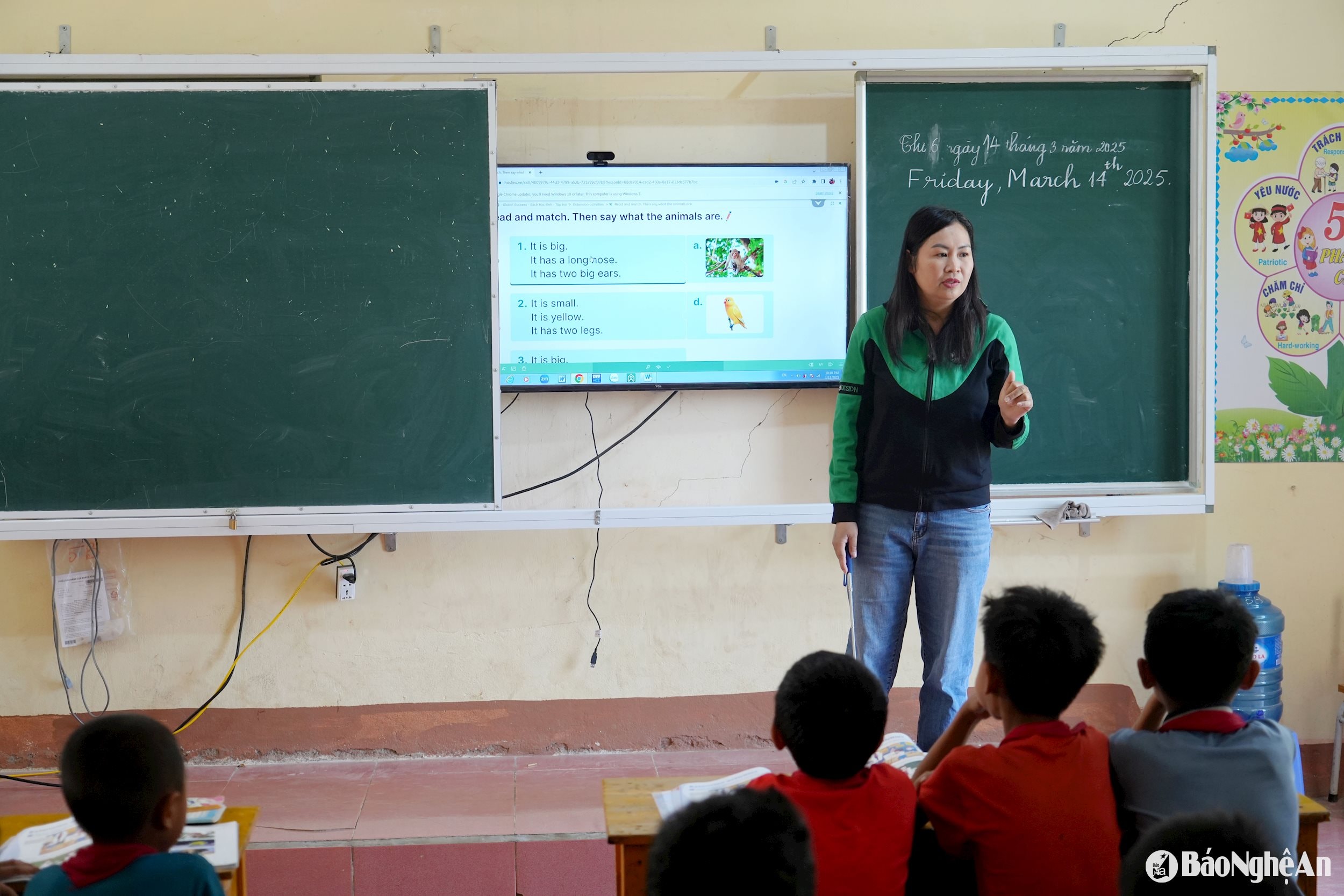
Witnessing a lesson taught by teacher Mai Phuong reveals the hardships and difficulties faced by both her and her students. Currently, all of the classes she teaches are combined classes based on grade levels. Primary schools in mountainous districts are often old buildings with small classrooms and no functional rooms. Before each lesson, students from different classes take turns moving desks and chairs to the common classroom, crowding into rooms with 50-55 students (exceeding the 20-student limit set by primary schools).
"With English, if students were taught in small classes, there would be more interaction and exchange. However, in the current context, this is impossible."
Teacher Nguyen Thi Mai Phuong

Regarding the implementation of English language instruction at Pha Danh Ethnic Boarding Primary School, Principal Pham Xuan Hong stated that, for the time being, the school is currently employing teachers from other schools to reinforce its teaching staff. In the long term, the school hopes to receive additional teachers or establish a mechanism to contract English teachers to ensure stable learning for both teachers and students.
The shortage or lack of English teachers is also occurring at 13 other primary schools in Ky Son district. At Na Ngoi 2 Primary School, since the previous English teacher transferred to another school, the school has not received any additional staff for the past three years.
Mr. Nguyen The Hanh, the school principal, also expressed concern that this situation might continue because recruiting English teachers in Ky Son district is facing many difficulties.
To address this issue, the Ky Son District Department of Education and Training is currently assigning Ms. Nguyen Thi Thi Thu (a teacher at Nam Can Ethnic Boarding Primary School) to teach in a "combined class" format. These classes will be held in the school's cafeteria to ensure sufficient seating for students and prevent them from having to move desks and chairs after each class.
.jpg)
In Quy Chau district, as of now, the entire district only has one boarding primary school, Chau Nga Ethnic Minority Boarding Primary School. The remaining schools, because they have not yet implemented boarding programs, face significant difficulties in merging students from grade 3 and above from smaller, outlying school locations into the main school campuses.
Currently, the district is facing a teacher shortage at both primary and secondary levels. Therefore, the district is flexibly implementing measures such as transferring, seconding, and reinforcing teachers through inter-school or inter-cluster teaching arrangements.
The current difficulty lies in the remote school locations, as the number of teachers is insufficient to cover all of them. Ms. Nguyen Thi Binh, Deputy Head of the Department of Education and Training, added: "Not only are teachers 'mobile,' but students in our district also attend English classes 'mobile.' This means that whenever there is an English lesson, students from the remote school locations will travel to the main school to study."


Starting from the 2022-2023 school year, in accordance with the 2018 General Education Program, English and Information Technology have become compulsory subjects for all students from grade 3 upwards. This also means that English and Information Technology will be widely taught nationwide. Implementing these subjects appropriately and effectively will create significant changes in communication skills, providing future generations with a solid foundation for their future development.
In Nghe An, the inclusion of English as a compulsory subject, starting from primary school, has brought both opportunities and challenges. The positive results are evident, but difficulties and shortcomings are also emerging, especially given the current limitations in infrastructure, teaching equipment, and, most importantly, the widespread shortage of teachers.
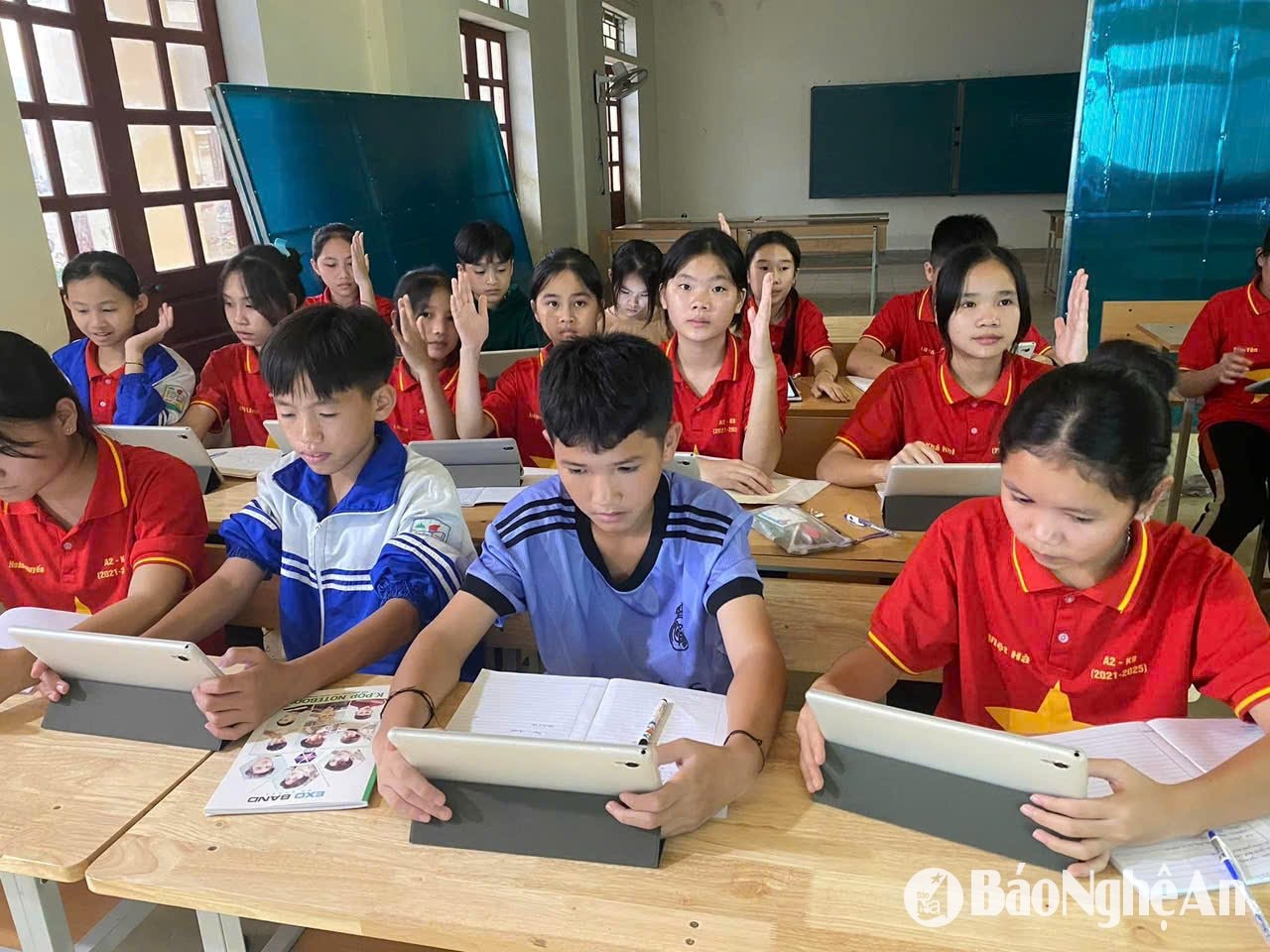
With the desire to give students opportunities and bridge the gap between mountainous and lowland areas, the Department of Education and Training of Nghe An province has issued long-term directives to ensure that English language teaching is carried out regularly and sustainably.
Specifically, since the entire education sector began implementing the 2018 General Education Program, Nghe An province has adopted a policy of consolidating students from grades 3 to 5 from all scattered schools into main schools, building boarding school models so that they can learn English and Information Technology, two compulsory subjects according to the new curriculum.
According to statistics from the Department of Education and Training, while the province had only 44 ethnic boarding schools in the 2021 school year, this number has increased to 83 after four years, including 41 primary schools and 8 primary and secondary schools. The total number of separate school locations has decreased from 417 to 322 after four years.
The percentage of students in grades 3-5 across the province who are learning English is 208,942 out of 209,360, an increase of over 31,000 compared to four years ago, with the increase mainly concentrated in mountainous districts.
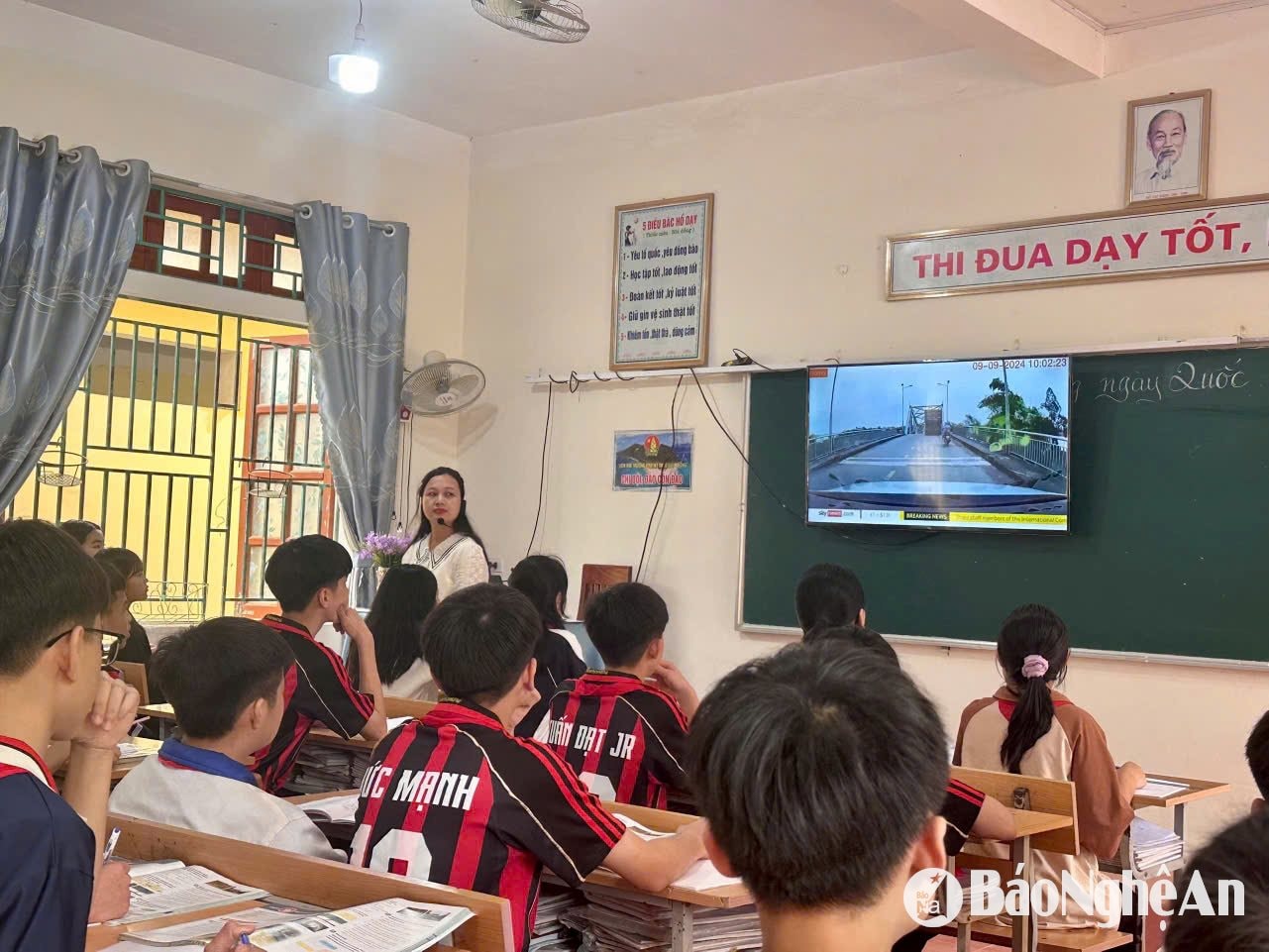
In addition, given the general situation where mountainous districts are lacking nearly 100 English teachers, the Department has directed lowland districts and cities to implement the "Department helping department - school helping school - professional helping professional" program, which includes supporting online teaching for students in mountainous areas.
To date, the Education and Training Departments of Dien Chau and Do Luong districts, and most recently Vinh City, have "sponsored" schools in the three mountainous districts.
Currently, this model has only been implemented in a few small-scale schools nationwide and not consistently. The Department of Education and Training of Nghe An province was also the first in the country to launch the "Department helping department - school helping school - professional helping professional" program, which was later adopted by many other localities.
Mr. Dang Van Hai, Chairman of the Education Sector Trade Union, said: Previously, the implementation of "department helping department - school helping school" mainly focused on supporting facilities and teaching equipment.
However, in the current context, what schools lack and need most is English teachers. Therefore, this collaborative effort has truly helped schools in mountainous areas overcome difficulties, enabling students to receive comprehensive English education from the primary school level.
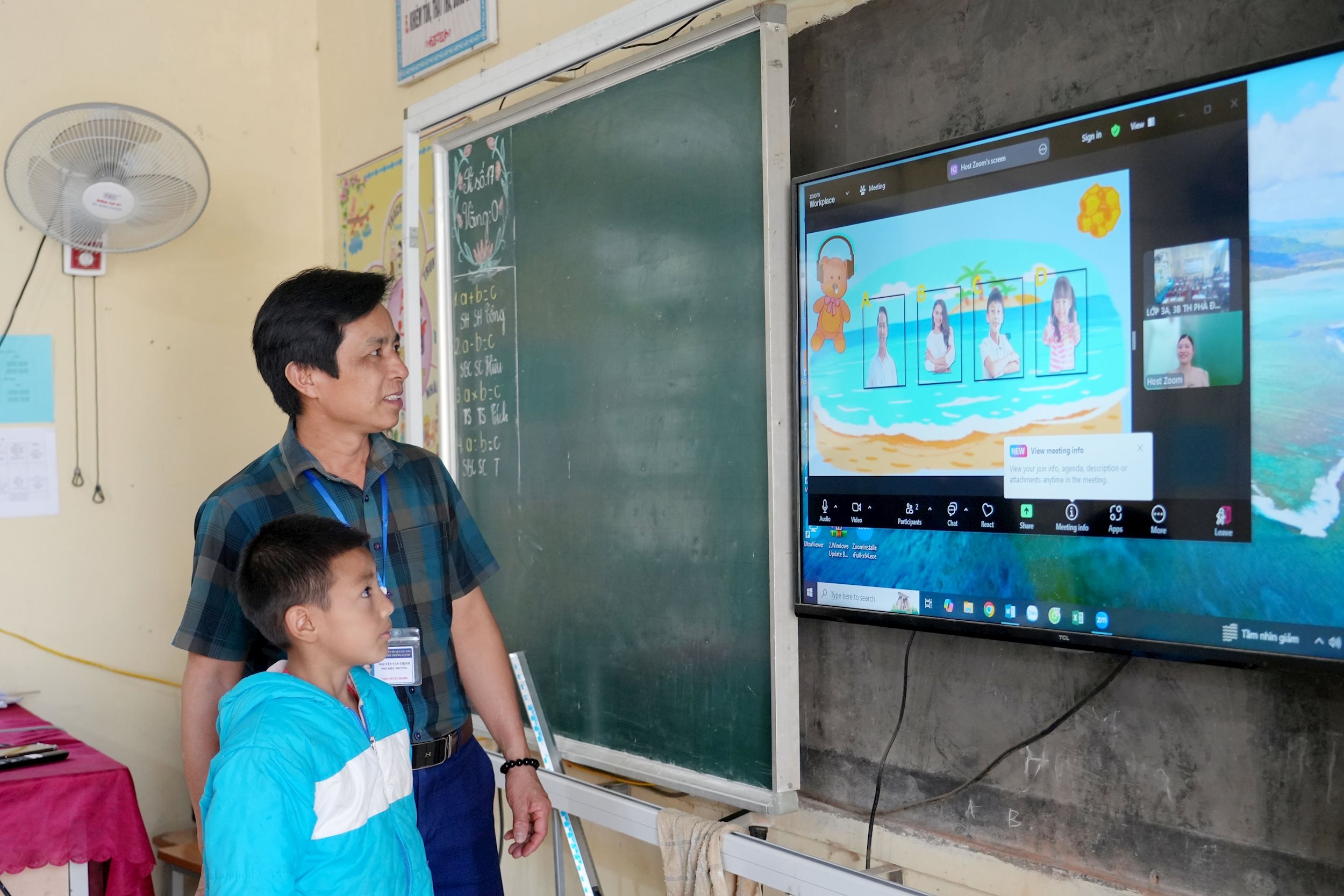
Good news for the mountainous districts: starting this school year, Nghe An province has issued Resolution No. 17/2024/NQ-HĐND. Accordingly, 83 ethnic boarding primary and secondary schools and high schools in the districts of Ky Son, Tuong Duong, Con Cuong, Que Phong, and Quy Chau will receive funding for enhanced teaching, including foreign languages.
This is also considered an important policy contributing to improving the quality of teaching and learning in mountainous districts, providing opportunities for students to develop comprehensively. Despite the difficulties in allocating teachers and facilities, the high mountainous districts are determined to overcome these challenges to give students more learning opportunities.
According to Mr. Pham Viet Phuc, Head of the Education and Training Department of Ky Son district, only 17 out of 33 primary schools in the locality currently have English teachers, and if both primary and secondary levels are included, there is a shortage of 64 teachers.
Recruitment is proving very difficult, despite having more staffing quotas than available. Therefore, in addition to teacher support from lowland districts, we are encouraging schools to invite additional teachers from junior and senior high schools, organize extracurricular classes, and conduct online learning..."
Mr. Pham Viet Phuc - Head of the Education and Training Department of Ky Son District

To address the difficulties faced by high-altitude mountainous districts, the Department of Education and Training recently organized a conference and working session with all principals and leaders of education and training departments in these districts to listen to the current situation, analyze the difficulties, and find solutions.
Mr. Thai Van Thanh, Director of the Department of Education and Training, stated that improving the quality of education in mountainous areas is one of the important goals of Nghe An's education sector. Therefore, the sector has been and continues to advise the province on policies to prioritize and support the implementation of programs and attract teachers to work in mountainous districts for the long term.
Furthermore, given that the shortage of English teachers cannot be resolved "overnight," the increased support and assistance from lowland districts through the "district helping district, school helping school, professional helping professional" program is effective and practical.