
Part I: The woes of a... frog-like craftsman
Like many people from Nghe An, whose hometowns are only recognizable by their accents, they came here, passed through here, and settled in this land. They pursue many different professions, some of which are family traditions, creating their own "brand." Nghe An Online Newspaper would like to introduce to readers a glimpse into the lives and work of these migrants in Nghe An, as they struggle to make a living.
 |
Living under a dilapidated, makeshift shack behind Cua Bac Market (Vinh City); wearing worn-out black clothes; a meal costing 3000 dong, sleeping on the bed costing 3000 dong each night... this is the life of these itinerant street vendors.
itinerant occupation
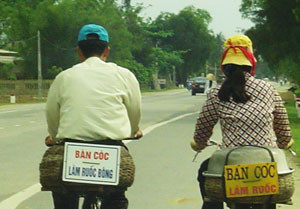
At 40 years old, having inherited their family's toad-slaughtering business since the age of 13, Mr. Huong and Ms. Nguyet have now traveled to all 64 provinces and cities across Vietnam to sell toads. With their old bicycle, they and others in the trade can't remember how many roads they've traveled or how many places they've set foot on in Vietnam; they only know that only by traveling do they realize how vast the country is, and only by visiting do they understand that there are still many people struggling to make a living like themselves... Along with Mr. Huong and Ms. Nguyet, ten other professional toad vendors have also arrived in Nghe An. Most of them are from Tho An commune, Dan Phuong district, Ha Tay province, where they proudly boast of their family's traditional toad-slaughtering trade. Reaching Nghe An means these people have traveled extensively through provinces from Ha Nam, Ninh Binh, Thanh Hoa... Each trip to Nghe An is different, sometimes bitterly cold, sometimes scorching hot; sometimes the prices are favorable, and other times the price surges cause hardship for the toad-slaughtering team.
A toad picker's workday begins at 4 a.m. They go to the market bus station to receive live toads sent from Ha Tay; sometimes they have to travel to districts like Yen Thanh, Quynh Luu, Nam Dan, Thanh Chuong... to buy them when customers place urgent orders. Once they have several tens of kilograms of toads in the basket on the back of their old bicycles, they spread out into every nook and cranny to sell them. The cry "Toads here! Toads for making shredded toad meat!" echoes through every street and neighborhood of Vinh City. Therefore, it's easy to understand why those from this province bordering the capital know the roads in Vinh better than the locals. Every day, hundreds of kilometers are covered under their worn-out tires. Every couple of weeks, when the demand here is saturated, they travel to another province. That's why many people call them inter-provincial toad pickers...
A hard job
The business of selling toads usually thrives before the Lunar New Year and during the transitional seasons. Customers are mainly from the city, buying toads to nourish children suffering from rickets. According to the couple, Mr. Quyet and Ms. Thoa, the best time to sell toads is after office hours, when customers have free time. This means they have to work for short periods so the owners can go to work or attend to other matters. Therefore, a midday nap or a proper meal is a rare luxury for them. As customers, we witnessed Mr. Quyet and Ms. Thoa's skill in toad extermination. The most important thing is knowing how to remove the toad's venomous spines, preventing the sap from contaminating the flesh. This is almost a family secret passed down through generations. In just 45 minutes, over 20 kilograms of toads, numbering over a hundred, were exterminated. After boiling, Ms. Thoa meticulously checks the meat, removing any unnecessary bones and flesh, leaving behind a mass of white, succulent, steaming toad meat. All of this toad meat is then pounded in a mortar. The strong hands of the worker move the mortar and pestle rhythmically. After a few dozen minutes, the toad meat is pounded until smooth, then transferred to a large pan and stirred slowly. The secret of the flame and the art of stirring transforms the entire toad into a fluffy toad meat floss.
Each kilogram of toad meat floss costs between 500,000 and 600,000 VND, depending on the time of year and the quality of the live toads. The larger and older the toads, the higher the price. On average, each kilogram of toad meat floss requires 10 to 15 kilograms of live toads. Each kilogram of toad meat costs between 35,000 and 45,000 VND, meaning the toad sellers only make a small profit. On average, each toad processing worker earns between 20,000 and 40,000 VND per day. This doesn't even include the hardships they endure, such as unsold goods, and scrutinized customers... But these things are nothing compared to the heavy burden of making a living.
And hardship
More than ten people, both men and women, crammed into a shack of about 10 square meters. The entrance to the shack was deep, damp, and resembled a toad's burrow. The shack was surrounded by a mossy wall that could collapse at any moment, and the roof was covered with corrugated iron to provide just enough protection from rain and sun... Ten people lived, ate, and rested on a cramped platform made of salvaged scraps of wood. The shack contained nothing but a few tattered mosquito nets, some worn-out pillows, and blankets that never got washed. Mosquitoes swarmed and buzzed at the slightest human touch. In the corner of the shack, several bicycles, incredibly old, lay piled on top of each other. They slept to the squeaking of toads trampling on each other in their sacks. According to the toad sellers, their living conditions were at their absolute limit. Renting a room would cost at least 200,000 VND/month or 10,000 VND/night, but renting a room in this shack only costs 3,000 VND/night - "cheap and fun." "Life is hard work, if I had to rent a room at a higher price, along with other expenses like electricity and water... I'd have no choice but to give up the job..."
Equivalent to a night's sleep costing 3000 dong is a 3000 dong meal for these toad-hunting workers. After traveling hundreds of kilometers, they gather at their familiar roadside eatery in Cua Bac Market (Vinh City). A 3000 dong meal consists of nothing more than a bowl of cold broth, a few pieces of braised tofu with mushy meat, and a bowl of rice that looks like it was cooked with rice from a flood. Occasionally, on "lucky" days, the men treat themselves to a few glasses of liquor and some peanuts to relax. Recently, prices have risen, and the meal has increased to 3500 dong, maintained by adding more rice and reducing the amount of other food. The most luxurious meal is reserved for a pregnant female worker in her fourth month of pregnancy: 5000 dong.
Nghe An province is known for its harsh climate, and the way its people cope with nature is unique, like frogs huddled together in a dark burrow. Mr. Nguyen Van Bac, the longest-serving resident of Nghe An, understands the cold of the region very well: "In winter, only those sleeping on either side suffer from the cold; otherwise, everyone huddles together and stays warm. In summer, it's bearable because the huts are open, and the wind blows in, making it very cool!" For these people, hardship has become commonplace. But what worries them most is their family and children back home. Their village, Tho An, is about 400 km from Vinh City, a distance equivalent to several days of traveling to sell goods, but they only return home for Tet (Lunar New Year). After a hurried, quiet Tet in their hometown, around the fourth day of Tet, they continue their journey through various provinces and cities. Their sons and daughters are left in the care of their grandparents. Often, longing for the warmth of their children, they could only huddle closer together to comfort themselves; sometimes, yearning for their homeland, their cries of hawking would fade away in their desperate hope of selling as many toads as possible...
Returning to the toad-picking shack after the Lunar New Year, we didn't see Mr. Quyet, Ms. Thoa, or Mr. Bac anymore; instead, we saw a few new faces. Ms. Tran Thi Hoa said that the people we had just mentioned had probably landed in Quang Nam or Da Nang, or perhaps they had moved to the Southwest region because they heard that there were more toads there and they were easier to sell?!
Text and photos: Nguyen Khoa - Thuy Vinh


