
Commemorating the 68th anniversary of the atomic bombings of Hiroshima and Nagasaki.
The mayor of Hiroshima stated that the atomic bombing was the most horrific and inhumane disaster in human history.
Today (August 6th), Hiroshima, Japan, held a ceremony commemorating the 68th anniversary of the atomic bombings of Hiroshima and Nagasaki. Over 50,000 people participated in the commemoration. At the ceremony, Hiroshima Mayor Matsui emphasized that this was one of humanity's most horrific and inhumane disasters and called for unity throughout society toward the abolition of nuclear weapons.
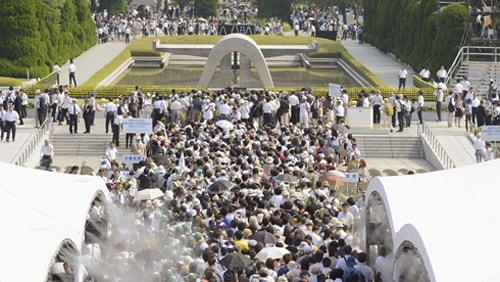
Over 50,000 people participated in the celebration (Photo: Kyodo)
Mayor Matsui also clarified that the Japanese Constitution has always supported pacifism and that Japan continues to strive to protect its national security against any threat. At the preparatory committee meeting for the Nuclear Non-Proliferation Treaty (NPT) renegotiation conference held in Geneva, Switzerland, in April, 80 countries worldwide issued a joint statement condemning the inhumanity of nuclear weapons. This demonstrates the growing number of countries opposing nuclear weapons.
In a speech in Berlin during his visit to Germany last June, President Obama also expressed his determination to reduce nuclear weapons.
Speaking at the commemoration ceremony, Japanese Prime Minister Shinzo Abe emphasized: "We have a responsibility to realize a world without nuclear weapons."
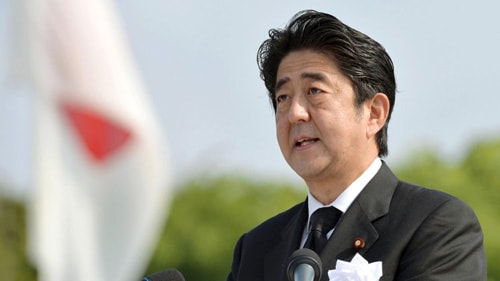
Prime Minister Abe urged Japan to take responsibility for realizing a world without nuclear weapons (Photo: Kyodo)
Sixty-eight years ago, the U.S. military dropped two atomic bombs on Hiroshima and Nagasaki on the orders of President Harry Truman in the final days of World War II in Japan. On August 6, 1945, the first atomic bomb, codenamed "Little Boy," was dropped on Hiroshima. Three days later, on August 9, 1945, the second bomb, codenamed "Fat Man," exploded over Nagasaki.
There are many reasons why the exact number of fatalities is inconsistent. The figures vary because they were compiled at different times. Many victims died months, even years, later from the effects of radiation. There were also pressures to exaggerate or understate the numbers for political propaganda reasons. Estimates suggest that nearly 200,000 people in Hiroshima died from the explosion and its aftermath. The death toll in Nagasaki was 74,000. In both cities, the vast majority of the dead were civilians.
The consequences and justifications for the bombings remain a subject of debate. In the United States, the majority view is that the two bombs ended the war months earlier and limited the loss of life on both sides. In Japan, public opinion considers the act against civilians to be immoral.
According to VOV - DT


