
A "shield" for students against risks in cyberspace.
Social media opens up many learning and networking opportunities for students, but it also brings with it numerous unpredictable risks. Given the increasing number of cases of online fraud, impersonation, and bullying, educating students on self-protection skills and fostering safe digital behavior has become an urgent task for schools and families.
Helping students protect themselves
"Safety in the battle"cyberspace" is an e-book created by teachers and students of Nhon Mai Ethnic Boarding Junior High School, which has been widely shared and become a guide for disseminating information to teachers, parents, and students.
The entire ebook, though only 19 pages long, is designed to be visually appealing, simple, easy to understand, and integrated with the familiar melody of the song "Clicking." When the pages are opened, much of the content is incorporated to help students recognize risks early, develop safe internet usage habits, and learn how to protect themselves.
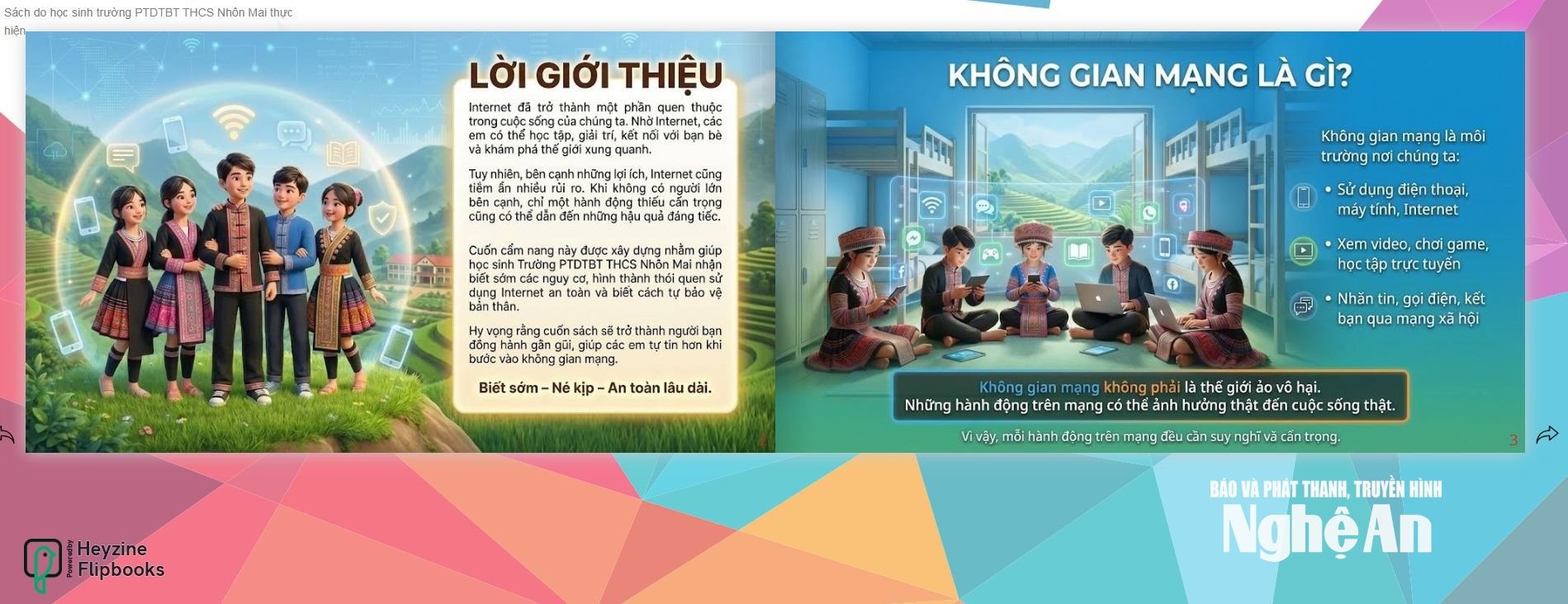
Nhon Mai Ethnic Boarding Junior High School is an ethnic boarding school located in a particularly disadvantaged mountainous commune. Due to the school's unique characteristics, students are not allowed to use mobile phones or the internet while studying and living at the school.
However, when they return home on weekends or holidays, students still access the internet without the direct supervision of teachers and family. In many cases, they click on suspicious links, share personal information, or remain silent when faced with unusual situations.
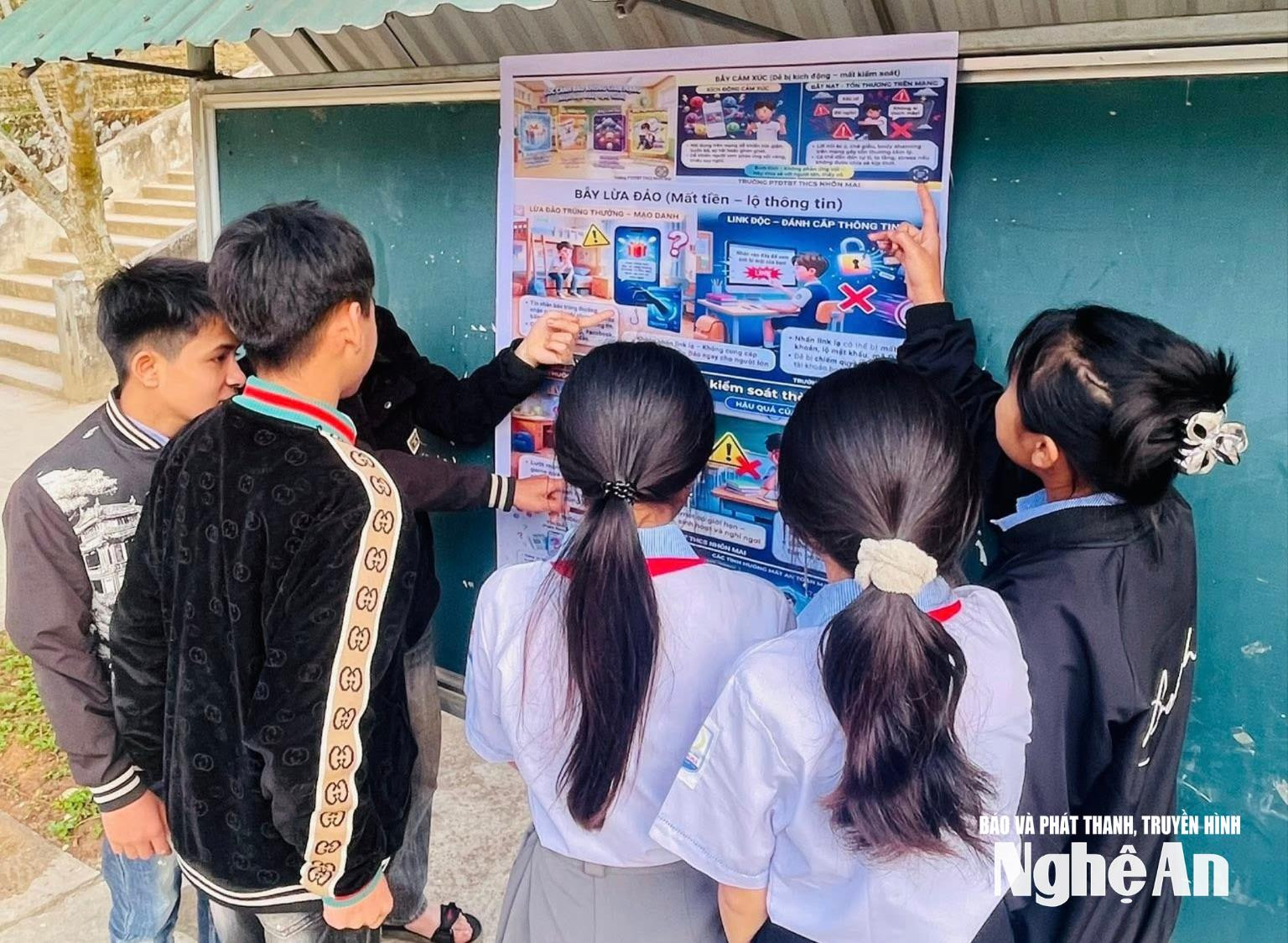
Recently, two students from the school, Kha Ngoc Ha and Va Thi Kieu (9A class), implemented the project "Solutions for Digital Behavior Education to Help Students at Nhon Mai Ethnic Boarding Junior High School Prevent Risks in Cyberspace." Many of these solutions have been regularly used in the school, such as creating "Cybersecurity Warning Corners" in classrooms and boarding areas. Through concise and easy-to-understand images and infographics, students can identify common risks such as suspicious links, fake news, and account impersonation. Daily observation helps them remember and develop a habit of vigilance.
Another quite effective solution is to build a chatbot to support cybersecurity. The chatbot is designed to assist students while they are at home, following a three-step process: Warning of potential risks - guidance on initial handling - guidance on finding support.
I am very pleased that after implementing these solutions, the results show that 61% of students clearly remember the online safety rules; 55.5% know not to click on strange links and proactively report to adults; 63% know how to seek support when encountering problems; and their confidence in using the Internet has increased significantly. Feedback from students, parents, and teachers also indicates that students have better reflexes in real-life situations and no longer react impulsively as before.
Mr. Nguyen Ngoc Tan - Principal of Nhon Mai Ethnic Boarding Junior High School
Prevent it early and from afar.
At the beginning of this school year, the Nghe An Department of Education and Training issued a document warning about the tactics used to lure and deceive students by exploiting cyberspace. This is also a reality that has been occurring in the province recently, with increasingly sophisticated methods causing anxiety for victims and their families.
A typical example is the "online kidnapping" case that occurred in Vinh Hung ward, where local police promptly prevented a scam involving the misappropriation of 100 million VND from DK (born in 2007). Prior to this, K.'s family noticed unusual behavior such as anxiety, fear, constantly clutching his phone, and unexpectedly leaving home. Shortly after, the family received a call from an unknown number, in which K. frantically demanded that 100 million VND be immediately transferred to an account "belonging to the police" to facilitate the "sealing and investigation" of a drug case he was falsely accused of.
The family also discovered that K. had taken some money with him before leaving, so they suspected a scam and reported it to the police. Within less than four hours of receiving the information, the Vinh Hung Ward Police located K. at a hotel in Thanh Vinh Ward. When found, the student appeared panicked and was preparing to take a bus to Ho Chi Minh City as instructed by the scam group.
Working with the police, K. stated that she received video calls from individuals impersonating police officers. They forced her to leave home, cut off contact with relatives, rent a room for "secret meetings," and demanded that her family transfer money to "prove her innocence."
For example, a 9th-grade student in Kim Bang commune, after accessing a "prize draw" link on social media, received a notification that he had won an iPhone 15 and 10 million VND in cash. Subsequently, the perpetrators demanded that he transfer money to pay "VAT fees" and fabricated a story about the order being seized by the police, threatening to penalize him for "tax evasion".
Previously, after 5 years of implementing the "Protecting and Supporting Children's Healthy and Creative Interaction in the Online Environment Program giai đoạn 2021 - 2025", Nghe An province also received and processed 7 out of 7 cases of abuse and harm to children in cyberspace. At the same time, it provided support and intervention for 3 out of 3 children who were abused in the online environment.
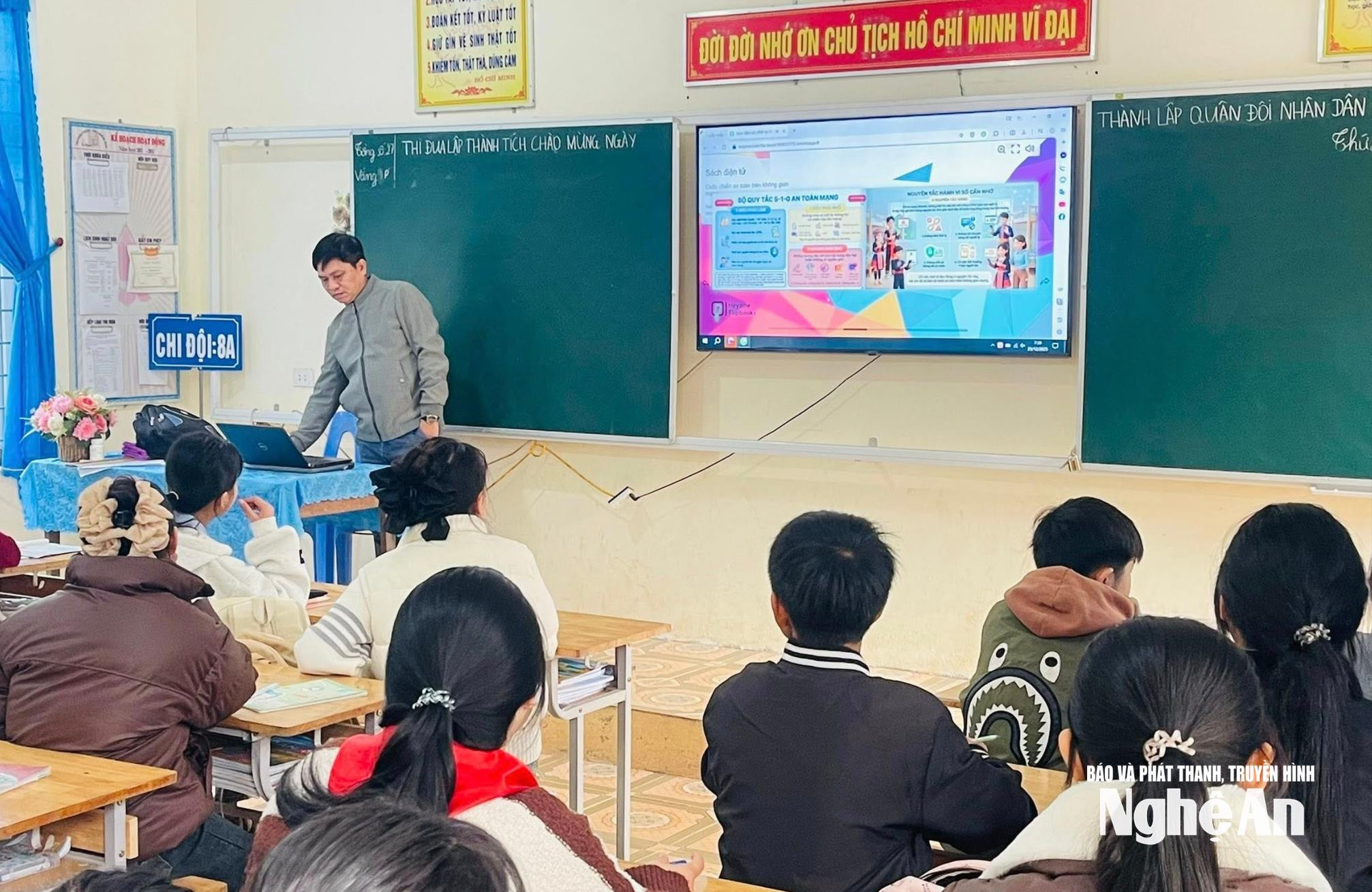
Real-life stories and incidents serve as vivid examples presented by schools during awareness campaigns on cybersecurity prevention and control. The focus is on enhancing digital skills education for students, promoting awareness, and providing guidance on identifying risks and handling incidents online.
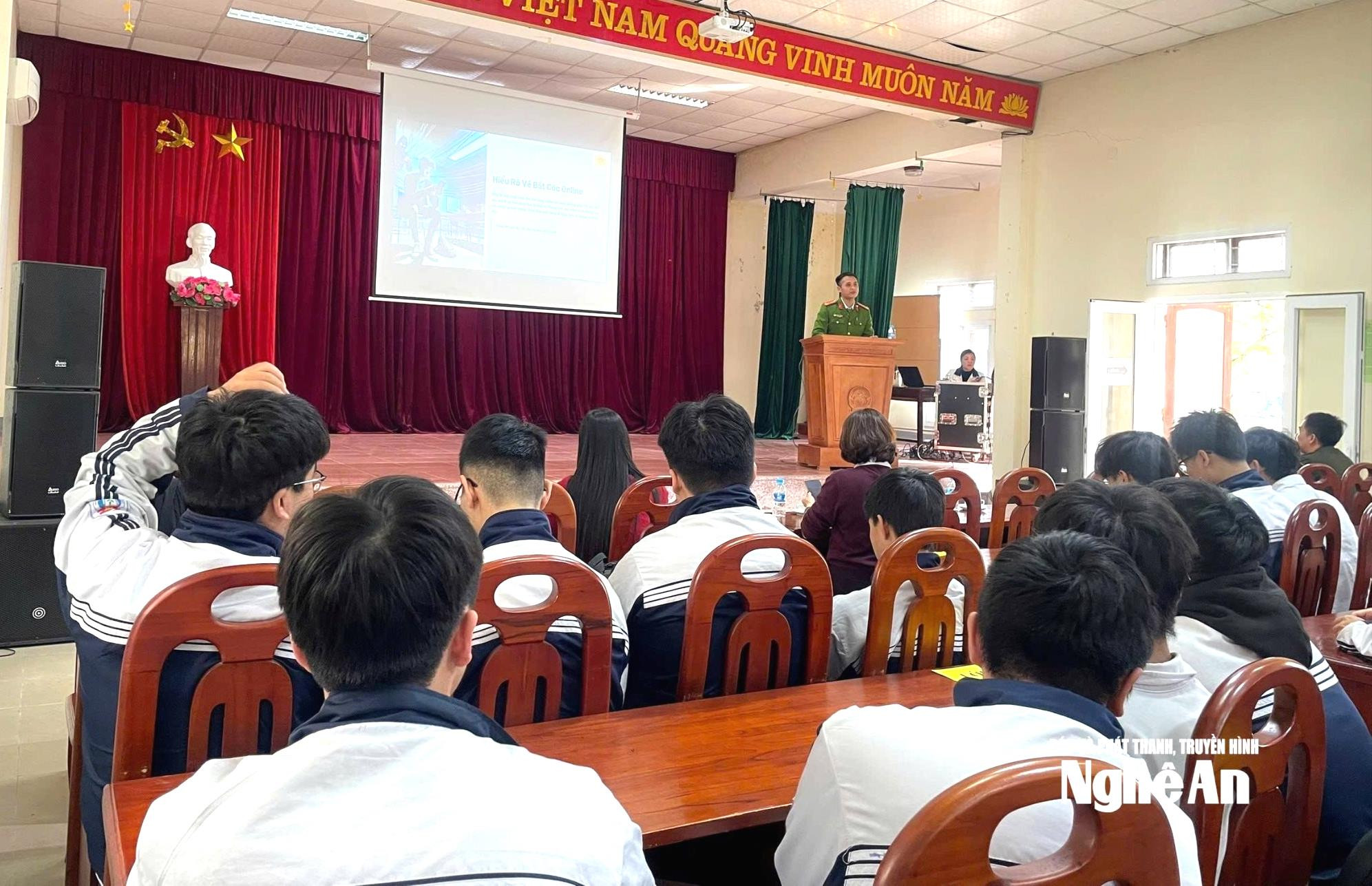
At Huynh Thuc Khang High School, in early January 2026, the school collaborated with the Nghe An Provincial Police and the Provincial Continuing Education Center to organize a life skills lesson on the topic "Cybersecurity - Understanding Online Kidnapping" for 12th-grade students. Through this lesson, students were guided on identifying online kidnapping tactics, practicing handling situations, and remembering the "4 don'ts - 3 needs - 1 have" principles to protect themselves online. At Quy Chau High School, the local police also organized a thematic awareness session for over 1,900 students and teachers. This included guiding students on identifying fake news and misinformation; verifying information; warning about the consequences of sharing untrue content; being vigilant against "online kidnapping" tactics; and instructing them on how to handle suspicious calls.
For many years, the Department of Education and Training has planned to strengthen the management and political and ideological education of students in the online environment. Accordingly, schools have been required to enhance the management and political and ideological education of students in the online environment to improve their ability and skills in accessing and using information online in a healthy and useful way. This aims to minimize the impact of harmful and false information on the online environment on students.
Mr. Nguyen Trong Hoan - Chief of Office of the Department of Education and Training
The Department also requires 100% of schools and educational institutions to organize propaganda, education, and guidance for students on how to properly utilize the online environment for research, learning, and healthy entertainment. 100% of schools must build a team of staff and teachers to manage and provide political education to students in the online environment.


