
Let the people see...
(Baonghean) - Ngoài nhiệm vụ bảo vệ an ninh trên 25 km đường biên giới với nước bạn Lào và tham mưu cho địa phương bảo đảm an ninh trật tự địa bàn, Đồn Biên phòng Keng Đu (Kỳ Sơn) còn phối hợp với đồng bào xây dựng được một số mô hình điểm về phát triển kinh tế gia đình.
Major Lu Ba Tien, Deputy Political Officer of Keng Du Border Guard Post, said: To date, the Post has implemented two effective family economic development models: a model of reclaiming 1.5 hectares of land for rice cultivation for Mr. Moong Pho Phoi's family in Keo Can village, and a model of integrated economic development at the farm of Mr. Luong Pho Tam's family in Hat Ta Ven village. Mr. Tien had two officers from the Post, Lieutenant Xeo Van Thang and Senior Lieutenant Tran Hung Viet, guide them to see the integrated farm model in Hat Ta Ven village.
We rode our motorbikes for 7 kilometers and then had to walk down a steep hillside. From the top of Nam Xoc hill, looking down, next to the stream was a thatched-roof house, surrounded by herds of cows and fish ponds.
Lieutenant Xeo Van Thang said: "Implementing a model like this is very difficult because the terrain here is fragmented. Transportation is difficult and arduous, but the outpost still chose to implement it because this area has the conditions for raising cattle, digging ponds for fish farming, and growing rice. The officers and soldiers of the outpost had to spend a lot of time persuading the families before they agreed to participate, because the people didn't believe that it was possible to dig fish ponds, raise cattle, chickens, etc., here..."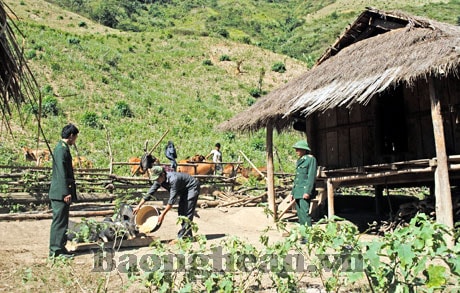
Cán bộ, chiến sỹ Đồn Biên phòng Keng Đu thăm mô hình chăn nuôi tổng hợp của gia đình anh Lương Phò Tâm, bản Hạt Tà Vén.
It wasn't just about talking to the people, but about showing them. From the very beginning, the outpost assigned eight officers and soldiers to live and work alongside the people, sharing meals, shelters, and other necessities. They built houses, constructed livestock pens, and then dug ponds for fish farming. Using about 200 square meters of alluvial land along the stream, they dug and built pond embankments, then used stream stones to reinforce the sides to prevent erosion.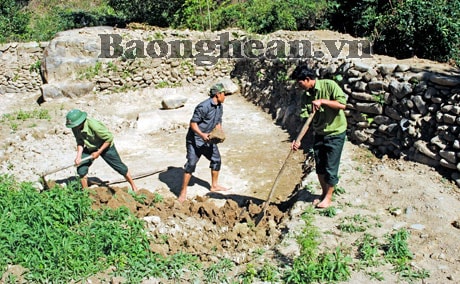
Together with the locals, we dug ponds and raised fish.
In just a few months, two fish ponds were completed, stocked with traditional fish species such as carp, tilapia, and crucian carp. During the 2012 Lunar New Year, there were so many fish that the entire village had to share them to eat. Mr. Tam excitedly shared that his family's herd of cattle, which initially consisted of only 10, has now grown to 16. They also raise sows and laying hens. He added that without the border guards at Keng Du Border Post, his family wouldn't have been able to achieve this. Now, besides rice, they have cattle, pigs, chickens, and fish, and they are no longer poor.
Over the years, the Keng Du Border Guard Post has also helped build 13 "Great Solidarity" houses for ethnic minority people in the commune. Each house receives 5 million VND in support from the unit. The post also actively advises the local authorities on building cultural villages. To date, Keng Du commune has 4 out of 10 villages that have achieved the status of "Cultural Village".
Society


