
Xuan Dinh sapodilla village in western Nghe An province
(Baonghean.vn) - Upon arriving at Khe Tin village, Yen Khe commune (Con Cuong district), many people are quite surprised to learn that the local specialty is Xuan Dinh sapodilla. Grown for decades, this sapodilla tree, originating from the capital city, has been associated with many generations, and many people call Khe Tin the sapodilla village.
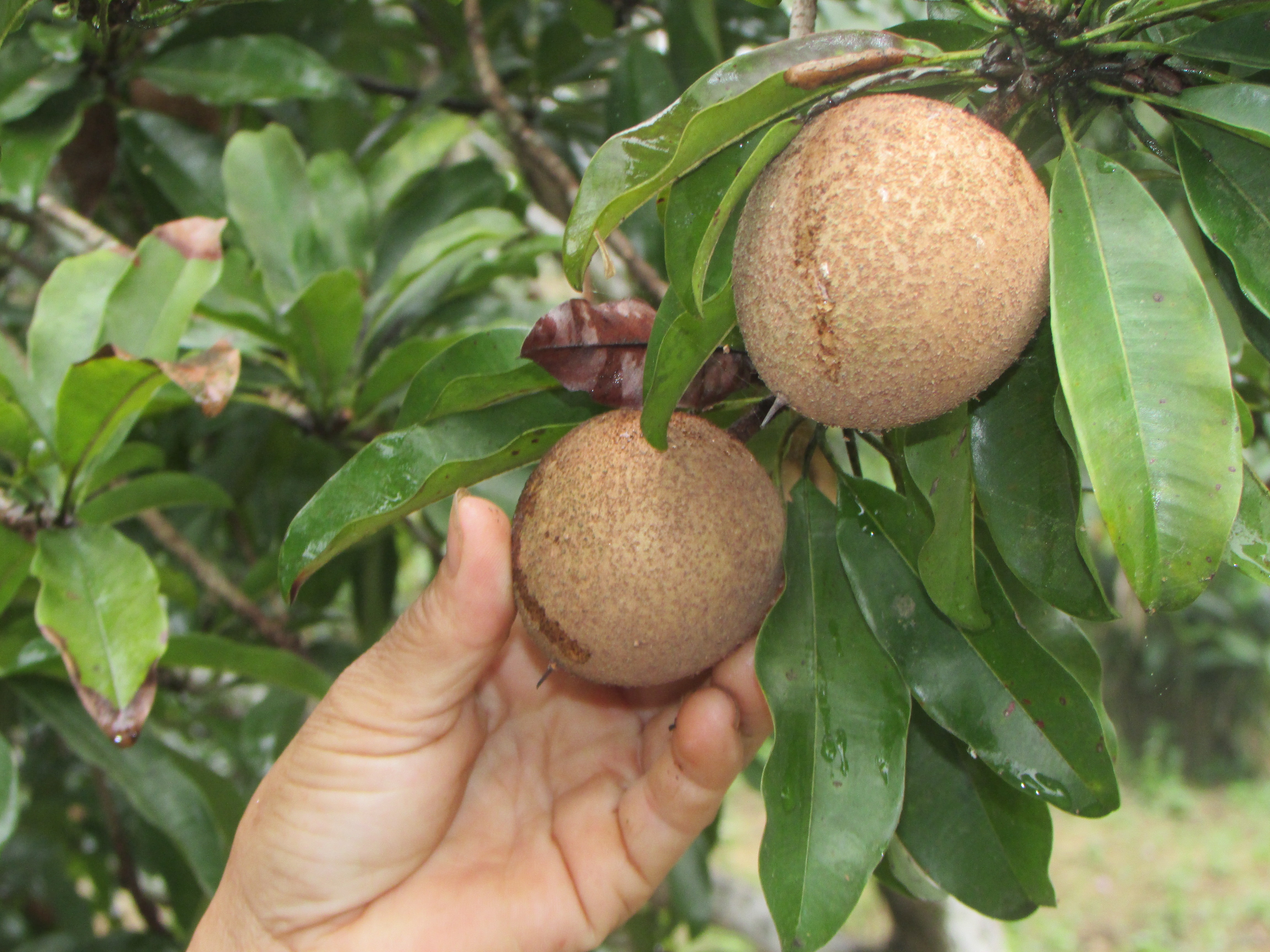 |
| Present in Khe Tin village for nearly 40 years, the sapodilla tree, originally from the North, has become the main crop in the gardens of local households. Photo: Ba Hau |
Located about 10 km from the center of Con Cuong town, the first impression of Khe Tin village is the lush green canopy of old sapodilla orchards. It was learned that sapodilla trees were first planted in this area in the 1980s. At that time, a villager brought saplings from the North and planted them in his garden. Finding the trees easy to grow and producing sweet fruit, he later propagated them by grafting, allowing several other households in the village to plant them as well.
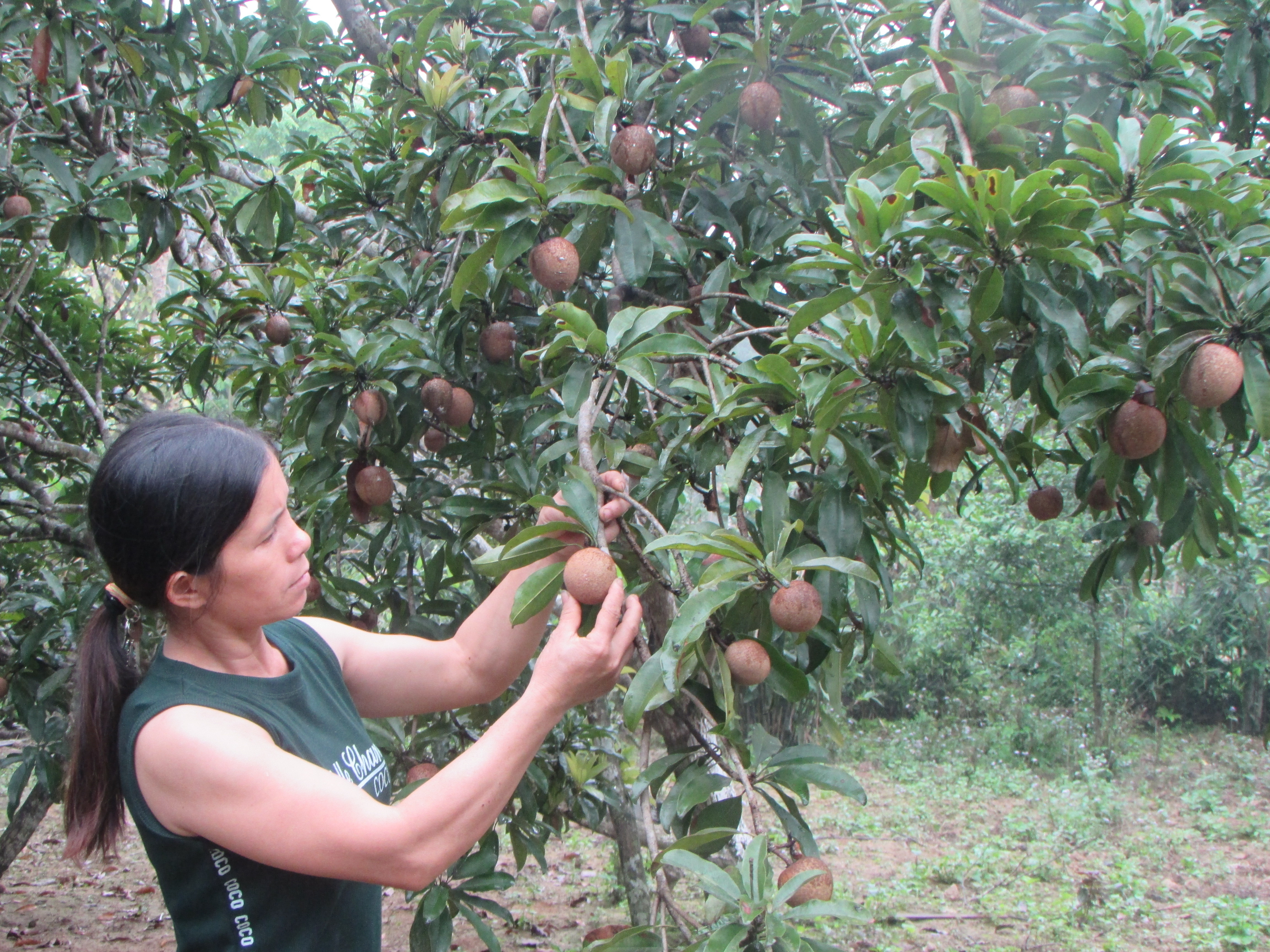 |
| Currently, sapodilla trees in Khe Tin are in their harvesting season. Photo: Minh Hanh |
Mr. Tran Doan Dan is one of the people who have been involved with sapodilla cultivation for many years in Khe Tin village. In 1997, he started planting this type of tree on his family's garden land, initially only 3 trees. Gradually, he learned from experience and propagated seedlings to plant. Currently, his family has 30 trees. In recent years, with favorable weather, the 30 sapodilla trees of his family have yielded an income of over 40 million VND per year.
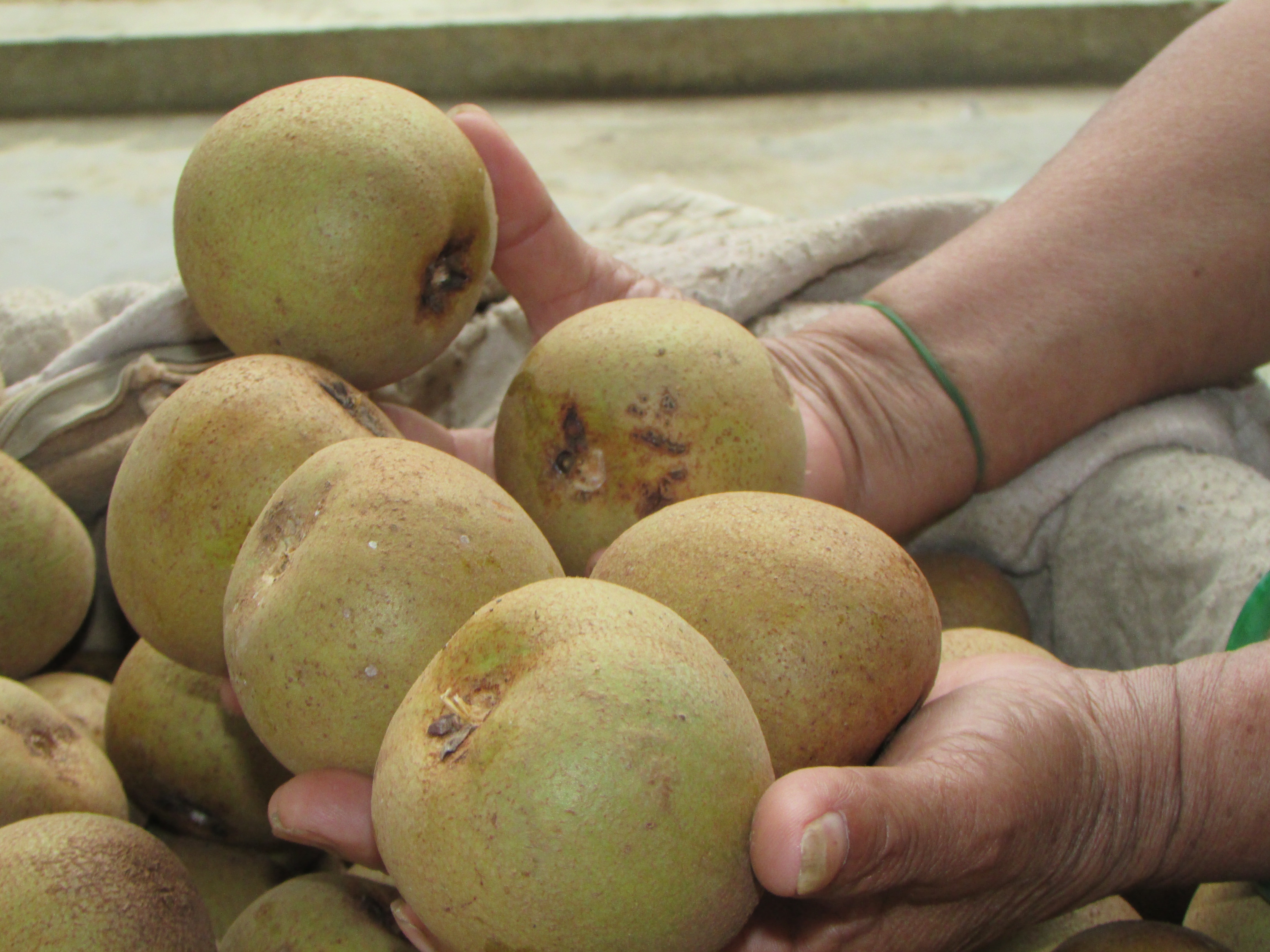 |
| Four to five persimmons weigh 1kg and sell for 30,000 VND/kg. Photo: Bá Hậu |
Mr. Dan said that sapodilla trees are easy to grow and require simple care techniques. Other crops degenerate after a few harvests, but sapodilla trees become healthier and greener with age. Most of the trees in his garden are up to 20 years old. They also have a lot of sap, so they are less susceptible to pests and diseases; if there are any, it's usually just stem borers and sooty mold. Even when pests or diseases occur, he only needs to spray pesticides once or twice a year.
According to Mr. Dan, some households in the village have also tried growing several sapodilla varieties, but they found that the Xuan Dinh sapodilla (from Tu Liem, Hanoi) is the best. Currently, people in Khe Tin mainly grow this variety. Xuan Dinh sapodillas are not very large, but rather evenly shaped, with a thin, earthy yellow skin. Because of the thin skin, the flesh is thick and juicy. When ripe, it is intensely sweet and has a long-lasting aroma.
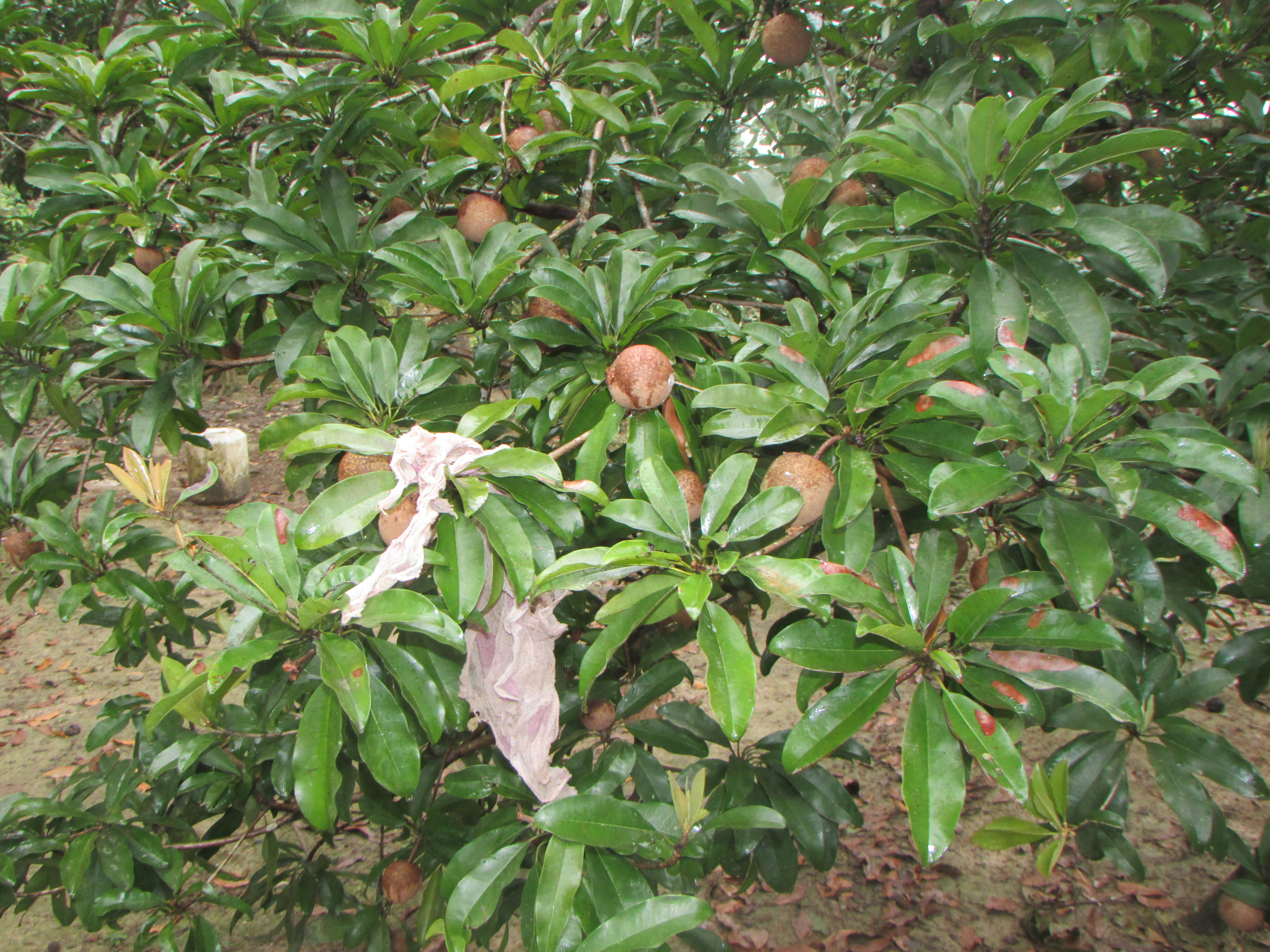 |
| From just a few households growing sapodilla, now 65 out of 79 households in Khe Tin village cultivate it. The household with the most trees has 30. Photo: Minh Hanh |
Not far from Mr. Dan's house, Mrs. Chu Thi My's family has also been growing sapodilla for nearly 20 years. With nearly 10 trees currently, they bring in an additional income of nearly 5 million VND each year. According to Mrs. My, the method of ripening sapodilla is a crucial step that determines the delicious taste of the fruit.
To get a batch of evenly ripened, sweet, fragrant, and visually appealing persimmons, growers have to put in a lot of effort: When picking persimmons for ripening, they must choose mature, round fruits with firm, smooth, and slightly reddish-pink skin, then soak them in cool water for about 10 minutes to remove the pink powder. When washing the persimmons, they must use a soft cloth or sponge and wipe them gently to avoid scratching the skin. After washing, the persimmons are dried in a sunny, airy place until completely dry before being pickled. After arranging the persimmons in jars or containers, the locals usually burn a bundle of incense sticks, break them into pieces, put them in a bowl, place it inside the jar, and seal it tightly, avoiding opening it too often.
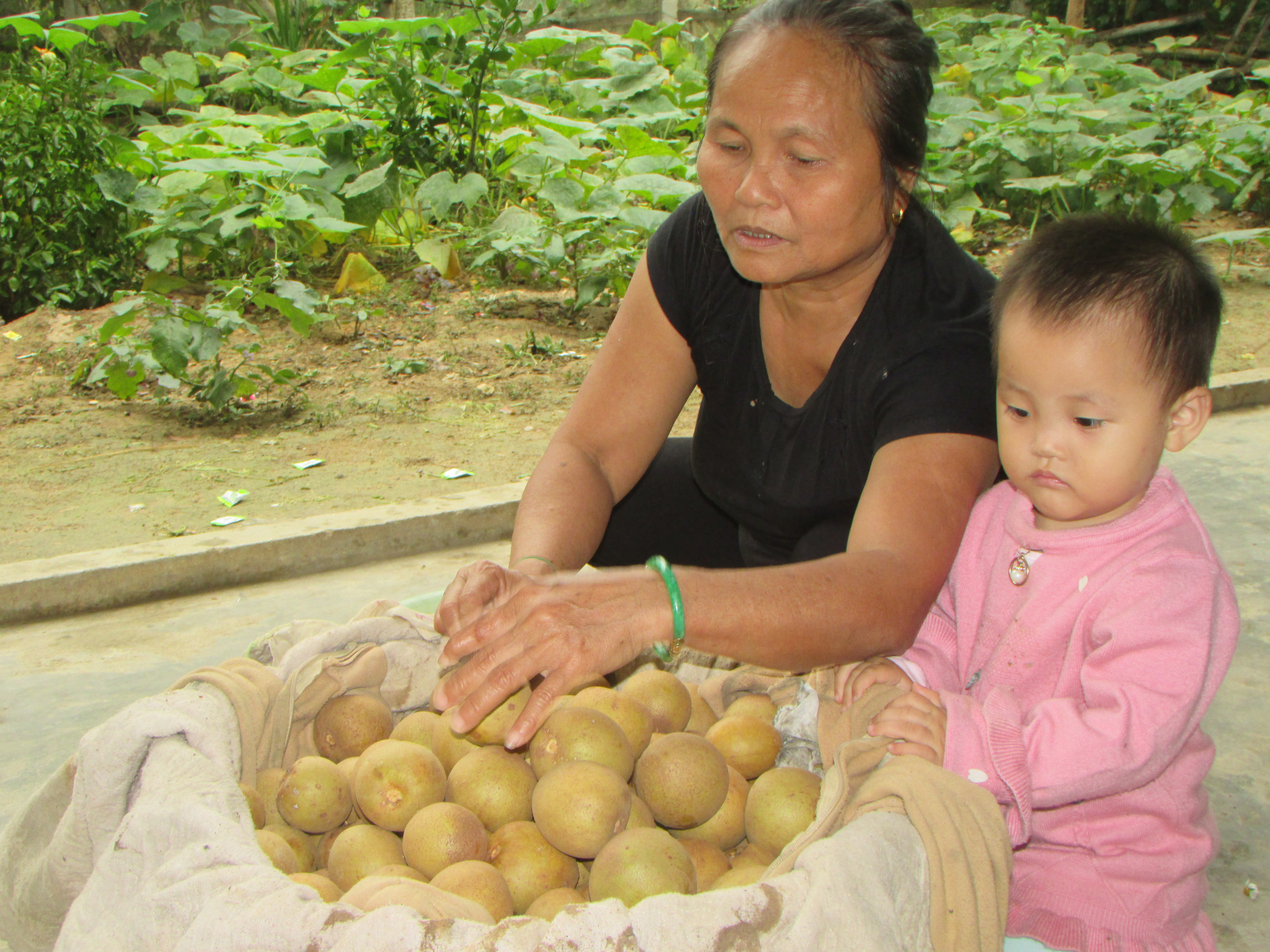 |
| After harvesting, sapodillas are left to ripen before being sold. (Photo: Bá Hậu) |
Due to the economic benefits of sapodilla trees, 65 out of 79 households in Khe Tin village now cultivate this crop. Each family has at least 5-10 trees, with some having as many as 30. The highest price for ripe sapodilla at this time is 30,000 VND per kilogram. On average, each tree yields 30-40 kg per year. Sapodilla is mainly sold by the villagers within the district and some neighboring areas.


