Rural villages in turmoil due to informal lending schemes - Final part: A wake-up call.
High interest rates, simple procedures, and a reliance on trust – informal lending schemes, once a familiar form of capital rotation, have recently been distorted, exposing a brutal dark side where money is lost, debts pile up, and families are torn apart. A warning bell is ringing, but will it be enough to awaken people to the truth?
Content: Tien Hung /Present:Tran HaiApril 29, 2026
*****
High interest rates, simple procedures, and a reliance on trust – informal lending schemes, once a familiar form of capital rotation, have recently been distorted, exposing a brutal dark side where money is lost, debts pile up, and families are torn apart. A warning bell is ringing, but will it be enough to awaken people to the truth?
.png)
Recently, a somber atmosphere has prevailed in many localities in Nghe An province following a series of failed informal lending schemes. From seemingly close and trustworthy investment groups, hundreds of people have suddenly found themselves penniless and burdened with debt. Behind this are costly lessons and a warning that cannot be taken lightly.
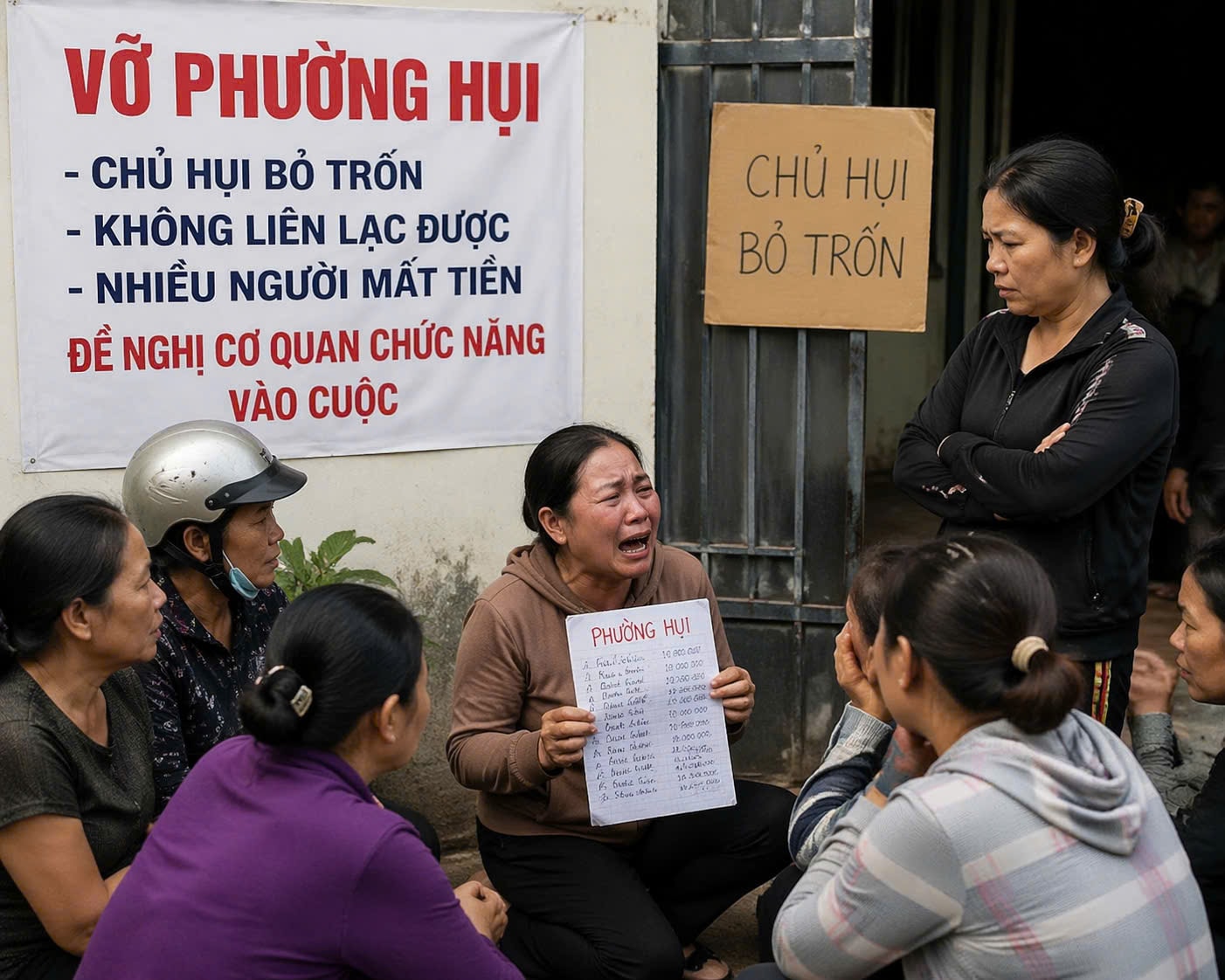
In Tan Ky commune, hundreds of people are in dire straits as many informal lending groups have suddenly collapsed. Some people participated in dozens of groups, contributing billions of dong, but after a brief announcement from the group leader, everything suddenly vanished. The common thread among the victims is trust. The group leaders are often acquaintances, even friends or neighbors. Coupled with this is the allure of attractive "interest rates"—the higher the profit margin, the better. This mechanism led many to invest all their savings, even borrowing more money, to participate.
Discussing recent cases of failed informal lending schemes, Lawyer Le Anh from the Nghe An Provincial Bar Association stated that, in reality, scheme organizers often fulfill their initial commitments to gain the trust of participants. However, they then open multiple schemes simultaneously, create fictitious groups, and use the names of members in these schemes, even though these members do not actually participate (they do not pay their dues or receive payments as announced in the group). When unable to repay, these organizers often conceal assets or flee, causing significant losses to the people and leading to disputes, affecting community unity.
“According to the law, organizing rotating savings and credit associations (ROSCA) is only recognized as a legitimate civil transaction when it complies with civil law regulations. Currently, most ROSCAs operate spontaneously, without registration, records, or transaction documents, posing many risks and potential for criminal activity. For violations, those organizing ROSCAs illegally may face administrative penalties and be required to return the illegal profits; if there are signs of fraud or misappropriation of assets, they will be prosecuted criminally,” lawyer Le Anh stated.
Although the law has specific regulations in Decree 19/2019/ND-CP, informal lending groups (phường hụi) are essentially based primarily on trust between individuals. When that trust is exploited, the legal obligations become fragile, leaving participants at risk of losing all their assets.
.png)
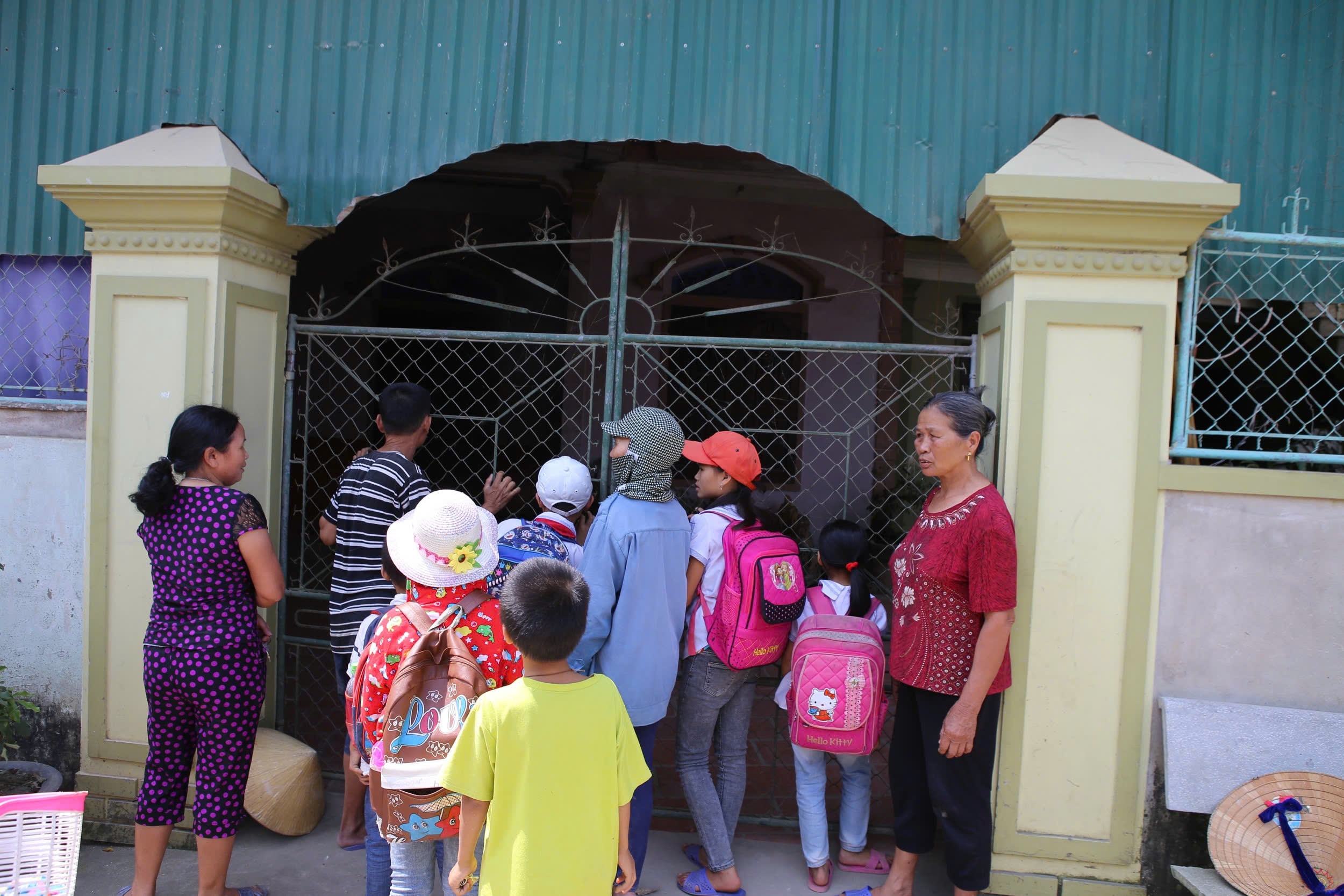
Beyond economic losses, the collapse of informal lending schemes (hui) leaves behind severe social consequences. In many localities, the sight of people gathering in front of the scheme organizer's house demanding their money back is no longer uncommon. In some places, conflicts and fights occur, even destroying long-standing community bonds. Stories of "siblings turning against each other" and "relatives refusing to speak" become common after each hui collapse. This is because many people not only participated but also introduced and lured relatives into the scheme. When it collapses, trust crumbles. From a broader perspective, many large-scale hui collapses have plunged hundreds of families into destitution, creating chain debts and affecting local security and order.
Essentially, informal lending groups (hụi and phường) are forms of folk capital contribution, not prohibited by law if they operate according to regulations. However, the reality in Nghe An shows that this form is being seriously distorted. Many lending group leaders exploit trust to raise capital on a large scale, operating as a disguised form of "loan sharking." In some cases, they even create "virtual members," conduct transactions without transparency, and make it impossible for participants to control the flow of money.
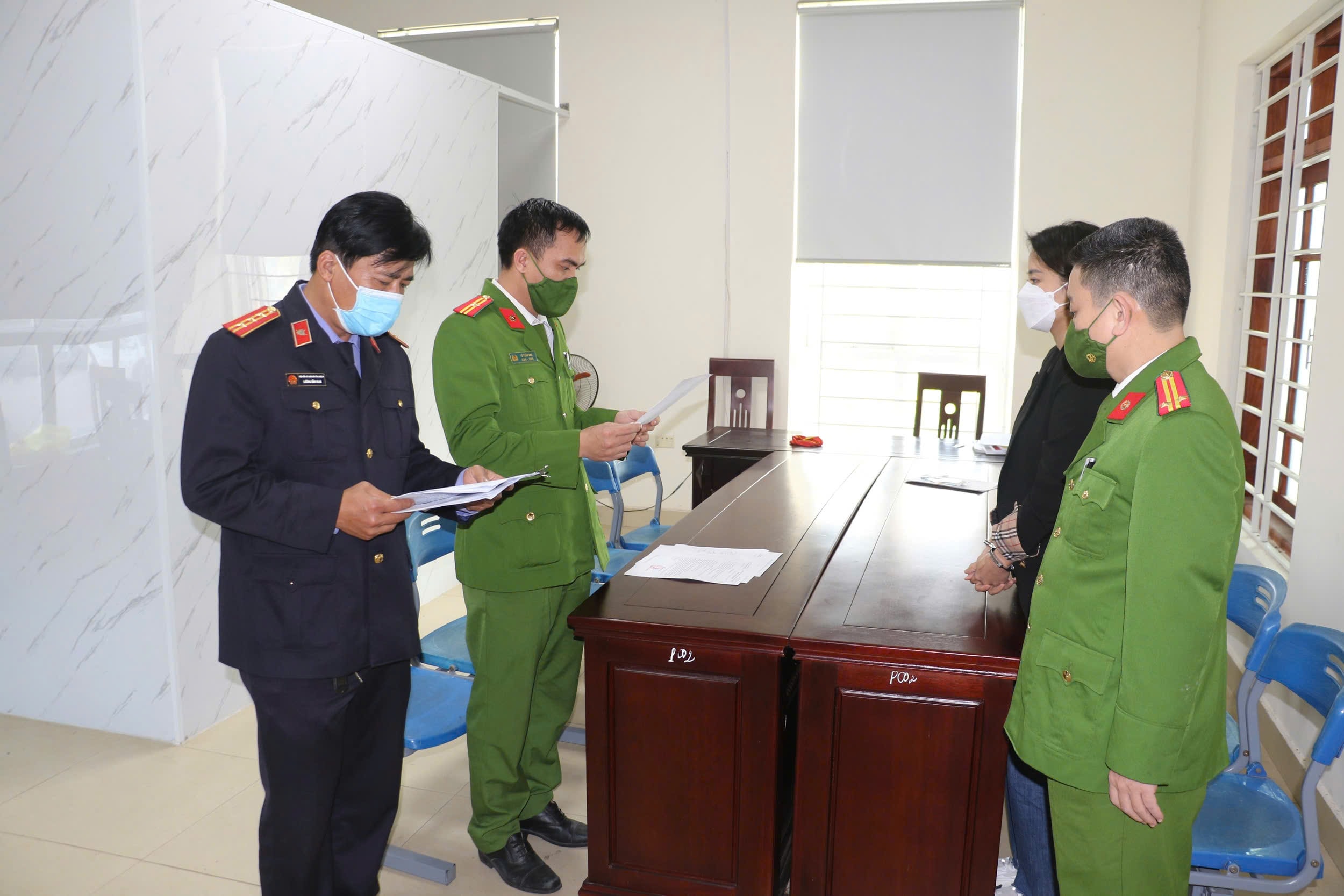
Lieutenant Colonel Nguyen Thanh Nhan, Deputy Head of the Criminal Police Department (Nghe An Provincial Police), stated that the situation regarding informal lending schemes in Nghe An province has continued to be complex. In 2025 alone, the unit received 7 complaints related to failed informal lending schemes. Immediately after receiving these complaints, the provincial police leadership directed relevant departments and commune police to gather information, classify cases, and, if there were signs of criminal activity, handle them according to the law.
“Rural savings schemes are a legitimate form of capital mobilization, very popular among people, especially when people have difficulty accessing capital from banks, with accompanying conditions. During operation, some scheme organizers have taken advantage of people's lack of legal knowledge before participating, so they only make verbal agreements. Many organizers, after raising a large sum of money, become greedy and then find reasons to announce the collapse of the scheme to embezzle the funds,” Lieutenant Colonel Nhan said. Currently, the provincial police leadership has directed the police in communes to coordinate with local authorities to review all rural savings schemes operating in the area, to manage them according to Decree 19/2019/ND-CP regulating rural savings schemes. When signs of exploiting rural savings schemes to embezzle assets are detected, after receiving information, they will promptly prevent and handle the cases.
“It must also be said that when participating in informal lending schemes, the people themselves lack responsibility for the money they invest. They don't understand the law, they don't make written agreements according to regulations, ensuring they have documents to prove their case in case of disputes. Therefore, we also advise people to thoroughly understand the law when participating in informal lending schemes, especially Decree 19/2019/ND-CP. In addition, when participating in any lending scheme, people need to report to the authorities early so that the authorities can monitor and support them, and prevent any irregularities early on. This prevents the scheme organizer from taking advantage of the situation to embezzle assets or declare bankruptcy to misappropriate money,” said Lieutenant Colonel Nguyen Thanh Nhan.
According to Ms. Nguyen Thi Thu Thu, Director of the State Bank of Vietnam, Region 8, to help people avoid fraudulent and risky informal lending schemes, in recent years, credit institutions and banks have implemented many legitimate, safe, and low-interest loan programs. Deposit and withdrawal procedures are also simple; customers can withdraw money before the maturity date if needed. “Credit institutions operate according to the law, have deposit insurance, and are subject to state management. Currently, online or in-person deposits are very convenient and simple, no longer requiring as much time and procedures as before. The network of credit institutions has also expanded to serve the people. When depositing money, if people need money urgently, they can withdraw both principal and interest on time or before the maturity date,” Ms. Thu said.
Meanwhile, according to Ms. Thu, when people participate in informal lending groups, they mostly rely on trust, with little guarantee, and when the group leader collapses, there are many potential risks. “In informal lending groups, the interest rates can be higher, so the group leaders exploit this psychology of the people. Bank interest rates, on the other hand, are publicly announced and at a reasonable level to meet the borrowing needs of businesses and individuals. People should be cautious and not participate in informal lending groups for short-term gains without any guarantees, because when risks arise, they may not be able to recover their initial contributions, let alone the interest,” Ms. Thu advised.
Decree No. 19/2019/ND-CP stipulates that: The organization of rotating savings and credit associations (ROSCA) must comply with the basic principles of civil law as stipulated in Article 3 of the Civil Code; ROSCAs may only be organized for the purpose of mutual assistance among participants; they are prohibited from engaging in usurious lending, fraud, misappropriation of property, abuse of trust to misappropriate property, illegal fundraising, or other violations of the law. The ROSCA agreement must be in writing. The written agreement may be notarized or certified if requested by the participants. When contributing, receiving, or paying interest, or conducting other related transactions, members have the right to request a receipt from the ROSCA organizer or the person who established and maintains the ROSCA ledger. The head of a rotating savings and credit association (ROSCA) must notify the People's Committee of the commune where they reside in writing when organizing a ROSCA with a value or number of shares in a single ROSCA session of 100 million VND or more, or when organizing two or more ROSCAs...
The head of a rotating savings and credit association (ROSCA) will be fined between 5 and 10 million VND if they fail to notify the People's Committee of their place of residence in writing about organizing a ROSCA with a total value of 100 million VND or more per installment; or organizing two or more ROSCAs...