
Lantern Festival (the 15th day of the first lunar month)
(Baonghean)For generations, visiting temples at the beginning of the year has been a beautiful cultural tradition in the spiritual life of the Vietnamese people. In particular, the full moon of the first lunar month is the first full moon of the year, and folklore holds that it is the day when the Buddha descends to temples to witness the devotion of his followers. Therefore, the large number of people visiting temples and shrines on this full moon day adds to the festive atmosphere.
In the minds of people in East Asia, the full moon of the first lunar month holds many special meanings. It is the first day of the year when people see the perfectly round moon, illuminating the earth throughout the long night. According to Confucianism, this day was originally the festival of the top scholar.
|
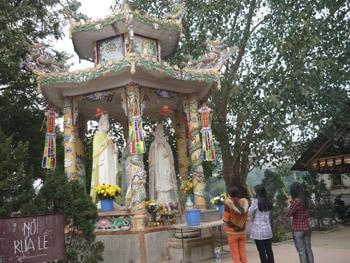
In Vietnam, the full moon of the first lunar month is considered the Thượng Nguyên Festival (the highest beginning). People believe that by visiting temples on this day, their prayers will be sacred because they will be witnessed by the deities. Therefore, on this occasion, all temples in villages and towns hold ceremonies and open their doors to welcome visitors from all directions.
The first full moon of the lunar year is also considered the day of the Heavenly Official, a rare opportunity for people to offer prayers to ward off misfortune and calamities. Therefore, on these days, temples and pagodas often set up altars for star-offering ceremonies. The altar has three levels. The top level represents Heaven, Buddha, Immortals, and Saints. The middle level represents the guardian stars (according to Taoism, each person is influenced by a particular star each year). The bottom level is for offering prayers to wandering souls and restless spirits. This is another reason why many people visit temples on the first full moon of the new year. Hence, the old saying: "Praying to Buddha all year is not as good as praying on the first full moon of the lunar year."
In Nghe An province, starting from New Year's Eve, temples and pagodas are enveloped in a sacred and mystical atmosphere: incense smoke rises in abundance, offerings are elaborately and luxuriously arranged; people come to pray for wealth, fortune, and peace... Notable temples and pagodas that are often crowded with visitors from all over the country include: Can Linh Pagoda, Cau Duoc Pagoda, Rao Temple, Corn Temple, Hong Son Temple, Hoang Muoi Temple…
In folk tradition, the full moon day of the first lunar month is primarily understood as a major festival. Depending on their beliefs, some families worship Buddha; others offer sacrifices to the Earth God and the God of Wealth. Some clans hold reunion ceremonies at the head of the clan's house or the clan's ancestral temple. However, most families perform ancestral worship ceremonies, expressing filial piety to their grandparents and parents, and praying for blessings for peace, prosperity, and good fortune for their descendants in the new year.
In a country like Vietnam, where Buddhism plays a significant role in people's spiritual lives, temples and the crowds of people visiting them for worship, especially on the first and fifteenth days of the lunar month, are the most typical evidence of this unique spiritual culture. Among these, many believe that attending a temple on the first full moon of the year – the first full moon of the lunar month – will bring blessings and moments of peace and tranquility to the soul.
Text and photos: Phan Tú


