
Going to Nam Can to attend the border market at Dinh Dam.
(Baonghean) - From Muong Xen town to the border market is a distance of 24 km, but it took us more than an hour to reach the Nam Can border gate. Autumn had just begun, but in this remote border region, the cold had already seeped into our skin, and the weak rays of the new day could not yet dispel the fog on the Truong Son mountain range…
The road to Nam Can is winding, with sharp turns and seemingly endless slopes. At some points, stopping at the top of the slope to look down, the road appears like a thin thread disappearing into the mist. Reaching this remote border region, we understood why Ky Son is often called the Sapa of Nghe An, with some areas exceeding 1,000 meters above sea level and an average temperature of only 15-20 degrees Celsius.
When our local friend welcomed us, he reminded us to bring extra warm clothes. We laughed and said, "It's still hot down here, we have to sleep in air conditioning at night!"... But his reminder was indeed not unwarranted.
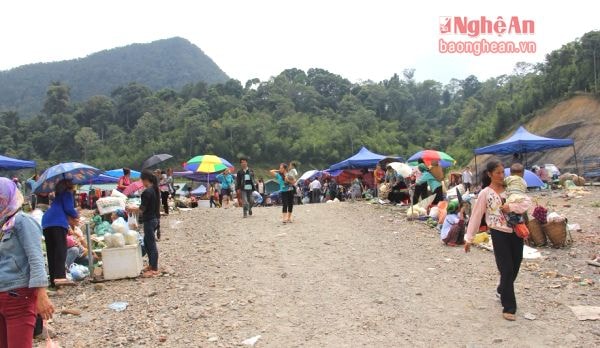 |
| A panoramic view of Dinh Dam border market. |
Having traveled nearly halfway, climbing several hairpin bends, Noọng Dẻ suddenly appeared in the mist. We decided to rest there. The Thai people were also preparing for the border market, calling out to each other to set off at the same time. The people of Noọng Dẻ usually tie rolls of brocade fabric to the back of their vehicles. This is a product of the weaving craft (Noọng Dẻ is recognized as a traditional craft village) and has long been a well-known brand in the region. The village is located almost in the middle of the Mường Xén to Nậm Cắn border gate road, so the sale of brocade products is quite convenient.
Descending the Tien Tieu slope, we could feel the bustling crowds of people heading across the border. The Dinh Dam market appeared, nestled between the Nam Can and Noong Het border gates. As the only market for the border residents, it holds three sessions on the 10th, 20th, and 30th of each month, so everyone, young and old, eagerly awaits market days. Previously, the market was located in an open area in Nam Can commune, Ky Son district. When Nam Can was upgraded to an international border gate, the market moved to a plot of land in Dinh Dam village, Noong Het commune, Xieng Khouang province, Laos.
From the Nong Het border gate, a large crowd was heading towards the market, everyone's faces beaming with excitement, carrying all sorts of goods. Interspersed among the crowd were numerous small trucks loaded with agricultural products such as sticky rice, black chickens, black pigs, and various vegetables and fruits. Trucks and pickup trucks have become quite common means of transportation for Lao farmers, making it easy to transport such a large quantity of goods to the market.
The joy and anticipation of many days are poured into the market, where laughter and inviting calls easily captivate people's hearts. People from the valleys come up, people from the mountains come down, meeting each other with handshakes and smiles, creating a lively atmosphere in this usually peaceful land. Some come empty-handed, some carry goods on their backs, some carry chickens and pigs, some come by motorbike, some by bicycle, but most come on foot to the market. People of all ages can bring anything to the market, whether it's a little or a lot, and for them, whether they sell their goods or not seems to matter much.
The smooth road from Muong Xen - Ky Son all the way to Xieng Khouang in neighboring Laos has made trade extremely convenient for border residents today. From clothing, shoes, cosmetics, and household items to the latest mobile phones, these have become indispensable goods at every market. However, the most special thing about this border market is the produce harvested by the residents of Ky Son and Noong Het from these majestic mountains.
For generations, the inhabitants have lived close to the mountain slopes, their lives intertwined with the forest, the steep rocks, and the streams that flow through the rocky valleys. It is also here that they have produced famous produce, highly prized for its delicious taste and cleanliness. Goods are spread out on tarpaulins on the ground, yet arranged in orderly rows: banana blossoms, mustard greens, cucumbers, Lao ginger flowers, Loi bamboo shoots, Lao pears, bitter bamboo shoots… or tiny ears of corn harvested from the rocky hillsides after months of sowing.
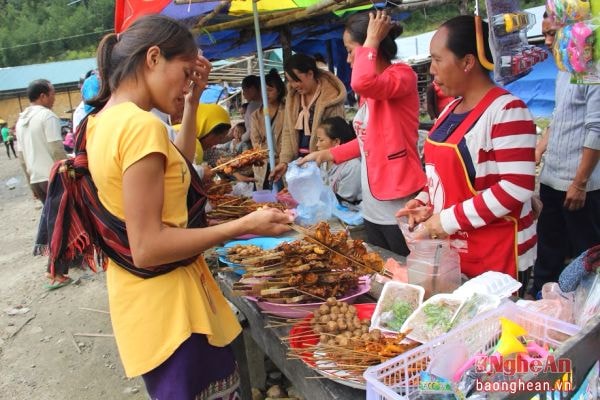 |
| A bustling scene of buying and selling at the grilled meat skewers stall. |
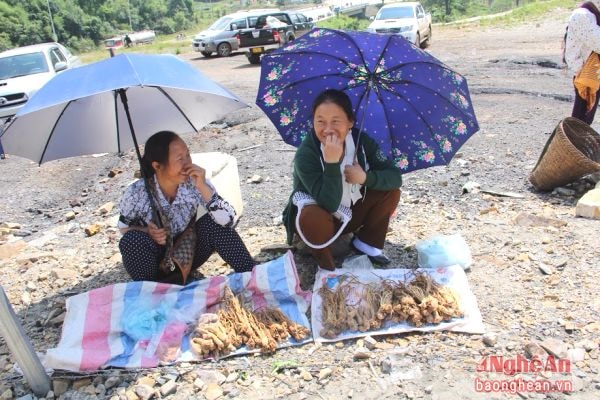 |
| A small amount of medicinal roots are being sold. |
The vibrant yellow blossoms of the mustard greens brighten the colorful atmosphere of the market, illuminating the joyful reunion. People from Ky Son and Noong Het greet each other warmly, their voices blending with the haggling of buyers and sellers, like long-lost friends. The vegetables and chickens have forged these encounters, leading to marriages and friendships, and after the market closes, they eagerly await another meeting. The cultural exchange between the Vietnamese and Lao people thus strengthens this bond. That's why the Nam Can market is often called the market of heartfelt Vietnamese-Lao friendship.
It was a reunion market for friends and acquaintances. They met, inquired about each other's family lives, children, and businesses, and on this occasion, they didn't forget to offer each other a few drinks in the joy of reunion. Each ethnic group has its own unique culture, but all exude a pure, rustic beauty, just like the land itself. And going to the market wasn't just about buying and selling goods; they came to exchange joy. Our friend even said, "Sometimes, the Hmong men even bring their bamboo flutes to the market to play. So, going to the market is also a chance to find a wife!" The Laotian and Vietnamese girls, when going to the market, chose to wear their best clothes. For them, going to the market was also a celebration.
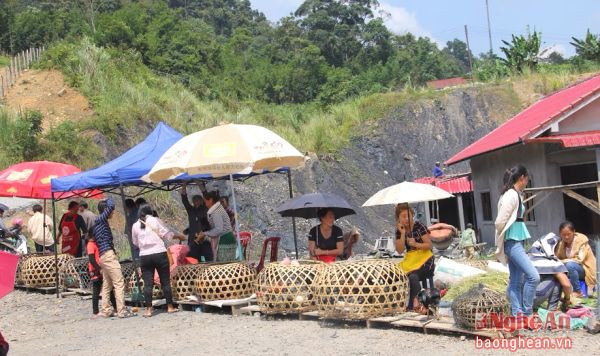 |
| Poultry products. |
We followed a few Lao diners into a food stall in the market. A Lao vendor, speaking broken Vietnamese, greeted us with a smile. The food stalls were packed together, with sizzling roasted meats on charcoal grills, emitting a fragrant aroma in the early autumn chill. The eating customs here were unique; everyone used their hands to squeeze sticky rice, tear apart grilled chicken, and mix it with some wild herbs to dip in spicy red soy sauce, with a basin of water and a towel nearby. In the lingering cold, we sat together squeezing sticky rice and savoring the delicious aroma of Lao sticky rice and grilled black chicken. At the border market, buyers and sellers could use both Vietnamese Dong and Lao Kip.
The market atmosphere remained bustling, joyful, filled with laughter and friendly greetings. Around 2 PM, the market began to thin out, and the vendors' goods dwindled. Beside a small pickup truck, a Lao couple was loading their remaining goods, preparing to close for the market day. The people of Ky Son also hoisted their baskets onto their backs and headed home, their joyful farewells lingering in their minds...
Lan Thai - Vuong Van
| RELATED NEWS |
|---|


