
UN adopts arms control agreement.
According to the agreement, participating countries will have to disclose their annual arms sales figures...
With 154 votes in favor and 3 against, the UN General Assembly on April 2nd approved the first international agreement on controlling the global arms trade. This important document will help limit the sale of conventional weapons to governments and armed groups that commit war crimes, genocide, or carry out large-scale acts of violence.
The UN General Assembly's ratification of the Arms Trade Treaty (ATT), after nearly a decade of discussion, was seen by most member states as a turning point in efforts to control the global arms market, worth $60 billion, as well as to prevent armed conflict and crime.
The President of the UN General Assembly, Vuk Jeremic, emphasized: “I believe that the lack of a legal framework for arms control has contributed to conflicts, regional instability, terrorism, and transnational organized crime. The agreement demonstrates the link between the presence of weapons in developing countries, particularly in conflict zones, and challenges to sustainable development and human rights.”
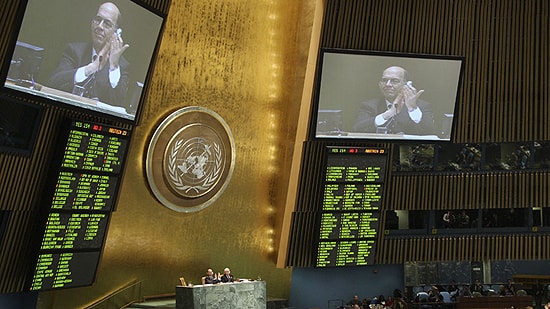 |
| Voting session - Photo: UN |
According to the ATT Agreement, conventional weapons such as tanks, warships, fighter jets, and light weapons are not permitted to be transferred to countries subject to UN sanctions or involved in acts of genocide, crimes against humanity, or war crimes.
The agreement requires participating governments to establish national record systems to track conventional arms sales and ensure that weapons do not fall into the hands of terrorist organizations or other armed groups. In addition, participating countries must disclose their annual arms sales figures.
The agreement does not stipulate arms control in any particular country, but participating countries must establish and implement regulations to control the transfer of conventional weapons and related components, as well as regulate brokers in this field.
US Secretary of State John Kerry welcomed the ATT agreement, calling it a powerful, effective, and viable tool that contributes to enhancing global security and protecting the legitimate right of countries to purchase weapons.
Meanwhile, Russia's envoy to the UN, Vitaly Churkin, said Russia was concerned about what it considered unclear provisions in the agreement, including the definition of genocide. Russia was one of 23 countries that abstained from voting. India, Egypt, Indonesia, and Pakistan also argued that the agreement unfairly benefited major arms exporters. India's chief negotiator, Sujata Mehta, further warned that the agreement was not strong enough against terrorism and disadvantageous to arms importers.
Iran, North Korea, and Syria—three countries that voted against—strongly opposed the ATT, arguing that the agreement would prevent smaller countries from buying and transferring weapons for self-defense. Iran stated that the arms control agreement protects gun owners in the US but does not protect those living under foreign occupation.
Previously, a conference aimed at seeking consensus among all UN member states on the ATT agreement failed due to opposition from the three aforementioned countries.
According to VOV - DT


