
'Forest bounty' brings joy to the streets as the Lunar New Year arrives.
(Baonghean.vn) - The end of the year is a time when "forest bounty" is brought down to the city to welcome the Spring. While there are no statistics on this income for the highland people, it is one of the significant sources of revenue that helps them cover expenses during the Tet holiday.
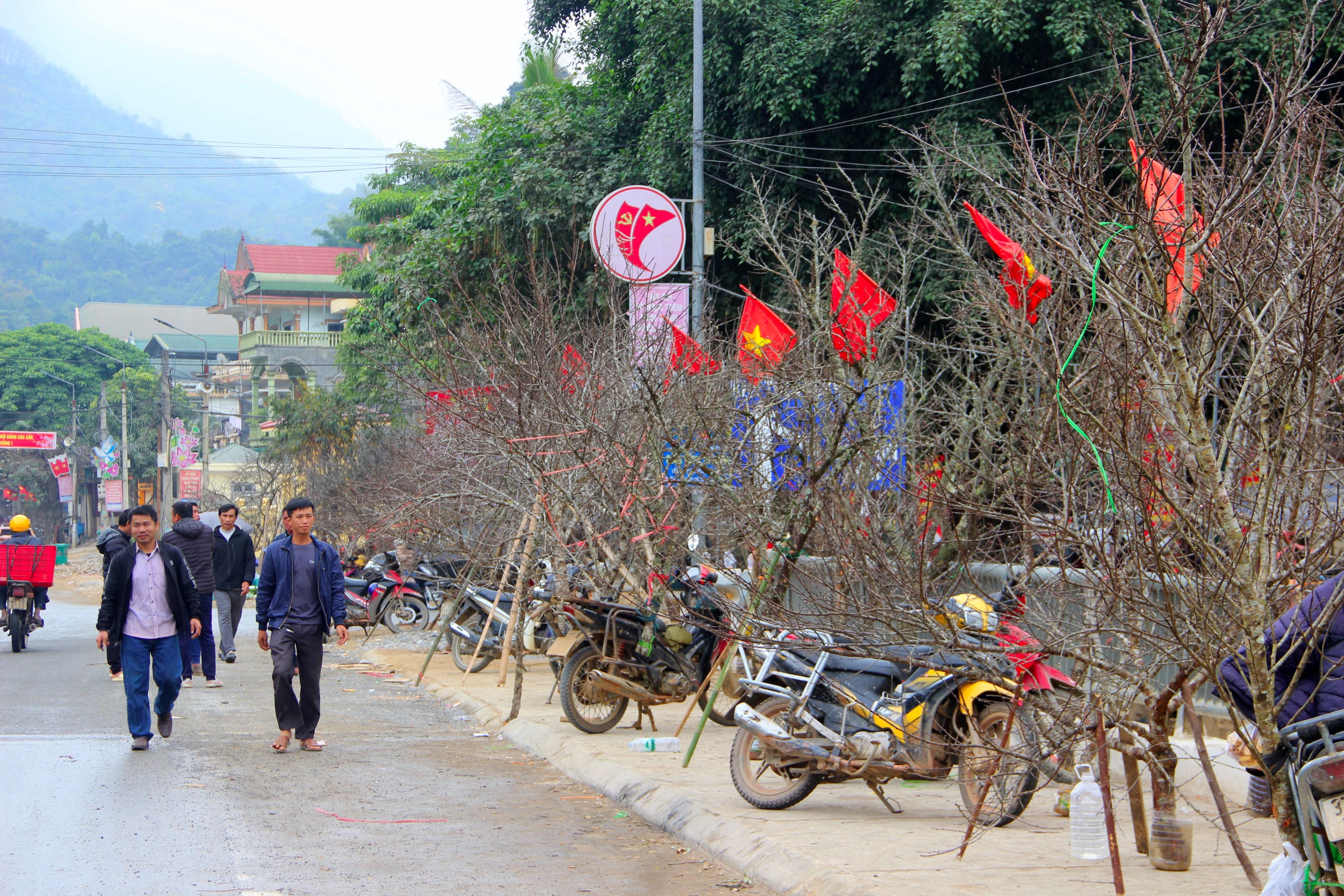 |
| Peaches are harvested by locals in the highlands of Ky Son from their fields and brought to the mountain town of Muong Xen to sell during Tet (Lunar New Year). Photo: Quang An |
When spring arrives and fills the vast forests, it is also the time when the people of the highlands of Con Cuong, Anh Son, Tuong Duong, Ky Son, Que Phong, Quy Chau… rush into the forest to find produce. Dong leaves, bamboo tubes, peach blossoms, cotton flowers… are loaded onto vehicles and transported to the cities, bringing the colors of spring to every home. Local people call this “forest bounty” to welcome Tet.
In Ky Son and Que Phong districts, local peach trees, many years old and covered in moss, with plump buds, beautiful flowers, and lush green leaves, are brought down to the mountain towns to be sold by the locals.tradersAccording to the Hmong men selling peach blossoms for Tet in the Muong Xen town area, it's not simply a matter of cutting down any peach blossom branch you come across. You have to know how to choose mature branches with beautiful shapes. This year there's always next year, so you have to know how to save some.
 |
| In the town of Muong Xen, in the days leading up to Tet (Lunar New Year), besides selling peach blossoms, locals also sell many other local products. Photo: Xuan Hoang |
Market researchpeach blossoms for TetIn the highlands of Ky Son, most peach blossom branches are priced from 2 to 5 million VND per branch, while exceptional branches with perfect shape, buds, and leaves are offered by traders for 25 to 40 million VND per branch.
In the mountainous district of Kỳ Sơn, the most extensive digging takes place in the communes of Mường Lống, Na Ngoi, Nậm Cắn, and Tây Sơn.
According to Mr. Vi Oanh, Head of the Agriculture and Rural Development Department of Ky Son district: Decades ago, the people of Ky Son highlands planted peach trees on their fields, both for shade and for fruit to eat; few people cut branches to decorate for Tet (Lunar New Year). Later, people from the lowlands preferred peach trees with rocky or mossy surfaces, so every Tet and Spring, the people of the highlands would "hunt" for mossy peach trees to sell to traders.
Towards the end of December, along the roads leading to the inland communes of the district, motorbikes laden with peach blossom branches line the streets towards Muong Xen town, adding to the bustling atmosphere of the year-end in the highlands. Perhaps the harsh natural environment has created a unique beauty for the peach blossoms of spring here.
Dong leaves are harvested year-round by locals to supply bakeries, but the peak season is at the end of the year to supply people everywhere for wrapping cakes.TetAccording to the people of Hanh Dich commune, Que Phong district: The dong leaf plant usually grows and develops in areas with high humidity; the deeper you go, the more beautiful the leaves become, while the giang plant grows halfway up the mountain.
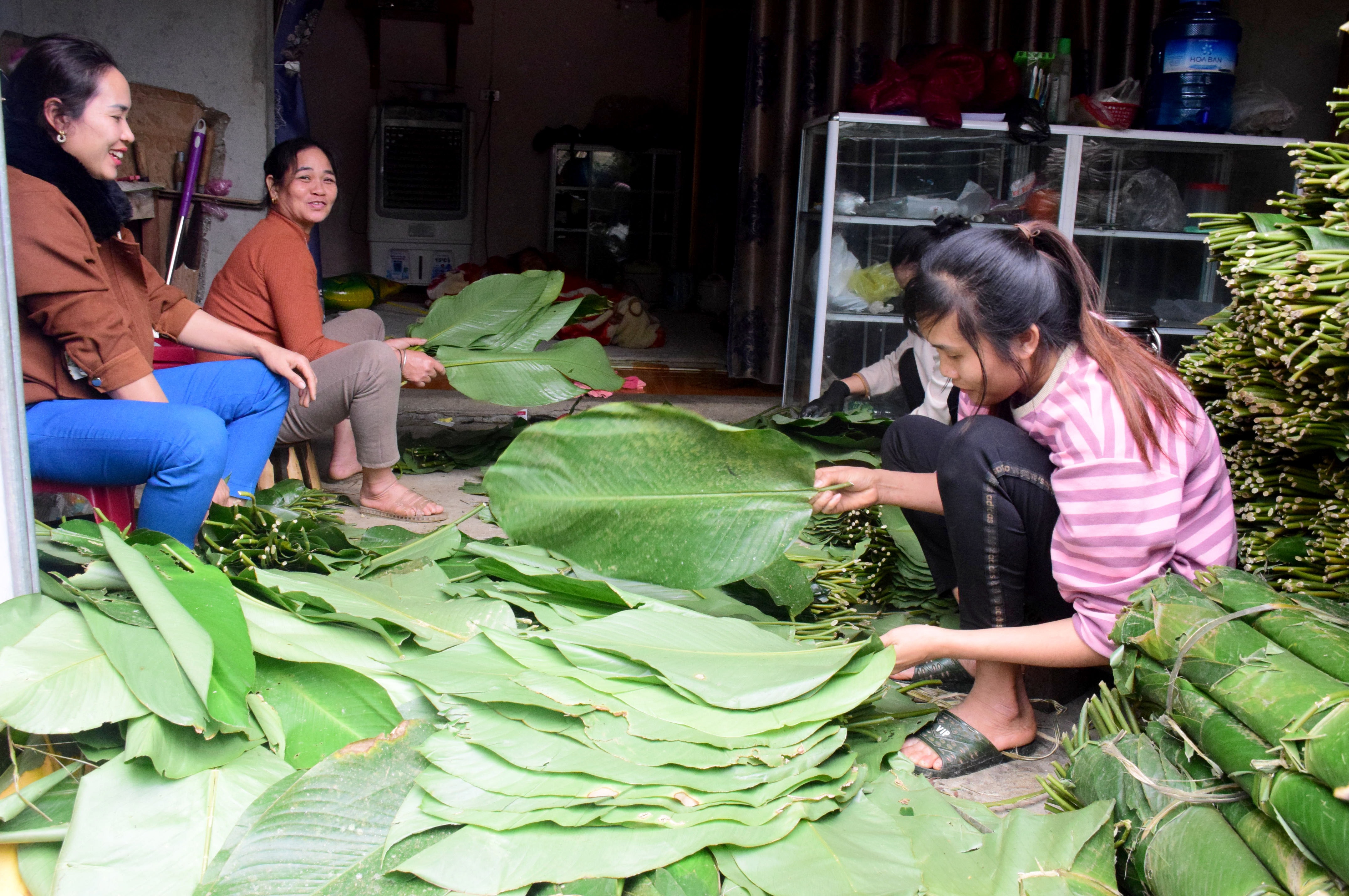 |
| The banana leaves are bought by traders in Tam Dinh commune, Tuong Duong district, then selected and bundled neatly for sale on the market. Photo: Quang An |
Mr. Luong Van Manh from Chieng village, Hanh Dich commune, said: "The place where we pick dong leaves is along the stream, about an hour's walk from my house, so I can only make two trips a day. Each trip, one person carries more than 10 bundles of leaves. Customers prefer dong leaves that are about 25 cm wide and 50 cm long, because they look beautiful when used to wrap banh chung and banh tet (traditional Vietnamese rice cakes). Therefore, we have to go to great lengths to find a clump of dong leaves with many beautiful leaves. Picking dong leaves requires sharp cutting tools, and the leaf stems must be cut neatly with each stroke. Arranging and bundling the leaves also requires skill to prevent tearing. Because people believe that 'forest blessings' are a blessing for Tet (Vietnamese New Year), when bundling leaves, we must not mix torn or bad leaves in with the rest to sell to customers," Mr. Luong Van Manh explained.
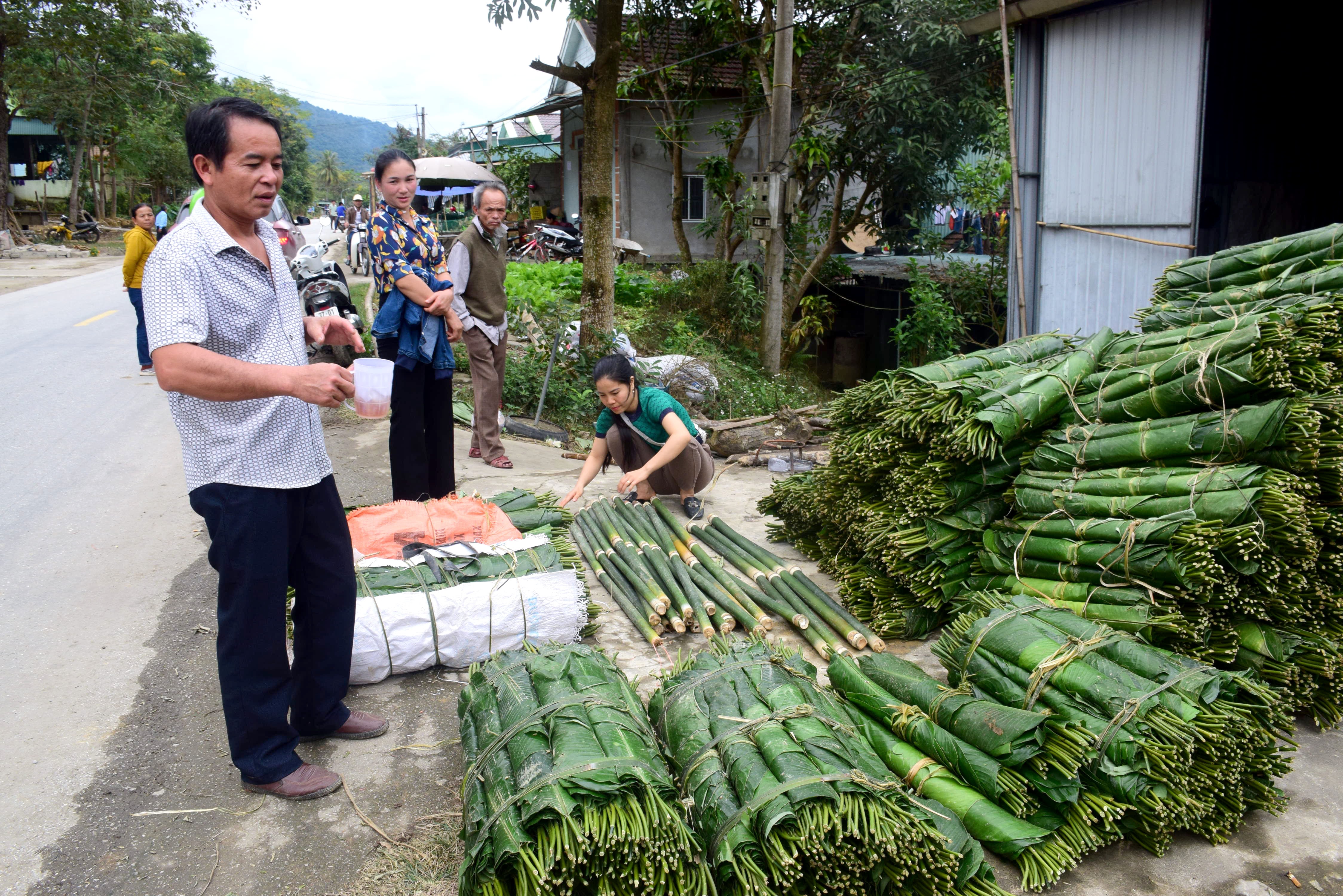 |
| Traders gather banana leaves along National Highway 7, in the section passing through Tam Dinh commune (Tuong Duong district), to transport them downstream for sale during Tet (Lunar New Year). Photo: Xuan Hoang |
The price of banana leaves varies from year to year. This Tet holiday, according to traders buying banana leaves in the districts of Tuong Duong, Ky Son, Que Phong, etc., the purchase price from farmers right at the forest edge is 300-400 VND per leaf. The traders buy them, select, bundle them nicely, and transport them to the lowlands for sale.
According to traders, dong leaves are found in most of the highland districts along National Highways 7A and 48. However, the most beautiful dong leaves come from Hanh Dich, Thong Thu, and Dong Van in Que Phong district. Experience shows that in years when it rains from the beginning of the twelfth lunar month until the 20th day, dong leaves are in high demand. Because of the prolonged rain, people are reluctant to go into the forest. In years when it is sunny throughout the twelfth lunar month, dong leaves are abundant, meaning the purchase price is cheaper.
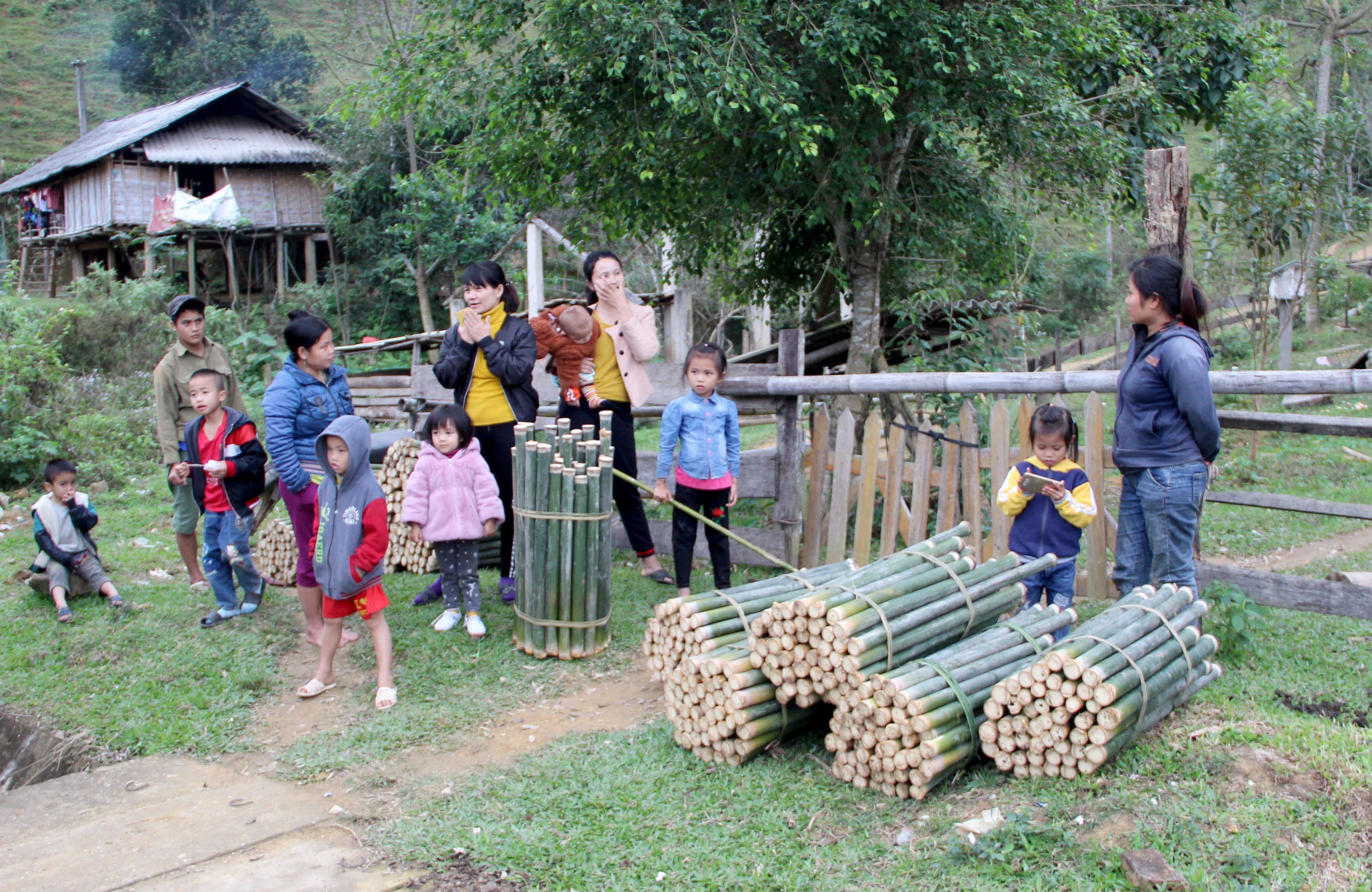 |
| People in Dong Van commune (Que Phong district) harvest bamboo stalks to sell to traders. Bamboo stalks are used to split into strips for wrapping Tet rice cakes, so they are in high demand during Tet. Photo: Quang An |
According to those who specialize in buying dong leaves, the distinctive features of dong leaves are their green core, green leaves, and the tip of the leaf which has a spiral protrusion. There are two types of dong leaves: oval leaves and straight leaves. However, straight leaves are preferred.
With bamboo, once cut from the forest, it must be sold immediately because the bamboo needs to be fresh to be easily split into thin strips. The strips used for wrapping cakes should be as thin as possible. Ms. Luong from Dong Van commune, Que Phong district, confided: "I don't hope to get rich; I'm just happy if the 'gifts from the forest' are enough to cover the expenses for Tet. The villagers have been connected to the forest for generations, and every Tet, all our clothes, meat, fish, cakes, and sweets depend on the 'gifts from the forest'."
"Forest bounty" makes spring brighter, allowing highland people to celebrate Tet (Lunar New Year) more warmly and fully. Therefore, those who benefit from these products must know how to protect the forest and preserve every sapling. This means exploiting the forest rationally so that it can thrive and flourish. When picking banana leaves, carelessness can lead to cutting down and damaging the roots of the banana plant. The same applies to bamboo; when bamboo shoots are harvested indiscriminately, it inadvertently leads to forest destruction. Or some people dig up and cut down the plants at the root, preventing them from continuing to grow. If we do not have a sense of responsibility in exploiting these products, one day "forest bounty" will be depleted.
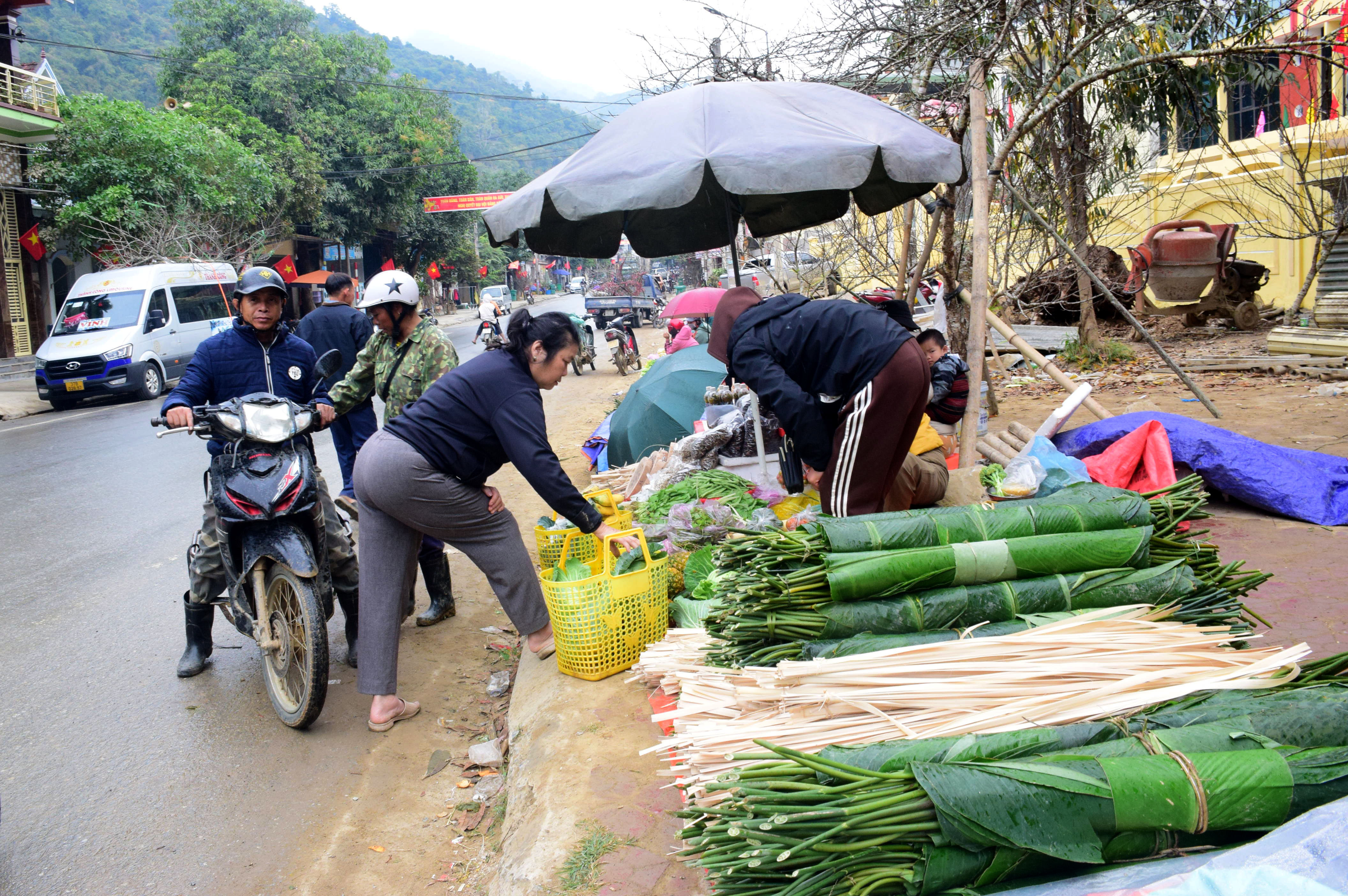 |
| Buying and selling banana leaves and other products in Muong Xen town, Ky Son district. Photo: Xuan Hoang |
It's impossible to quantify how much money highlanders earn each year from harvesting "forest bounty," but hundreds, even thousands, of families will have a prosperous Lunar New Year thanks to these forest products. Therefore, at the end of the year, when we travel up to the highlands, we see trucks loaded with goods heading back down to the lowlands. On those trucks are vibrant green banana leaves, bamboo tubes, peach branches, and other products that lowlanders call "highland specialties," evoking a feeling of excitement as spring arrives.


