
The minimum wage is proposed to increase by more than 10%.
In July, the National Wage Council will meet to discuss plans for increasing the regional minimum wage in 2016.
Following the government's directive on wage policy reform, the National Wage Council will meet this month to develop a plan for increasing the regional minimum wage, which will be submitted to the government in October.
Speaking to the press at a recent dialogue on labor, wage, and social insurance policies, the Chairman of the Vietnam Chamber of Commerce and Industry (VCCI), Vu Tien Loc, said that the organization and business associations are discussing the increase in the minimum wage. "We propose stopping at a level above 10% to compensate for the devaluation of the currency and to be consistent with the current rate of labor productivity growth."
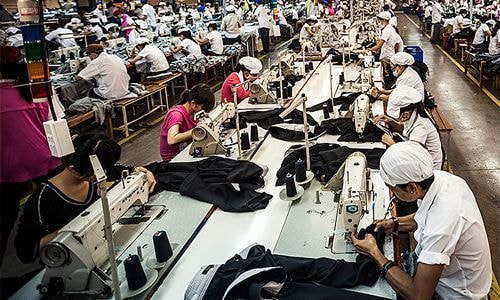 |
| The current minimum wage only covers about 60% of the living expenses of workers. |
In 2015, the regional minimum wage was adjusted upwards by 250,000 to 400,000 VND per month, an average increase of 14.8% compared to the previous year. In 2014, the increase was also approximately 15% compared to 2013. Therefore, if the regional minimum wage only increases as proposed by employers, this would be the lowest increase in the last three years.
According to Mr. Loc, increasing the minimum wage impacts employers, workers, and economic growth. The adjustment must help improve workers' incomes while ensuring the competitiveness of businesses and the stability of the economy. If the regional minimum wage increases too much compared to the rate of increase in labor productivity, businesses will be unable to expand production, affecting the economy and GDP growth.
Deputy Minister of Labour, Invalids and Social Affairs Pham Minh Huan, who is also the Chairman of the National Wage Council, stated that the projected increase would not be drastic.
Mr. Huan analyzed that workers always want higher wages. However, employers argue that because the consumer price index is still rising slowly and businesses are facing many difficulties, they want a suitable increase. "The Ministry must analyze these opinions and choose a compromise solution that is acceptable to all parties," he said.
According to the roadmap for increasing regional minimum wages from 2015 to 2017 proposed by the Vietnam General Confederation of Labor to the National Wage Council, by 2015, the minimum wage must meet 80% of the living needs of the region, similarly reaching 90% in 2016 and 100% in 2017.
According to Mr. Le Dinh Quang, Deputy Head of the Labor Relations Department (Vietnam General Confederation of Labor), current wages only meet 60% of the minimum living standard for workers. In the first six months of this year, there were 235 work stoppages by workers, primarily aimed at demanding wage increases, improved working conditions, and protesting overtime.
According to VNE


